Apr 23 2009
The first major study of media coverage, policy debates and public perceptions about nanotechnology is the focus of a new book co-authored by Professor Stuart Allan of Bournemouth University.
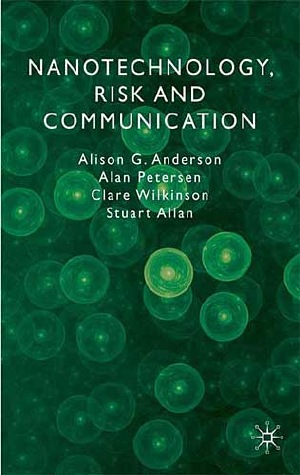
The book, entitled Nanotechnology, Risk and Communication (published by Palgrave Macmillan 2009) analyses the way the media has covered the early development of nanotechnology. It also uses that coverage to contribute to the debate about the effectiveness of scientists and journalists in communicating science-related stories to the wider public.
Collectively, Professor Allan and his colleagues from the Universities of Plymouth and West of England in the UK and Monash University in Australia found that the practice of engaging the public in science-based stories tends to focus on risk management rather than wider dissemination. As a result, the book’s authors recommend that scientists would benefit from a more rigorous understanding of the rapidly-changing character and day-to-day operations of the media.
“In its early stages, coverage of nanotechnology tended to be in the context of science fiction, evoking images of ‘nanorobots’ and ‘nanosubmarines’,” said Professor Allan, author of Media, Risk and Science. “This was especially true during the period of the extensive reporting of Prince Charles’s purported comments in 2004 about the dangers of nanotechnologies giving rise to ‘grey goo’.
“Science tends to be presented in the media as somehow outside society, as constituting unmediated truth, with ‘communication’ being conceived as a process of informing an assumed ‘ignorant’ or ‘unaware’ audience of ‘the science facts’,” he continued. “We have also seen how the term ‘nanotechnology’ itself is mired in definitional ambiguity, a problem compounded by various competing representations of the benefits and risks of particular innovations.”
Research for the book was based on the findings of a study funded by the UK’s Economic and Social Research Council (ESRC). Professor Allan interviewed science journalists who had written about nanotechnology and were reasonably familiar with the science involved. He and his colleagues drew further insight from interviews with scientists.
“We were particularly interested to know more about how news reporting of nanotechnology has unfolded over the years and the extent to which it has been influenced by other controversies such as the rise of BSE, genetically-modified crops or stem cell research,” said Professor Allan. “We also looked at what participants themselves think about the news coverage as other studies have focused on the news reports alone.”