Aug 7 2009
Stork Climax Research Services, Inc. (Stork CRS) of Wixom, Michigan is presenting "Aspects of Electron Microscopy and Microanalysis," on Friday, August 21. The free technical presentation will be offered in either a morning (9:00 AM to 12:00PM) or afternoon (1:30 PM to 4:30 PM) session. The presentation will be taught by Dr. John M. Tartaglia of Stork CRS. Stork CRS has provided materials testing, consulting, and failure analysis to industries for over 20 years.
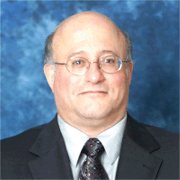 John M. Tartaglia, Ph.D., FASM
There is no cost to attend this presentation. For reservations or questions, please contact us via e-mail, [email protected]. Registrants should include name, company, telephone number, and email address and indicate their preference for the morning or afternoon session on Tuesday, August 21, 2009. Reservations will be confirmed with a reply email from a Stork CRS associate.
Abstract:
Various techniques have been developed to characterize material structure and composition at high magnification and in localized regions. Materials investigators often combine several techniques to reach a more comprehensive solution to a developmental or failure problem. This talk will first explain some of the historical development and underlying physics behind the various techniques, including some key parameters for instrument design such as gun brightness, specimen chamber atmosphere and detector design. The speaker will introduce the concepts of primary versus secondary radiation and beam-specimen interaction volumes to explain the different materials information that various emitted signals carry, e.g. secondary electrons, back-scatter electrons, X-rays and Auger electrons.
The second part of the talk will compare and contrast the various techniques, with special emphasis on scanning electron microscopy (SEM), energy dispersive spectroscopy (EDS) and Fourier transform infrared spectroscopy (FTIR). The speaker will explain why analysts choose or avoid certain techniques due to their advantages and limitations such as spatial/lattice and depth resolutions; insulator charging; elemental versus molecular analyses; common interferes; generation volume overlaps; and qualitative versus semiquantitative analyses. The talk will include a few practical methods for overcoming charging and peak overlap problems in SEM/EDS analysis.
The speaker will conclude his presentation by describing several key examples from case studies to illustrate how Stork employed SEM, EDS and FTIR to analyze metals and plastics and their failures.
Dr. John M. Tartaglia is a Senior Metallurgical Engineer and the Engineering Manager at Stork CRS. Dr. Tartaglia has been performing failure analyses and materials characterization for more than 22 years. He holds B.S. and Ph.D. degrees in Materials Engineering from Rensselaer Polytechnic Institute in Troy, New York. Dr. Tartaglia’s Ph.D. thesis concerned the elevated temperature fatigue behavior of superalloys, and he is an expert in wrought steels, aluminum, magnesium, fatigue, failure analysis, scanning and transmission electron microscopy, and energy. Dr. Tartaglia was recently elected as a Fellow of ASM International. Click here to visit his professional page on the Stork Materials Technology Failure Analysis website.