Aug 17 2009
Nanochemists from the Chinese Academy of Sciences and Nano-Science Center, Department of Chemistry at University of Copenhagen have developed nanoscale electric contacts out of organic and inorganic nanowires. In the contact they have crossed the wires like Mikado sticks and coupled several contacts together in an electric circuit. In this way they have produced prototype computer electronics on the nanoscale.
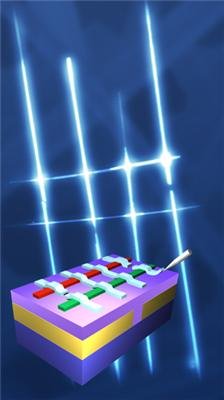 Researchers cross organic and non-organic nano wires like Mikado sticks and thereby make nanoscale prototype computer electronics. Image by Asmus Dohn
Alternative to silicon computers
Today the foundation of our computers, mobile phones and other electronic apparatus is silicon transistors. A transistor is in principal an on- and off- contact and there are millions of tiny transistors on every computer chip. However, we are reaching the limit for how small we can make transistors out of silicon.
We already use various organic materials in, for example, flat screens, such as OLED (Organic Light Emitting Diode). The new results show how small and advanced devices made of organic materials can become.
Thomas Bjørnholm, Director of the Nano-Science Center, Department of Chemistry at University of Copenhagen explains:
- We have succeeded in placing several transistors consisting of nanowires together on a nano device. It is a first step towards realisation of future electronic circuitry based on organic materials – a possible substitute for today’s silicon-based technologies. This offers the possibility of making computers in different ways in the future.
Danish-Chinese nanoelectronics
The researchers have used organic nanowires combined with the tin oxide nanowires in a so-called hybrid circuit. As in a Mikado game, the nanowires cross in a device consisting of 4-6 active transistor moieties. The devices have a low operational current, high mobility and good stability and that is essential in order for the material to be able to compete with silicon.
Professor Wenping Hu, Chinese Academy of Sciences is excited over the results:
- This work is the first significant result of our collaboration with the researchers from the Nano-Science Center. It is a good starting point for our new Danish-Chinese research centre for molecular nano-electronics and it underlines the fact that we can complement each other and that together we can achieve exciting and important results.