Aug 18 2009
Scientists have copied the natural glue secreted by a tiny sea creature called the sandcastle worm in an effort to develop a long-sought medical adhesive needed to repair bones shattered in battlefield injuries, car crashes and other accidents. They reported on the adhesive here today at the 238th National Meeting of the American Chemical Society (ACS).
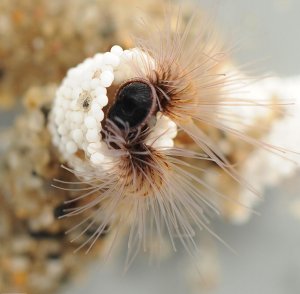 The sandcastle worm makes a protective home out of beads of zirconium oxide in a lab. At the University of Utah, scientists have created a synthetic version of this glue for possible use in repairing fractured bones. Credit: Fred Hayes
“This synthetic glue is based on complex coacervates, an ideal but so far unexploited platform for making injectable adhesives,” says Russell Stewart, Ph.D. “The idea of using natural adhesives in medicine is an old one dating back to the first investigations of mussel adhesives in the 1980s. Yet almost 30 years later there are no adhesives based on natural adhesives used in the clinic.”
The traditional method of repairing shattered bones is to use mechanical connectors like nails, pins and metal screws for support until they can bear weight. But achieving and maintaining alignment of small bone fragments using screws and wires is challenging, Stewart said. For precise reconstruction of small bones, health officials have acknowledged that a biocompatible, biodegradable adhesive could be valuable because it would reduce metal hardware in the body while maintaining proper alignment of fractures.
Stewart and colleagues duplicated the glue that sandcastle worms (Phragmatopoma californica) use while building their homes in intertidal surf by sticking together bits of sand and broken sea shells. The new glue, says Stewart, a bioengineer at the University of Utah in Salt Lake City, has passed toxicity studies in cell culture. It is at least as strong as Super Glue and is twice as strong as the natural adhesive it mimics, he notes.