A technical poster from Fluidigm Europe entitled 'Rapid single-molecule haplotyping in patients with sickle cell disease' reports upon the pioneering work of Dr Stephen Menzel and his fellow researchers at Kings College (London), School of Medicine.
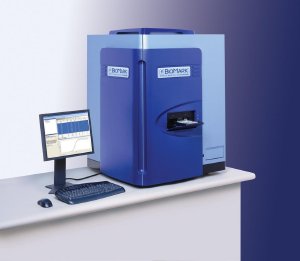
Sickle cell disease is a devastating genetic condition caused by mutation of the beta globin gene on chromosome 11p. Genetic variation elsewhere can lead to a milder form of the disease. One such modifier locus has been mapped to the intergenic region between HBS1L and MYB (HMIP) on chromosome 6q23.3. This new locus is dominated by a 24-kb haplotype block (HMIP-2) characterised by 11 SNPs. To identify the causitive varient within HMIP-2, the researchers used a Fluidigm BioMark™ System and Digital Array™ Integrated Fluidic Circuit (IFC) technology to investigate the SNP haplotypes in a series of West African and African/European patients.
The Kings College researchers found that Fluidigm digital arrays can be easily adapted to SNP haplotyping. Applying digital array haplotyping the researchers were able to phase three SNP markers at a modified locus for sickle cell disease. Further work using the Fluidigm BioMark System and Digital Arrays IFC's to extend and further characterise the African haplotypes will help identify the causitive genetic varients at this locus.
A copy of poster is available free to download from http://www.fluidigm.com/pdf/posters/FLDM_MRKT00122.pdf
The Fluidigm BioMark System uses IFC technology to reduce complexity, improve throughput with nanolitre precision and provide significant cost-savings (less reagent and smaller samples) for high-throughput PCR applications. The research described on this poster used the Fluidigm 12.765 Digital Array, a unique IFC that employs a network of integrated channels and valves to divide a mixture of sample and PCR reagents into 765 replicates. The chip is specially designed to quantify target sequences very accurately and to detect low-abundance targets that differ by only a base-pair from the wild-type sequence. With conventional assays these targets may be otherwise difficult to detect in the sample as a whole. Fluidigm also offers a 48.770 Digital Array IFC that is capable of testing up to 48 individual samples at a time and automatically partitioning each of the samples into separate sets of 770 reaction chambers - delivering a total of 36,960 simultaneous digital PCR reactions.
Fluidigm develops, manufactures and markets proprietary Integrated Fluidic Circuit (IFC) systems that significantly improve productivity in life science research. Fluidigm's IFCs enable the simultaneous performance of thousands of sophisticated biochemical measurements in extremely minute volumes. These "integrated circuits for biology" are made possible by miniaturising and integrating liquid handling components on a single microfabricated microfluidic device. Fluidigm's IFC systems, consisting of instrumentation, software and single-use IFCs, increase throughput, decrease costs and enhance sensitivity compared to conventional laboratory systems. Fluidigm products have not been cleared or approved by the Food and Drug Administration for use as a diagnostic and are only available for research use.