For the first time, the widely used molecular synthesis technique known as click chemistry has been safely applied to a living organism. Researchers with Lawrence Berkeley National Laboratory (Berkeley Lab) and the University of California (UC) Berkeley have crafted a unique copper-free version of click chemistry to create biomolecular probes for in vivo studies of live mice. Conventional click chemistry reactions require a copper catalyst that is toxic to cells and organisms.
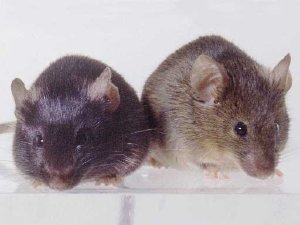
“We developed a variant of the click chemistry reactions that possesses comparable kinetics to the conventional copper-catalyzed reactions, only without the requirement of a toxic metal,” says Carolyn Bertozzi, a Berkeley Lab-UC Berkeley chemist who leads this research. “Our latest studies have now established copper-free click chemistry as a bioorthogonal reaction that can be executed in the physiologically relevant context of a mouse.”
Bertozzi and her research group used copper-free click chemistry to label glycans in a variety of mouse tissues including the intestines, heart and liver. Glycans are sugars that are ubiquitous to living organisms and abundant on the surfaces of cells. They are central to the signaling that takes place between cells during development and are also involved in bacterial and viral infections, as well as the immune system’s response to such infections.
“There is great scientific interest in monitoring the dynamics of glycans as they move about within cells and on the cell surface, but the means to tag glycans with imaging probes in living organisms has been lacking,” says Bertozzi, who is the director of Berkeley Lab’s Molecular Foundry, a faculty scientist with Berkeley Lab’s Materials Sciences and Physical Biosciences Divisions, and the T.Z. and Irmgard Chu Distinguished Professor of Chemistry as well as a professor of Molecular and Cell Biology at UC Berkeley. She is also an investigator with the Howard Hughes Medical Institute (HHMI).
For the past decade, Bertozzi, a leading authority on glycobiology, has worked with various collaborators to devise means by which glycans can be used for molecular imaging in living cells and organisms.
“Molecular imaging reveals a wealth of information about biomolecules in their native environments and glycans are appealing targets for molecular imaging,” she says. “A major focus of my research has been the development of chemical approaches for probing the functions of glycans in cell-based systems, and the application of these tools to studies of glycobiology.”
Two years ago, Bertozzi and her research group developed the first copper-free variant of the click chemistry reactions, which they used to probe glycan dynamics in living cells and in live zebrafish embryos. Now they have applied copper-free click chemistry to the laboratory mouse, which is widely regarded as the model organism for studying human pathology.
The results of this latest development have been published in the Proceedings of the National Academy of Sciences (PNAS) in a paper titled, “Copper-free click chemistry in living animals.” Co-authoring the paper with Bertozzi were Pamela Chang, Jennifer Prescher, Ellen Sletten, Jeremy Baskin, Isaac Miller, Nicholas Agard and Anderson Lo.
Chemistry with a Click
Click chemistry is best known for a copper-catalyzed azide-alkyne reaction that makes it possible for certain chemical building blocks to “click” together in an irreversible linkage, analagous to the snapping together of Lego blocks. Since its introduction in 2001 by the Nobel laureate chemist Barry Sharpless of the Scripps Research Institute, the copper-catalyzed azide-alkyne reaction has proven extremely valuable for attaching small molecular probes to various biomolecules in a test tube or on fixed cells. However, it can’t be used for biomolecule labeling in live cells or organisms because of copper’s toxicity.
Earlier work by Bertozzi and her group had shown that glycans can be metabolically labeled with azides – a functional group featuring three nitrogen atoms – via a reaction they devised, which they called the Staudinger ligation. To apply click chemistry to glycans, she and her colleagues designed a ring-shaped molecule, called difluorinated cyclooctyne or DIFO, that reacts with azides rapidly at physiological temperatures without the need for a toxic catalyst.
“This copper-free click reaction of azides and DIFO combines the biocompatibility of the Staudinger ligation with the fast reaction kinetics of click chemistry,” Bertozzi says.
To apply their copper-free click chemistry to living mice, Bertozzi and her group delivered azides to the surfaces of target cells within the mice via a metabolic precursor, then labeled select glycans(those that bore corresponding azido sialic acids) by covalent reaction in vivo with a panel of cyclooctyne-FLAG peptide conjugates. The labeled biomolecules were probed by ex vivo analysis of cells and tissue lysates.
“The relative amounts of ligation products observed with different cyclooctynes suggest that both intrinsic reaction kinetics and other properties such as solubility and tissue access govern the efficiency of copper-free click chemistry,” Bertozzi says. “More broadly, copper-free click chemistry appears to possess the requisite bioorthogonality to achieve specific biomolecule labeling in this important model organism.”
This research was primarily supported by a grant from the National Institutes of Health.