Nanolane presents a study, recently published in PNAS, that deals with the role of bacterium-generated slime (extracellular mucus forming films of 0.1 to 5nm in thickness) on bacterial adhesion and ability to move.
These results were obtained by two French groups from INSERM and CNRS at Aix-Marseille University in collaboration with Nanolane. They show for the first time live observations of bacterial slime whilst the bacteria are in motion.
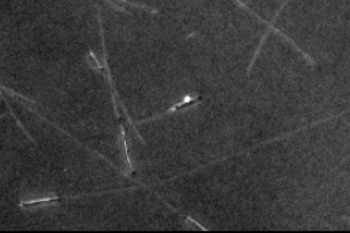 SEEC of slime deposition by bacteria
This feat was made possible thanks to T-Surfs, innovative contrast-enhancing slides specially designed for nanometric characterization with a conventional inverted light microscope. T-Surfs are intended to help study biological samples, biofilms, organic layers in liquid or in air. In addition, they are compatible with most of the nano-analytical devices and instruments (microfluidics, Fluorescence, AFM,...).
The study reveals that slime (extracellular mucus) is secreted by bacteria at a constant rate, independent of the bacterium speed. Furthermore, it is demonstrated that secretion takes place underneath the bacterium and not at its ends. These brand new results are in opposition to previous works which most often indicated direct involvement of the extracellular matrix on bacterial motility through a mode of propulsion caused by the secretion of the matrix at the 'rear' of a bacterium.
For the first time, the relationship between the production of extracellular matrices and time of residence of bacteria is clearly established thanks to SEEC microscopy. This discovery adds a new and possibly fundamental element as far as understanding the roles of bacteria and extracellular matrices in cancer biology, bacteriology, and many other fields.