Leading microfludics and nanotechnology development company mPhase Technologies, Inc. today announced that the company has been awarded a Phase II Small Business Technology Transfer Program (STTR) grant, part of the Small Business Innovation Research (SBIR) program, from the U.S. Army for continued development of a reserve Smart NanoBattery for a critical computer memory application.
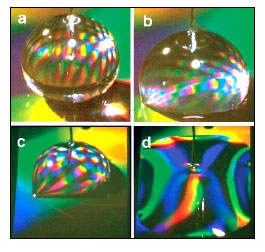 Source: mPhase Technologies
On the heels of mPhase's positive results achieved in its $100,000 Phase I grant, which was awarded in 2007, mPhase/AlwaysReady has won the Phase II STTR grant worth $749,700 over the two-year development period. Only a limited percentage of Phase I participants are invited by the U.S. Army to submit proposals for a second phase of work, and still fewer are awarded Phase II grants.
The funds will be used to build a functional lithium Smart NanoBattery prototype for the computer memory application. Whereas the Phase I grant supported the effort to develop a low-power "green" battery to continuously power a SRAM (static random access memory) circuit for a computer device, the Phase II work will focus on further refinements to the technology, and will be leveraged into similar commercial applications for large scale program deployments. The target is a small footprint, reserve style multi-cell, 3 V lithium chemistry micro-arrayed battery with a minimum of a 20-year shelf life and uninterruptible power output during this period. This dual use concept is part of the mPhase/AlwaysReady commercialization strategy.
"We are very pleased that we have won this Phase II award based on our technical achievements during Phase I and that our work will contribute to developing advanced power solutions in the future," said Ron Durando, CEO of mPhase.
The SBIR program is a U.S. government funding program for domestic small business concerns to engage in research and development that has the potential for commercialization. STTR program grants are offered to small businesses working in conjunction with university development partners. mPhase/AlwaysReady began working with the Energy Storage Research Group (ESRG) at Rutgers, The State University of New Jersey, for the Phase I project and will continue to work with Rutgers ESRG over a two-year period as part of the Phase II effort to develop the Smart NanoBattery for this SRAM backup application. This version of the Smart NanoBattery may potentially go into production if Phase II is successfully completed.
"Rutgers is pleased to support a New Jersey company in this project and we look forward to continuing the development effort with our colleagues at mPhase on the design of the arrayed micro battery," said William Adams, Director of the University's Office of Corporate Liaison and Technology Transfer.