From ELMARCOReviewed by Maria OsipovaJan 22 2026
In this interview, AZoNano speaks with Katerina Rubackova and Jiri Maskarinec from Elmarco about their specialized Nanospider electrospinning workshop that is designed to help researchers and developers optimize nanofiber production and scale-up.
Can you please introduce yourselves and your roles at Elmarco?
Katerina Rubackova : Hello, my name is Katerina Rubackova, I am with the Sales and Customer Support team at Elmarco. I work closely with our partners and clients across industries who are using electrospinning technologies, especially the Nanospider platform.
Jiri Maskarinec: And I’m Jiri Maskarinec. I’m a Process Engineer at Elmarco, and my focus is on optimizing electrospinning parameters and guiding our customers in maximizing the capabilities of our Nanospider systems – especially in industrial or scale-up scenarios.
What is the Nanospider electrospinning workshop, and who is it designed for?
Jiri Maskarinec: The workshop, titled Nanospider Techniques for Peak Performance, is a hands-on training course held at Elmarco’s facility. It is primarily intended for researchers, electrospinning product developers, and operators of Nanospider technology, especially those who are looking to improve their productivity or solve challenges in process scale-up.
Katerina Rubackova: It’s also valuable for users of needle-based electrospinning systems who are curious about needleless alternatives. Our aim is to help attendees explore more productive and scalable methods of nanofiber production using our NS 3S500U machine from the LINEA line.
What makes the NS 3S500U system ideal for this workshop?
Katerina Rubackova: The NS 3S500U is our most versatile pilot-scale machine. It’s half a meter wide, designed for semi-industrial use, and integrates advanced features like multivariate processing and the use of multiple wires. It offers exceptional flexibility, which allows us to demonstrate everything from fine-tuning recipes to working with new collecting electrodes – all in a real industrial setting.
Jiri Maskarinec: It’s perfect for both research and low-volume production. Participants can experiment with their own materials and recipes during the workshop.
How is the workshop structured across the three days?
Jiri Maskarinec: Day one focuses on theoretical knowledge, a factory tour, and an overview of Elmarco’s technology and product portfolio. We also take a look at eco-friendly practices in electrospinning, like the use of green solvents.
Katerina Rubackova: On day two, we shift to look more at experimental work.
We begin spinning with various polymer solutions, compare wire setups (one, two, or three wires), and explore collecting electrode options like the rotating drum and the endless belt. Day three is all about optimization – process air control, solution conductivity, spinning distance, and static trace evaluation.
What level of experience is expected from workshop participants?
Katerina Rubackova: We strongly recommend that participants already have some experience in electrospinning. This is not an introductory course as it’s tailored for those who are actively working with either needle or needleless systems and want to go deeper into process optimization, scale-up, or productivity improvements.
Can you describe some of the hands-on work attendees will engage in?
Jiri Maskarinec: Participants will operate the NS 3S500U and test new types of carriages and electrodes. They’ll observe differences when spinning from one, two, or three wires and assess how those configurations impact fiber uniformity and throughput.
Katerina Rubackova: They can also bring their own polymer solutions and substrates. This is their opportunity to test real-world conditions and receive expert feedback in a controlled environment.
What are the benefits of using different collecting electrodes during the process?
Jiri Maskarinec: Each electrode has a specific use case. For example, the rotating electrode is ideal for creating aligned fibers, while the endless belt electrode can be used for direct spinning – producing self-supporting membranes without a substrate. Participants get to see how these tools reduce defects or enable advanced materials development.
Katerina Rubackova: We demonstrate how electrode swapping can be done easily, offering flexibility for diverse applications and product requirements.
How do environmental conditions, like humidity, influence the electrospinning process?
Jiri Maskarinec: Humidity is a critical parameter. We show how to control it using the NS AC150 air conditioning system. Small variations in relative humidity can significantly impact fiber diameter and membrane uniformity. That’s why mastering environmental control is a big part of what we teach.
Will Elmarco be involved in any other upcoming events related to nanofiber technology?
Katerina Rubackova: Yes, Elmarco will be exhibiting at major international trade shows in 2026, including Techtextil (April 21–24, 2026) and FILTECH (June 30–July 2, 2026). At Techtextil in Frankfurt, Elmarco will demonstrate its technology by bringing the NS 3S500U model directly to the exhibition hall, showcasing its suitability for industrial-scale nanofiber production. At FILTECH, Elmarco will further present its solutions for advanced filtration applications, reinforcing its position as a global technology leader in industrial electrospinning.
About the Interviewees
Katerina Rubackova 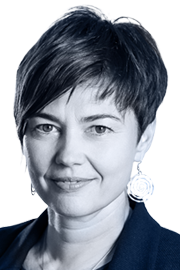
Katerina Rubackova is a Business Development Manager at Elmarco, where she focuses on advancing global adoption of nanofiber technologies, particularly through the company’s Nanospider platform.
With a strong background in applied sciences and materials engineering, she is instrumental in organizing customer-focused events and specialized workshops on electrospinning scale-up. Katerina is a frequent speaker and advocate for the practical industrialization of nanofiber-based solutions.
She holds a degree in Wastewater Treatment processes from VŠB-Technical University of Ostrava, CZ, and a degree in Chemical and Process Engineering from the Technical University of Eindhoven, NL.
Jiri Maskarinec
Jiri Maskarinec is a Senior Process Engineer at Elmarco, specializing in electrospinning process development and optimization. He plays a critical role in training clients, developing custom solutions, and advancing needleless electrospinning applications with the Nanospider technology. His technical insights are essential in guiding researchers and industrial users toward more productive and scalable nanofiber manufacturing.
Maškarinec studied at the Technical University of Liberec, where he gained expertise in materials science and nanotechnology.

This information has been sourced, reviewed and adapted from materials provided by ELMARCO.
For more information on this source, please visit ELMARCO.
Disclaimer: The views expressed here are those of the interviewee and do not necessarily represent the views of AZoM.com Limited (T/A) AZoNetwork, the owner and operator of this website. This disclaimer forms part of the Terms and Conditions of use of this website.