Scientists say a single FAP molecule enacts two roles, blocking a protein involved in scarring while helping turn hard-to-dissolve drugs into tiny particles that reach fibrotic tissue more effectively.
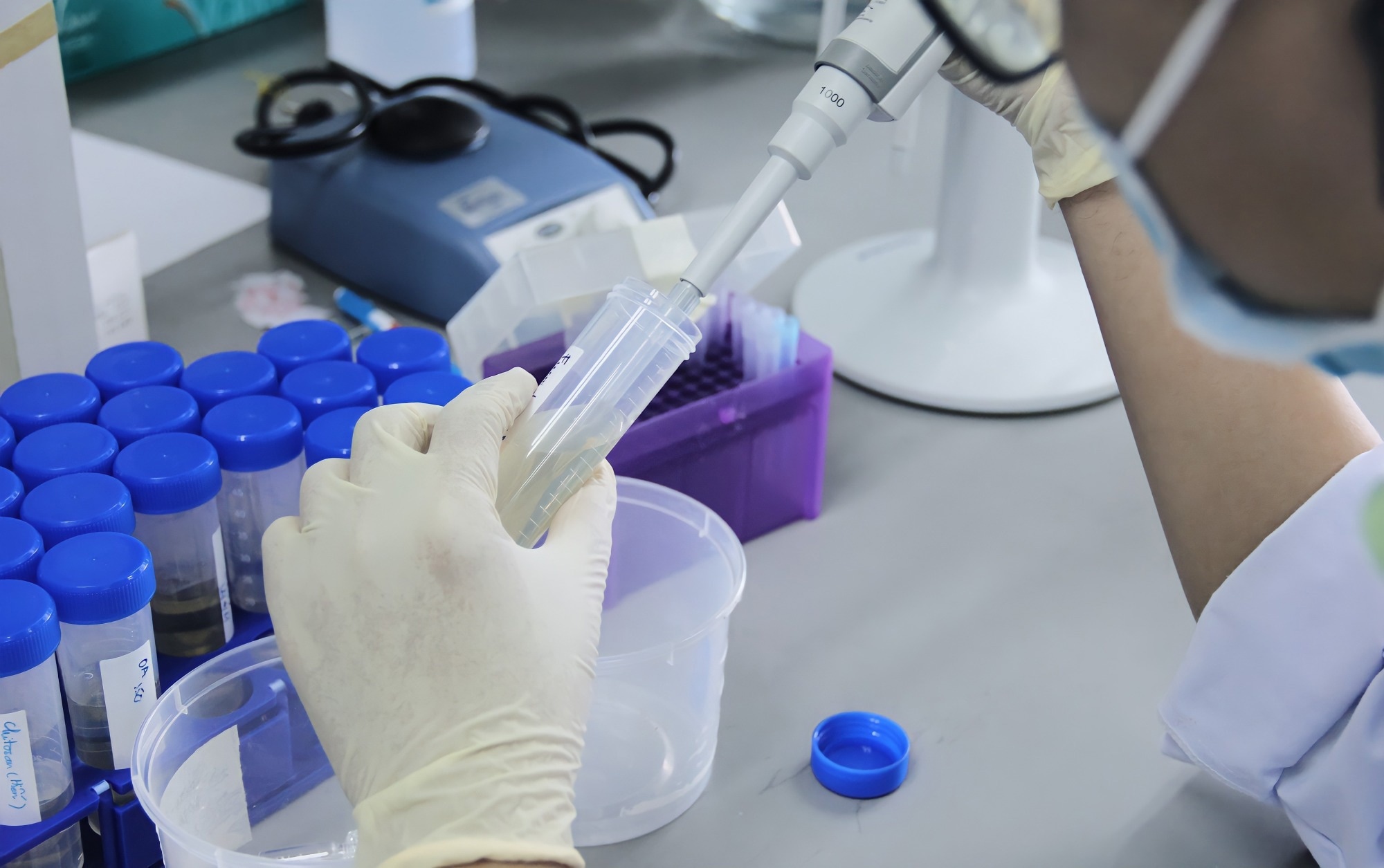 Study: Machine Learning-Informed Nano Co-Assembly Inhibits Fibroblast Activation Protein and Improves Drug Delivery in Fibrotic Tissue. Image Credit: Mars.53/Shutterstock.com
Small-molecule drugs are central to modern medicine, but many promising candidates suffer from low solubility and rapid clearance. Nanocarriers can help, however, they often require multi-component recipes and complicated manufacturing that limit scalability.
One possible alternative is small-molecule nano-self-assembly, which can enable high drug loading with simpler fabrication. This has potential, but most co-assembly strategies have been developed with cancer in mind, and there are relatively few broadly useful excipients.
Fibrosis adds another layer of difficulty: when tissue stiffens and becomes more stromal-dense, drug penetration often drops. That’s where FAP comes in. FAP is a membrane-bound serine protease enriched in activated fibroblasts within fibrotic lesions and stromal-rich disease environments, which makes it a compelling target and a potential “handle” for delivery.
Saving this for later? Download your PDF here.
In the Advanced Materials study, the researchers repurposed SP-13786 (SP) – a small-molecule FAP inhibitor with prior antifibrotic and imaging relevance – as a co-assembly excipient.
Using a straightforward co-precipitation approach at millimolar concentrations, they mixed SP with a range of hydrophobic drugs to form SP co-assembled nanoparticles (SCAN).
Testing Particle Formation And Composition
The team used dynamic light scattering (DLS) and transmission electron microscopy (TEM) to confirm the nanoscale assemblies and assess their morphology. To verify SP was distributed throughout the particles, they used energy dispersive X-ray (EDX) mapping, made possible through SP’s fluorine signal.
To probe why some drug-SP pairs assemble and others do not, they ran molecular dynamics simulations (50 ns, aqueous) and compared structural compactness and solvent exposure across forming vs non-forming pairs.
They then paired these insights with explainable machine learning.
Starting from 4,810 computed molecular descriptors, they filtered to 356 interpretable physicochemical features, and then used random forest-based recursive feature elimination to arrive at an optimal set of 228 descriptors associated with co-assembly outcomes.
Across the models, key predictors included aromaticity, molecular rigidity, and nitrogen-related interaction features (with the relative importance of features shifting depending on size/formation criteria).
Biology And In Vivo Readouts
The researchers assessed SCAN interactions with FAP-expressing fibroblasts in cells, tracking binding-related morphological changes and uptake dynamics, along with viability.
In vivo, they focused on murine myocardial ischemia/reperfusion (IR) injury, a model that develops progressive fibrosis.
The study separated two imaging goals:
- PET/CT with a radiolabeled FAP tracer (68Ga-FAPI-04) to validate in vivo FAP targeting (a targeting readout, not nanoparticle tracking).
- Fluorescence imaging (including ICG-labeled drug formulations) to track SCAN biodistribution and quantify heart targeting indices over time.
Broad Co-Assembly With Clinically Relevant Drugs
SP formed stable SCAN nanoparticles with multiple hydrophobic therapeutics (including ibrutinib, laduviglusib, sorafenib, and methotrexate), typically yielding uniform nanoscale aggregates with low polydispersity.
By contrast, some control combinations (e.g., SP with PLGA) did not co-assemble, suggesting specific molecular compatibility rather than a generic mixing effect.
In solution, SP alone tended to precipitate, while SCAN dispersions showed markedly improved colloidal stability, maintaining dispersion and drug retention over extended time windows (reported out to ~30 hours in their stability comparisons).
Clear “Rules” For Assembly and Cellular Uptake
The molecular dynamics results aligned with the experimental outcomes: successful co-assemblies tended to be more compact, less solvent-exposed, and energetically favorable than non-forming pairs.
The machine-learning models then translated that pattern into interpretable design cues, highlighting structural features that help predict whether a given hydrophobic drug is likely to co-assemble with SP.
The cell data add an important nuance: short-term SCAN uptake was not directly FAP-dependent in the uptake assays.
At the same time, the team observed binding-associated morphological changes and reported that sustained SP exposure (e.g., longer pre-incubation conditions) could increase uptake in specific setups, suggesting that SP may influence the local cellular or pericellular context that affects particle interaction and retention.
In Fibrotic Heart Tissue, SCAN Holds Up Better Than Free Drug
After IR injury, the study reports enhanced accumulation of SCAN in the injured, fibrotic myocardium compared with free-drug controls. The timing matters: FAP mRNA rose by day 3 and peaked around day 5, while SCAN cardiac accumulation peaked earlier (around day one) and then declined as fibrosis progressed.
As the tissue stiffened and permeability waned, free-drug delivery dropped more sharply; SCAN showed a comparatively smaller decline, an effect the authors interpret as likely linked to ongoing FAP inhibition by SP, which may ease fibrosis-related barriers.
To show broader relevance beyond cardiac fibrosis, the authors also evaluated SCAN in a stromal-rich pancreatic cancer (PDAC) setting, positioning the platform as potentially useful wherever dense stroma and fibroblast-driven biology limit drug access.
What This Means For Drug Delivery
The study reveals a molecule chosen for biology (FAP inhibition) can also be chosen for materials function (co-assembly), producing a high-loading, relatively simple nanoparticle system and offering a data-driven way to anticipate which drug candidates will co-assemble successfully.
For fibrotic and stromal-rich diseases, that combination could be especially valuable, because the “barrier” problem is both biochemical and physical.
Journal Reference
Liu Z., et al. (2026). Machine Learning-Informed Nano Co-Assembly Inhibits Fibroblast Activation Protein and Improves Drug Delivery in Fibrotic Tissue. Advanced Materials, 0, e19805. DOI: 10.1002/adma.202519805