In this interview, AZoNano speaks with Professor Dariusz Jarzabek from the Institute of Fundamental Technological Research, Polish Academy of Sciences, and Martina Schenkel, Applications Development Engineer at Zeiss, about the power of FIB-SEM in transforming TEM lamella preparation through a flexible and automated approach.
Can you please introduce yourselves and your roles at your respective institutions?
Prof. Dariusz Jarzabek: I’m a professor at the Institute of Fundamental Technological Research at the Polish Academy of Sciences and also affiliated with the Faculty of Mechatronics at Warsaw University of Technology. I lead the Laboratory of Experimental Micromechanics, where our primary focus is advancing high-entropy materials, including innovations in processing, surface engineering, and performance optimization.
Martina Schenkel: I'm an Applications Development Engineer for Nanoscience and Nanomaterials at ZEISS. I specialize in developing new applications for our crossbeam, laser, and cryo FIB systems, with a particular emphasis on streamlining TEM lamella preparation for a broad range of materials.
What are high entropy materials, and why do they require such detailed TEM analysis?
Prof. Jarzabek: High entropy alloys are a class of materials composed of at least five elements in nearly equiatomic proportions. This results in complex atomic configurations, which lead to unique structural and mechanical properties. TEM analysis is crucial for understanding the microstructure, phase distribution, and deformation mechanisms of these materials, particularly after treatments such as fatigue, ion implantation, or nitriding.
What are the main steps involved in preparing a TEM lamella from these complex systems?
Prof. Jarzabek: It begins with depositing a protective platinum layer on the surface, first with electrons, then with ions, to guard against beam damage. We then perform bulk-out cuts to isolate the lamella, followed by lift-out using a microgripper and platinum welding onto a grid. The final step is thinning, where SE2 and InLens signals help monitor thickness and surface smoothness, aiming for electron transparency under 100 nm.
Watch the webinar on-demand
What are some of the challenges encountered during manual lamella preparation?
Prof. Jarzabek: There are several. For example, internal stresses in materials – especially those resulting from post-fatigue or complex treatments – can cause lamella bending or failure. Improper handling during lift-out may cause the lamella to rotate or even be damaged. Uniform thinning is also difficult without precise tilt and beam control. Even experienced users can struggle with stress-induced deformation or poor bonding between the lamella and grid.
How does the Zeiss Crossbeam FIB-SEM system address these challenges?
Martina Schenkel: The ZEISS Crossbeam FIB-SEM system offers both flexibility and automation. With our TEM Prep Automation for Research software, users can queue up multi-site runs and leave the system to perform chunk preparation, lift-out, and thinning overnight. This reduces human error, saves time, and ensures reproducibility across multiple materials. It’s especially valuable in multi-user facilities where different researchers have varying needs.
Can you automate the entire TEM lamella workflow, or are there hybrid options?
Martina Schenkel: Both are possible. You can automate the full workflow (chunking, lift-out, and thinning) or just the initial steps. For example, if a researcher wants to manually control thinning for endpoint detection, they can automate chunking and lift-out, then resume manual work later. It’s designed to be as modular and user-friendly as possible.
How does the system handle diverse materials, such as hard metals, thin films, or porous samples?
Martina Schenkel: We've successfully tested it on a wide range of materials: steel, copper, thin films, and even challenging NMC cathodes with rough surfaces and porosity. Our adaptive recipes allow for different lamella shapes and thicknesses in a single run. As long as the material is FIB-millable and doesn’t excessively charge, automation works well.
Are there any particular precautions researchers should take when working with hard or carbon-based materials?
Prof. Jarzabek: For hard materials like ceramics, it's important to manage the risk of ion beam-induced amorphization. Protective coatings help. Carbon-based materials are also viable, including amorphous carbon and some composites. However, care must be taken with beam parameters to avoid structural damage, especially in layered 2D heterostructures where bonding is weak.
How does automation improve throughput and reliability in research labs?
Martina Schenkel: Traditional manual preparation might take around four hours per lamella if everything goes smoothly. With automation, you can prepare multiple lamellas overnight – each taking about an hour, depending on complexity. The consistency and quality are higher, and users can spend more time analyzing data instead of prepping samples.
What are the future possibilities of using FIB-SEM for materials science research?
Prof. Jarzabek: Beyond conventional TEM lamellas, we're using FIB to create samples for transmission EBSD, micropillar compression, and even friction testing via AFM. This versatility opens up new avenues for nanoscale characterization. The ability to precisely tailor sample geometry and location is invaluable in modern materials research.
Watch the webinar on-demand
About Prof. Dariusz Jarzabek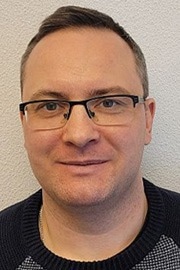
Dariusz Jarzabek is a professor and group leader at the Institute of Fundamental Technological Research of the Polish Academy of Sciences in Warsaw. He is also affiliated with the Faculty of Mechatronics at Warsaw University of Technology. His research focuses on the micromechanics of materials, particularly high and medium entropy alloys, nanoindentation, and advanced surface engineering techniques. Prof. Jarzabek has published extensively on topics including ion implantation, nitriding, and microstructural characterization using SEM and TEM. He earned his PhD in mechanical engineering and has made significant contributions to the understanding of mechanical behavior in complex alloy systems.
About Martina Schenkel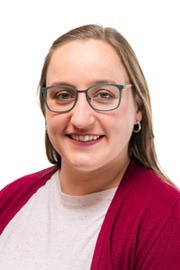
Martina Schenkel is an Applications Development Engineer at ZEISS Microscopy, specializing in solutions for nanoscience and nanomaterials. She works closely with FIB-SEM technologies, including the ZEISS Crossbeam, laser FIB, and cryo FIB systems. Her expertise lies in developing user-focused workflows for TEM lamella preparation, including the use of automation tools that enhance research productivity and reproducibility. With a strong technical background in electron microscopy and materials analysis, Martina supports the global research community in applying cutting-edge microscopy solutions to real-world challenges.

This information has been sourced, reviewed, and adapted from materials provided by ZEISS Microscopy GmbH.
For more information on this source, please visit ZEISS Microscopy GmbH.
Disclaimer: The views expressed here are those of the interviewee and do not necessarily represent the views of AZoM.com Limited (T/A) AZoNetwork, the owner and operator of this website. This disclaimer forms part of the Terms and Conditions of use of this website.