A preclinical mouse study found that a light-activated nanomedicine strategy helped pancreatic tumors take up more irinotecan, lowered key resistance mechanisms, and triggered broader antitumor immune activity.
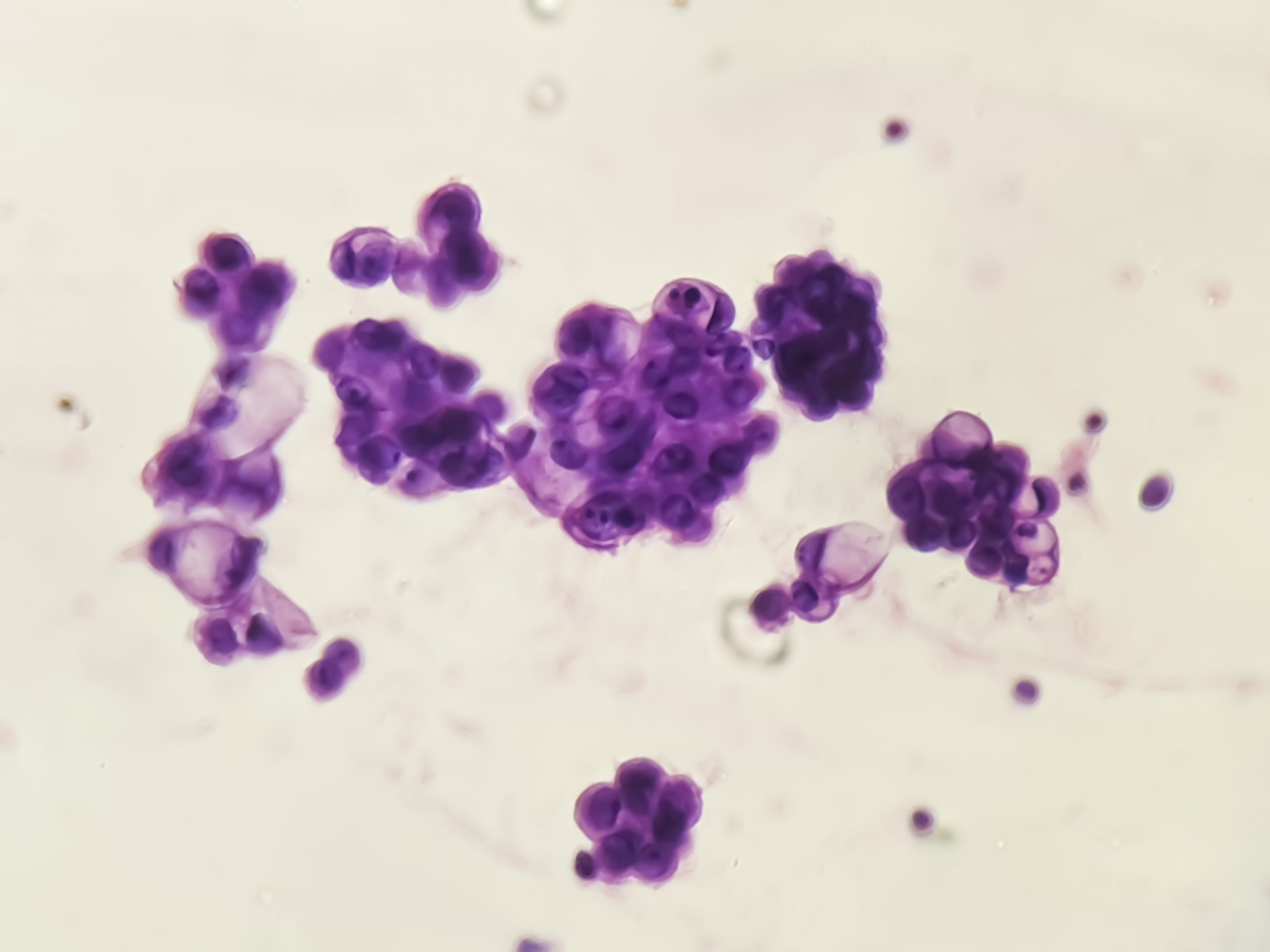 Study: Photodynamic Priming and Minocycline Overcome Chemoresistance by Reprogramming the Pancreatic Tumor Immune Microenvironment In Vivo. Image Credit: Saiful52/Shutterstock.com
A study published in Advanced Science describes a nanotechnology-based treatment strategy for pancreatic ductal adenocarcinoma (PDAC), one of the hardest cancers to treat. In mouse models, the approach combined photodynamic priming, minocycline-based tumor sensitization, and light-triggered irinotecan delivery through photoactivatable liposomes.
These interventions showed successful in improving drug accumulation in tumors, reducing resistance markers, and promoting a more immune-active tumor environment.
Saving this for later? Download a PDF here.
Why Pancreatic Cancer Resists Treatment
PDAC is an aggressive cancer, with standard chemotherapy treatment only offering limited benefit. That poor response stems from several resistance mechanisms acting at the same time. A dense fibrotic stroma blocks drug penetration, DNA repair pathways blunt chemotherapy damage, and drug efflux transporters reduce intracellular drug levels. The tumor microenvironment is also strongly immunosuppressive, limiting the infiltration and function of immune cells that might otherwise attack the cancer.
Most existing strategies address only one of these barriers at a time. This study instead tested a multi-component approach designed to tackle several of them in sequence.
The Dual-Priming Strategy
The researchers built a nanoplatform called photoactivatable multi-inhibitor liposomes, or PMILs. These liposomes carry irinotecan in their core and embed the photosensitizer benzoporphyrin derivative within the lipid bilayer. When exposed to light, the photosensitizer generates reactive oxygen species that disrupt the liposome membrane and trigger localized drug release in the tumor.
Minocycline was given before light treatment to inhibit DNA repair pathways, particularly through downregulation of Tdp1. The full “1–2–3” sequence consisted of minocycline priming, photodynamic priming, and chemotherapy.
The study evaluated this strategy in orthotopic PDAC mouse models and used biodistribution studies, pharmacokinetics, immunofluorescence, flow cytometry, and histology to track drug delivery, stromal remodeling, immune responses, and treatment outcomes. Additional bilateral tumor experiments were used to assess systemic antitumor effects in untreated distant tumors.
Less Resistance and Increased Drug Delivery
One of the clearest findings was improved drug delivery. Intratumoral irinotecan levels increased up to fourfold compared with PMILs without light. The authors linked this improvement to higher vascular permeability and reduced physical barriers within the tumor.
The treatment also affected two important resistance pathways. Expression of Tdp1, a DNA repair enzyme associated with irinotecan resistance, fell by about 76 %. Expression of ABCG2, a drug efflux transporter that lowers intracellular exposure to irinotecan and its active metabolite, fell by up to 77 %. Both changes point to stronger intracellular drug retention and greater chemotherapy effect.
At the same time, the tumor stroma became less restrictive. Fibroblast activation and collagen deposition both declined, leaving a less rigid extracellular matrix that may better support drug penetration and immune cell access.
Turning A “Cold” Tumor More Immune-Active
The treatment increased cytotoxic CD8+ T cells and raised levels of IFN-γ, TNF-α, and granzyme B, all markers associated with stronger antitumor function. Regulatory T cells, which suppress immune responses, decreased substantially. The results suggest a shift away from the immune-excluded state typical of PDAC and toward a more inflammatory, treatment-responsive tumor environment.
Innate immunity also changed. Macrophages showed a more pro-inflammatory, M1-like profile, while natural killer cell activity increased. In addition, the researchers found evidence of dendritic cell activation in the spleen, indicating that the immune effects were not confined to the treated tumor alone.
Survival And Distant-Tumor Effects
In vivo tests showed these biological changes translated into meaningful preclinical benefit. The therapy improved tumor control, extended survival in treated mice, and suppressed growth in distant untreated tumors in bilateral models, consistent with an abscopal effect.
The strongest survival benefit was seen in mice that received dual priming followed by additional cycles of minocycline plus nanoliposomal irinotecan.
PDAC Resistance as a Layered Problem
The work addresses PDAC resistance as a layered problem rather than a single obstacle. By combining light-triggered local drug release, DNA repair inhibition, stromal remodeling, and immune activation, the platform appears to improve both chemotherapy sensitivity and antitumor immunity in the same system.
The translational case is strengthened by the use of clinically familiar agents, including minocycline and irinotecan. The authors note that photodynamic priming is already under clinical investigation, which adds relevance to the platform.
However, the findings are preclinical. The study did not directly test long-term immune memory, and the authors note that broader molecular adaptations were not fully evaluated. There is also a practical challenge for translation: photodynamic priming requires direct tumor illumination, so use in deep pancreatic tumors will depend on effective light-delivery strategies.
Journal Reference
Cabral, F. V., et al. (2026). Photodynamic Priming and Minocycline Overcome Chemoresistance by Reprogramming the Pancreatic Tumor Immune Microenvironment In Vivo. Advanced Science, e75291. DOI: 10.1002/advs.75291
Disclaimer: The views expressed here are those of the author expressed in their private capacity and do not necessarily represent the views of AZoM.com Limited T/A AZoNetwork the owner and operator of this website. This disclaimer forms part of the Terms and conditions of use of this website.