Most motion applications are well served by precision mechanical bearings. However, applications requiring exceptional positioning accuracy, superior geometric performance, outstanding angular repeatability, or ultra-smooth motion often exceed the capabilities of conventional bearing systems. In these cases, even submicron bearing rumble can compromise performance and process quality.
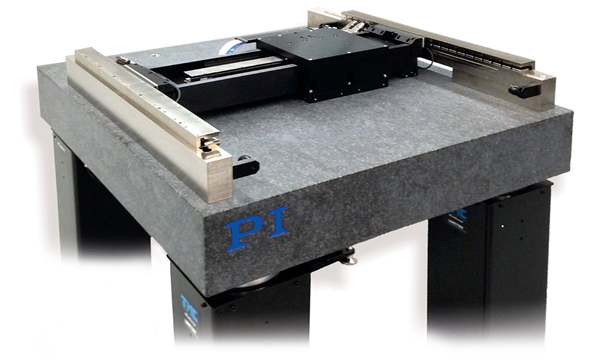
Image Credit: PI (Physik Instrumente) LP
An air-bearing positioning stage can address these limitations. These linear or rotary motion systems float on a thin film of air and use one of several preload methods to maintain stiffness and stability. By nearly eliminating mechanical contact, air bearings also minimize wear, friction, hysteresis, and bearing-induced vibration.
The following are the most common signs that an air-bearing stage may be the right choice for an application (Figure 1).
1. Frictionless High-Precision Positioning
In linear applications, a direct-drive motor and high-resolution encoder can position an air-bearing carriage with nanometer-level precision. In rotary applications, positioning performance can reach tenths of an arcsecond.
Because air bearings operate without mechanical contact, friction, stiction, hysteresis, and reversal error are extremely low. This supports highly repeatable motion for demanding inspection, metrology, and production processes. The absence of stiction also improves resolution and reduces in-position hunting, or limit cycling. As a result, repeatability can often be achieved within only a few encoder counts.
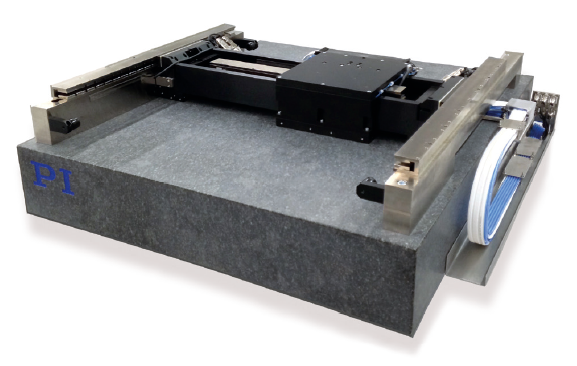
Figure 1. A high performance true-planar XY air bearing stage with active yaw control. Three-motor and four-motor designs are avaialable. Applicaitons are found in the optics, photonics and semiconductor industry. Image Credit: PI (Physik Instrumente) LP
Comparable positioning accuracy can also be achieved with piezo-driven, flexure-guided stages, although typically over much shorter travel ranges. Magnetic-levitation stages provide another noncontact alternative for applications requiring longer travel and ultra-smooth motion.
2. Velocity Stability and Scanning
Air-bearing stages can maintain exceptionally smooth, controlled motion, with velocity stability better than 0.01%. The absence of mechanical bearing elements minimizes friction, velocity ripple, and bearing-induced disturbances. This makes air-bearing systems ideal for applications requiring continuous motion at tightly controlled speeds, including inertial sensor testing, tomography, wafer scanning, and surface profiling.
3. Significantly Low Error Motions
Linear air-bearing stages provide exceptionally straight and flat motion, with pitch, roll, and yaw errors measurable in tenths of an arcsecond. Rotary air-bearing stages can achieve tilt, or wobble, errors below one arcsecond.
Air bearings also deliver highly repeatable angular performance, supporting consistent product quality and dependable measurements. These characteristics are especially valuable in semiconductor inspection, mirror and optics metrology, and medical-device manufacturing.
4. Travel Requirements are Greater Than a Flexure Stage Can Provide
Piezo-driven, flexure-guided stages and actuators are well suited for many high-precision positioning applications but are generally limited to travel ranges of only a few millimeters. For applications requiring 25 mm or more of linear travel, air-bearing stages are often the better choice (Figure 2). PI offers standard linear air-bearing systems with travel ranges up to one meter, with even longer travel available through custom designs.
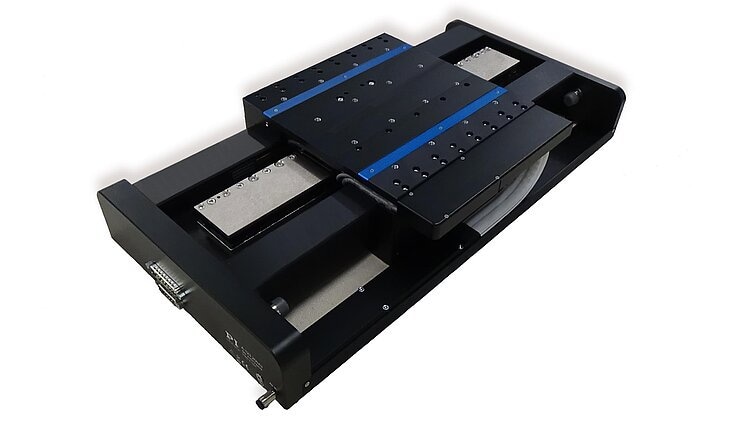
Figure 2. The A-123 air bearing linear stage provides a travel range up to 750mm. Image Credit: PI (Physik Instrumente) LP
5. Wobble-Free or High-Speed Rotary Motion is Needed
Rotary air bearings (Figure 3) provide high stiffness and exceptionally precise rotational motion. Compared with most mechanical bearing systems, they produce substantially lower radial, axial, and wobble error motions. The absence of rolling elements also enables exceptionally smooth, low-disturbance rotation.
Rotary air-bearing stages can typically operate at speeds up to 600 rpm. For applications requiring higher rotational speeds, air-bearing spindles are generally used. Depending on the application, rotary air bearings can be mounted with the table plane oriented horizontally, as a turntable, or vertically.
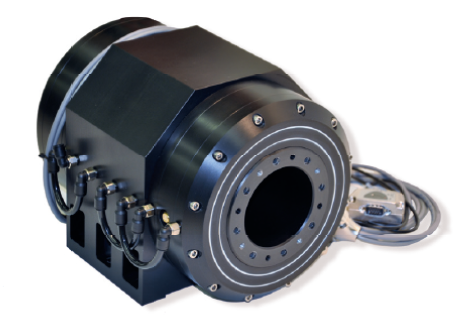
Figure 3. Rotary air bearing. Image Credit: Nelson Air
6. No Maintenance and Recalibration Issues
Because air-bearing stages have no contacting bearing components, they experience virtually no mechanical wear and require no routine lubrication. As a result, the positioning system is essentially maintenance-free.
The absence of wear also provides exceptional long-term stability. Positioning and geometric performance remain consistent throughout the system’s service life, minimizing recalibration requirements. Moving cables and air hoses are typically the only components subject to wear.
7. Clean Room Compatiblity
Because air bearings operate lubricant-free and wear-free, they generate virtually no particulates that could become airborne. This makes them especially well suited for cleanroom applications such as wafer inspection, optics metrology, flat-panel display inspection, and biopharmaceutical research. For applications with particularly stringent cleanliness requirements, the air bearing can be operated with 99.9% pure nitrogen.
8. Precise Force Control and Sensing
Air bearings operate with virtually no friction. When combined with a direct-drive motor or voice-coil actuator, they are therefore well suited for sensitive force-control applications (Figure 4). Typical uses include handling delicate components, materials testing, and coordinate-measuring systems.
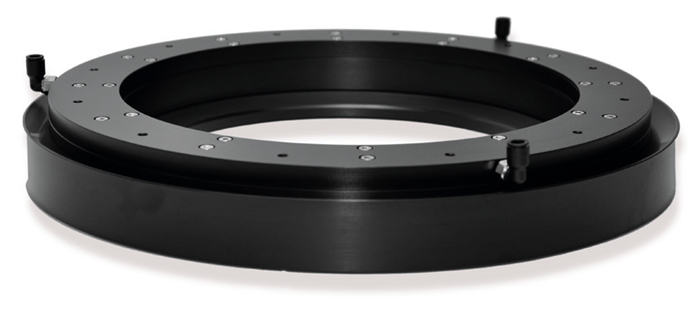
Figure 4. Spherical air bearings can be used to simulate zero gravity. Image Credit: Nelson Air
9. When to Choose an Alternative to Air Bearings
9.1 Vacuum Environments
Although air bearings can be engineered for operation in vacuum environments, doing so is technically challenging and often impractical. For most vacuum applications, mechanical bearings, magnetic-levitation systems, or magnetic levitation stages or flexure-guided stages are better alternatives (Figure 5).
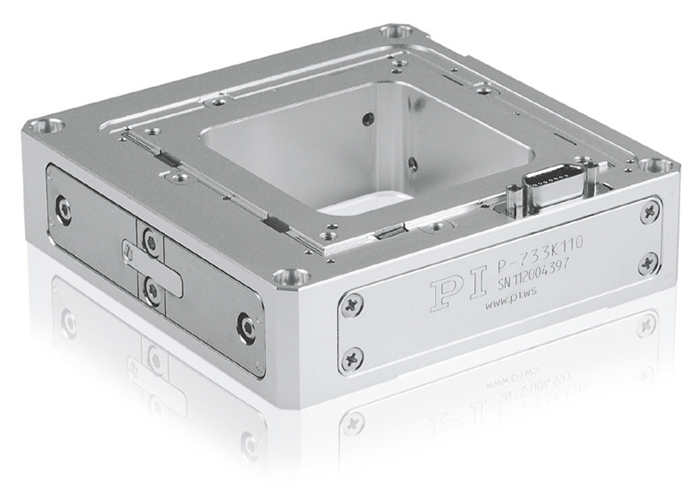
Figure 5. A flexure-guided, UHV-compatible XYZ piezo nanopositioning stage. Image Credit: PI (Physik Instrumente) LP
9.2 Extremely Dirty Applications
Air bearings are designed for clean operating environments. Applications that generate significant amounts of dust, dirt, debris, or process fluids are generally not well suited, as contaminants can affect bearing performance and long-term reliability.
9.3 Compressed Air or Nitrogen is Not Available
Air bearings require a continuous supply of clean, dry compressed air or nitrogen to maintain the air film that supports motion. If the application cannot provide a reliable gas supply, an air-bearing system is not a practical solution.
Experience with Air Bearing Technology
PI draws on decades of air-bearing expertise to deliver complete precision motion-control and positioning systems. In addition to five decades of experience in nanometer-level motion, PI combines advanced air-bearing design, direct-drive motor technology, high-resolution encoders, and sophisticated control algorithms to develop solutions optimized for accuracy, stability, throughput, and long-term reliability.