Advances in nanoparticle and colloidal science are playing an increasingly important role in driving innovation across pharmaceuticals, healthcare, advanced manufacturing, and materials research. In our latest Nanoparticles and Colloids Editorial eBook, we’ve brought together a curated collection of technical articles, application-focused insights, and emerging research that explore how nanoscale materials are characterized, monitored, and applied across a wide range of industries.

What’s Inside the Nanoparticles and Colloids eBook?
This eBook explores the growing importance of nanoparticle and colloidal systems in enabling more precise measurement, improved process control, and enhanced material performance. As nanomaterials continue to advance across both research and commercial applications, reliable characterization techniques and scalable manufacturing approaches are becoming increasingly critical.
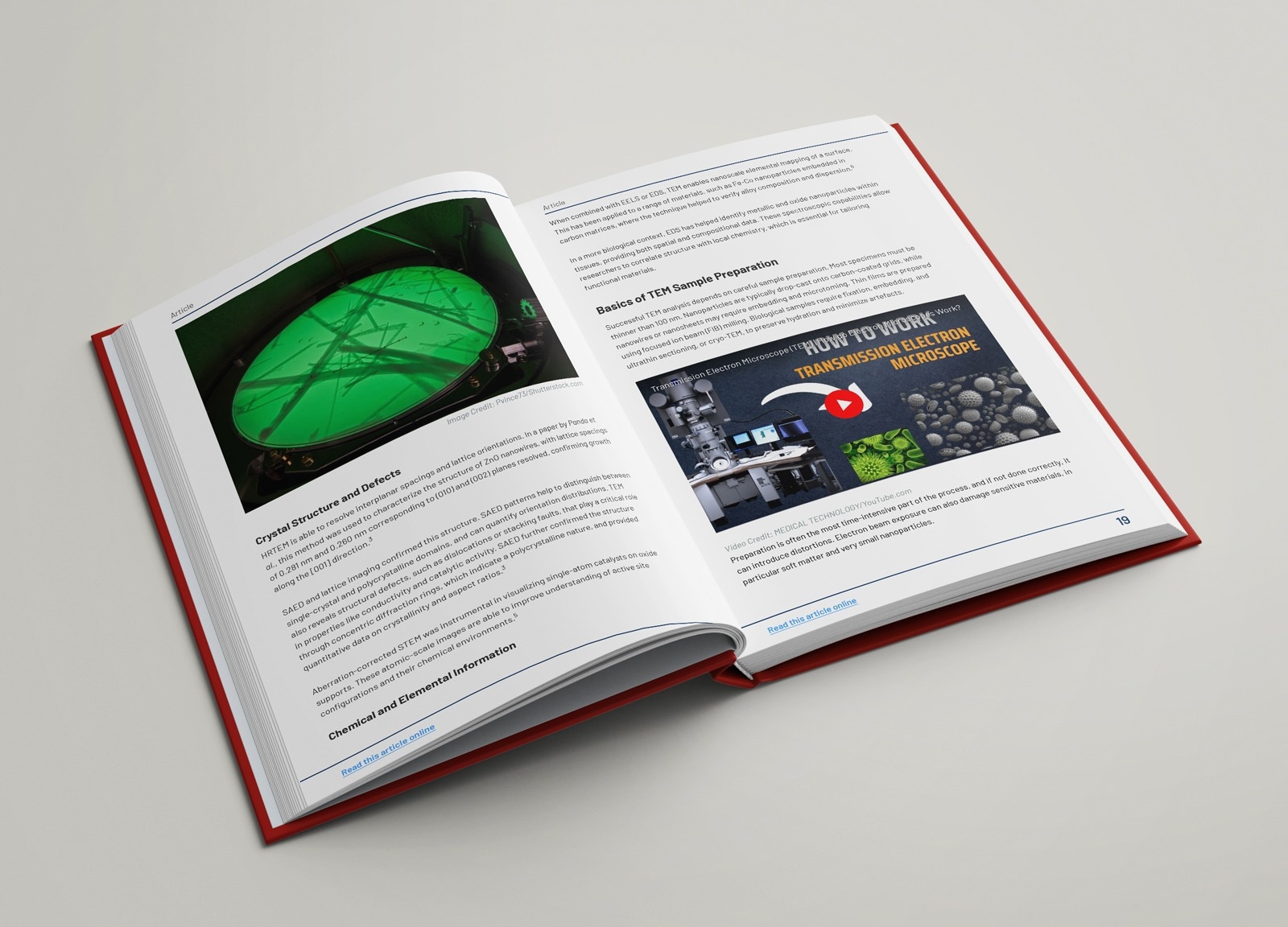
The collection examines how analytical methods such as dynamic light scattering and transmission electron microscopy support accurate nanoparticle characterization, while emerging process monitoring technologies help manufacturers achieve greater consistency and control in nanodispersion production environments.
It also highlights the expanding role of nanomaterials in healthcare and biomedical applications, from antimicrobial PPE technologies to ultrasound-activated nanoparticles designed to support cancer treatment and immune response. Alongside these developments, the eBook explores broader innovations in nanomaterials, including additive nanomanufacturing, zero-dimensional nanomaterials, and the ongoing challenges associated with scaling nanofiber technologies for industrial adoption.
Whether you work in pharmaceutical development, advanced materials research, process engineering, or nanotechnology innovation, this eBook provides valuable insight into the technologies and applications shaping the future of nanoparticles and colloids.

This information has been sourced, reviewed and adapted from materials provided by InProcess-LSP.
For more information on this source, please visit InProcess-LSP.