Oct 5 2009
Limit values for fine dust emissions are based on total particle weight. It is the ultra-fine particles, however, that are particularly harmful to health. A new technique separates them by size and identifies their composition - directly where they arise.
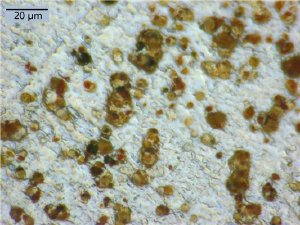 Tracing ultra-fine dust
Fine particle emissions have been the subject of heated debate for years. People who live near industrial plants see the smoke being discharged into the atmosphere and wonder how harmful it is. But visible emissions are not always the most harmful. The highest risk is posed by fine dust particles which can easily penetrate the human organism. These ultra-fine particles are difficult to measure, however, because they are less than 100 nanometers in diameter.
Research scientists at the Fraunhofer Institute for Laser Technology ILT in Aachen have developed a technique by which the composition of such particles can be precisely analyzed. “The statutory limit values for fine particle emissions are based on the total particle weight,” explains Dr. Cord Fricke-Begemann, project manager at the ILT. “Large particles are, however, much heavier than small ones. Weight measurements do not provide any information on the quantity of ultra-fine particles in the fine dust, but they are often more harmful than the larger particles.”
The measurement technique developed by the research scientists consists of two steps. A gas stream separates the particles into size classes before they are collected on filters. Their composition is then examined by means of laser emission spectroscopy. “We are therefore able to identify harmful heavy and transition metals, such as zinc, in the fine dust, and also to ascertain the particle size at which they become particularly enriched,” explains Fricke-Begemann. A key aspect of the method is that it delivers the results in less than 20 minutes. What’s more, it can work at a high throughput rate and enables measurements to be taken directly on site – e.g. in steel plants. Emission values can be measured and monitored in real time during production thanks to a further development of the technique in which the particles are continuously drawn off via an air tube and analyzed.
All industrial plants produce fine dust emissions, and every process leaves behind a characteristic “fingerprint” of the particle composition and size distribution. With their measurement method the scientists can test the air in nearby residential areas and identify where the particles are from. They can also help to develop strategies for reducing emissions from the plants concerned.