Retired Lawrence Livermore National Laboratory lab physicist and computational pioneer Berni Alder has received the National Medal of Science. President Obama on Thursday named nine eminent researchers as recipients of the National Medal of Science, the highest honor bestowed by the United States government on scientists, engineers, and inventors. The awards will be presented Oct. 7 at a White House ceremony.
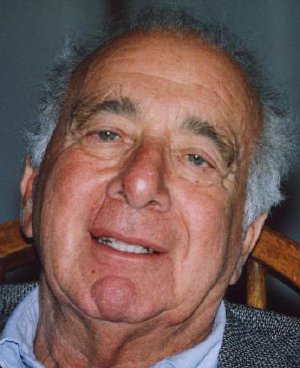 Berni Alder
Alder is widely regarded as the founder of molecular dynamics, a type of computer simulation used for studying the motions and interactions of atoms over time. His expertise includes changing kinetic molecular theory by showing that simulations can significantly affect a scientific field. In 1980, Alder was one of the pioneers who used large-scale simulations to solve quantum mechanics problems.
Alder said going into the field of molecular dynamics was “a relatively natural thing to do. The rest of the world didn’t have access to the big computers.”
The National Medal of Science was created by statute in 1959 and is administered for the White House by the National Science Foundation. Awarded annually, the medal recognizes individuals who have made outstanding contributions to science and engineering. Nominees are selected by a committee of presidential appointees based on their advanced knowledge in, and contributions to, the biological, behavioral/social, and physical sciences, as well as chemistry, engineering, computing and mathematics.
“These scientists, engineers and inventors are national icons, embodying the very best of American ingenuity and inspiring a new generation of thinkers and innovators,” President Obama said. “Their extraordinary achievements strengthen our nation everyday — not just intellectually and technologically, but economically, by helping create new industries and opportunities that others before them could never have imagined.”
Alder did his undergraduate work at UC Berkeley and, in the late 1940s, studied for his Ph.D. at the California Institute of Technology, where he met computer designer Stan Frankel. Using CalTech’s mechanical computers, Alder and Frankel developed a computer technique, now called the Monte Carlo method, for calculating results from random sampling.
Alder continued developing his ideas at UC Berkeley and became a consultant to Lawrence Livermore when it opened in 1952 under Edward Teller’s leadership. At the time, the connection to Livermore provided access to some of the only electronic computers in the nation. Alder joined the national lab full-time in 1955 and published his pioneering work on molecular dynamics in 1956.
In 1963, Alder helped found the UC Davis Department of Applied Science, which offers undergraduate and graduate programs in physical sciences and engineering at UC Davis and at Livermore. Among numerous other honors, he also is a member of the National Academy of Sciences.
Today, molecular dynamics and Monte Carlo methods are widely used across a wide range of sciences, from fundamental physics to molecular biology. But at the time of Alder’s work, those methods marked a radical change in how scientists thought about such problems.
“It certainly exceeded any expectation I had to how far we could go and how big the computers would get,” Alder said. “In the early days, we could do 100 particles in one hour on the Univac. Now, we can now do a trillion particles in an hour.”
Alder now works with the Lab’s Quantum Simulations Group. At 84, Alder still works three afternoons a week at Livermore and two afternoons a week at UC Berkeley. “There are still problems I would like to solve. At Livermore there are some young people who are willing to work with me and help me solve some of these problems.”
Just last year, Alder was inducted into the American Academy of Arts and Sciences. He joined the ranks of Lab physicist Claire Max, LLNL founding father Edward Teller and former Science and Technology Principal Associate Director Cherry Murray, who also earned that honor.
This year’s other recipients of the National Medal of Science are:
Francis Collins, National Institutes of Health, MD
Joanna Fowler, Brookhaven National Laboratory, NY
Elaine Fuchs, The Rockefeller University, NY
James Gunn, Princeton University, NJ
Rudolf Kalman, Swiss Federal Institute of Technology, Zurich
Michael Posner, University of Oregon, OR
JoAnne Stubbe, Massachusetts Institute of Technology, MA
J. Craig Venter, J. Craig Venter Institute, MD & CA
Founded in 1952, Lawrence Livermore National Laboratory is a national security laboratory, with a mission to ensure national security and apply science and technology to the important issues of our time. Lawrence Livermore National Laboratory is managed by Lawrence Livermore National Security, LLC for the U.S. Department of Energy's National Nuclear Security Administration.