Julius Jellinek of the U.S. Department of Energy's (DOE) Argonne National Laboratory has been elected a recipient of the prestigious Humboldt Research Award, known also as the Humboldt Prize, by the Alexander von Humboldt Foundation in Germany for his extensive groundbreaking work in physics and chemistry of finite-size systems.
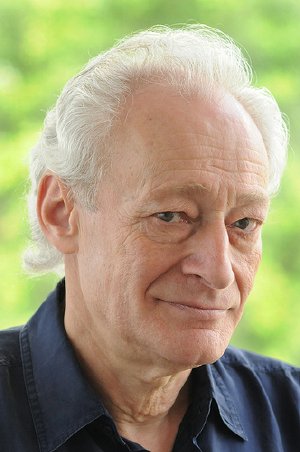 Julius Jellinek, an Argonne scientist, won the Humboldt Prize for physics and chemistry of finite-size systems.
Jellinek is a Senior Scientist in the Chemical Sciences and Engineering Division at Argonne and a Senior Fellow at the University of Chicago/Argonne Computation Institute. He earned a Diploma with Distinction in theoretical physics from Uzhgorod University, in the former USSR, and a doctorate in chemical physics from the Weizmann Institute of Science, Rehovot, Israel.
After spending three years as a Weizmann Fellow at the University of Chicago, he joined Argonne in 1986 as an assistant scientist in charge of the theory component in the Cluster Studies Group and rose to the rank of senior scientist in 1997. From 2000 to 2005, he served as the group leader of the Cluster Studies Group.
According to the Humboldt Foundation, this award is conferred on internationally renowned scientists in recognition of lifetime achievements in research; those whose fundamental discoveries and new theories or insights have had a significant impact on their own discipline and who are expected to continue producing cutting-edge innovations in the future. The nominations must be made by established academics in Germany.
Jellinek is a world leader in the area of atomic and molecular clusters, the scientific basis for the field of nanoscale materials. He has made many seminal contributions to the field by developing new fundamental concepts and theoretical/computational methodologies and tools of analysis, and applying them to a broad spectrum of systems and phenomena.
Among his most notable contributions are: Explorations of chemical reactivity at the nanoscale; investigations of the size-evolution of structural, dynamical and electronic properties of nanosystems; studies of thermal stability, phases and phase transitions in finite-size systems; explorations of the intriguing phenomenon of size-induced transition to metallicity and half-metallicity; novel analyses of dynamical complexity; development and applications of computational electron spectroscopy; and others.
His pioneering work on nanoalloys played a central role in the establishment of this new area of research. The fundamental concepts and methodologies he has introduced have found applications in other fields as well. He is the editor of the book Theory of Atomic and Molecular Clusters with a Glimpse at Experiments (Springer, 1999).
Winners of the Humboldt Research Award also are invited for a period of up to one year to carry out projects of their own choice in Germany in collaboration with German specialist colleagues. Jellinek plans to work on fundamental problems related to nanocatalysis, primarily with scientists at the Fritz Haber Institute, Berlin, and the Institute of Nanotechnology, University of Karlsruhe.