The unique behavior of nanoparticles is driven by their size, surface structure, and interaction dynamics, all of which must be measured and characterized with high precision.
Nanoparticles interact, assemble, and function in their surroundings depending on parameters such as particle size, distribution, and stability. To accurately evaluate the properties of nanoparticles, researchers must use methods that reflect how particles exist and behave in their natural state.
Dynamic light scattering (DLS) is a frequently used technique for determining the size of nanoparticles in suspension. It detects fluctuations in scattered light intensity induced by Brownian motion and uses the Stokes-Einstein equation to translate those fluctuations into a hydrodynamic dimension.
DLS is quick and non-destructive, and it reveals how nanoparticles operate in real-world situations. Several considerations make DLS the preferred approach for nanoparticle characterization, as detailed in the following sections:
Measures Nanoparticles in Their Native, Liquid Environment
Many nanomaterials are intended to function in liquid environments, such as colloids, emulsions, or biological formulations. Unlike microscopy-based approaches, which need drying or vacuum conditions, DLS analyzes particles directly in suspension, retaining their natural behavior and ensuring that the results represent real-world settings.
This type of analysis allows researchers to investigate how nanoparticles move and interact in the same environments in which they are produced, whether in buffers, biological fluids, or dispersions.
DLS accounts for the particle as well as any solvation or surface layer that affects its mobility by measuring its hydrodynamic size.
The end result is a measurement that accurately represents real-world performance. Furthermore, because DLS is non-destructive, materials can be examined multiple times or used for supplementary investigations, such as zeta potential or microscopy, without loss or change.
Fast, Simple, and Efficient Measurements
DLS combines analytical precision with easy operation, making it ideal for nanoparticle characterization. Sample preparation is often minimal, involving only dilution to an acceptable concentration and, if necessary, light filtration to remove dust or aggregates.
Measurements may be conducted in minutes. This efficiency facilitates rapid screening across different formulations and allows for easy monitoring of nanoparticle stability throughout nanomaterial development. In addition, since DLS requires very small sample volumes (typically in the microliter range), it is ideal for working with expensive or limited quantities of nanomaterials.
Provides Hydrodynamic Size and Polydispersity Information
In nanoparticle characterization, size information is substantially more than just an average.
The hydrodynamic diameter, measured using DLS, describes how a nanoparticle moves through its surroundings by taking into consideration both the solid particle and the solvent or surface layers that influence its mobility.
The polydispersity index (PDI), similarly generated by DLS, complements the hydrodynamic diameter by describing the breadth or narrowness of the size distribution. Low numbers denote a homogeneous population, whereas high levels suggest heterogeneity or aggregation.
Tracking variations in DLS-derived size and PDI over time, or under different pH, temperature, or ionic strength conditions, provides a clear picture of nanoparticle stability and projected performance during storage or usage.
Sensitive and Statistically Reliable
Accurate nanoparticle characterization requires resolving particles across a wide size range, and DLS may measure species from the sub-nanometer scale to several micrometers, depending on the instrument configuration.
DLS detects scattering from multiple particles simultaneously, yielding ensemble data that represent the entire nanoparticle population rather than individual species.
ISO 22412:2025 reinforces the role of DLS in nanoparticle characterization by defining standard protocols for light-scattering size analysis and enabling uniform data creation across laboratories, research settings, manufacturing workflows, and regulatory submissions.
Complements Other Characterization Techniques
As DLS fits neatly into broader nanoparticle characterization workflows, it complements approaches that provide various sorts of information on particle size and structure.
Transmission Electron Microscopy (TEM) and Scanning Electron Microscopy (SEM) provide direct visual detail on particle shape and morphology. In contrast, Nanoparticle Tracking Analysis (NTA) produces number-based size distributions and concentration data.
These methodologies, together with DLS's fast, in-solution measurements, contribute to a more thorough knowledge of nanoparticle systems.
Elevating Nanoparticle Characterization with DLS Technology
DLS is valued for its quickness, dependability, and applicability to real-world scenarios. It provides exact information regarding hydrodynamic size, distribution, and stability, enabling scientists to track how nanoparticles evolve in diverse settings or over time.
These advantages establish DLS as a stable and dependable technique for nanoparticle characterization, enabling consistent assessment of size-related features across various formulations. DLS, with its sensitivity, simplicity, and non-destructive nature, is a practical solution for both research and production environments.
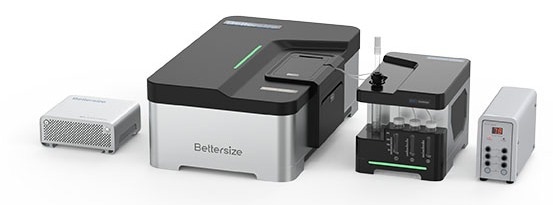
Image Credit: Bettersize Instruments
Modern DLS instruments, such as Bettersize's BeNano 180 Zeta Max, use enhanced optics, intelligent backscattering detection, and compliance with ISO 22412:2025 to provide precise and reproducible nanoparticle measurements.
Laboratories working with suspensions, emulsions, or other colloidal systems can use this level of precision to inform formulation and quality control decisions.

This information has been sourced, reviewed, and adapted from materials provided by Bettersize Instruments.
For more information on this source, please visit Bettersize Instruments.