Sponsored by SemplorReviewed by Olivia FrostNov 16 2026
Lithium cobalt oxide (LiCoO2), sometimes called lithium cobaltite, is a key material in the production of lithium-ion batteries. These batteries are predominantly used as power sources for computers, consumer electronics, and communications equipment.
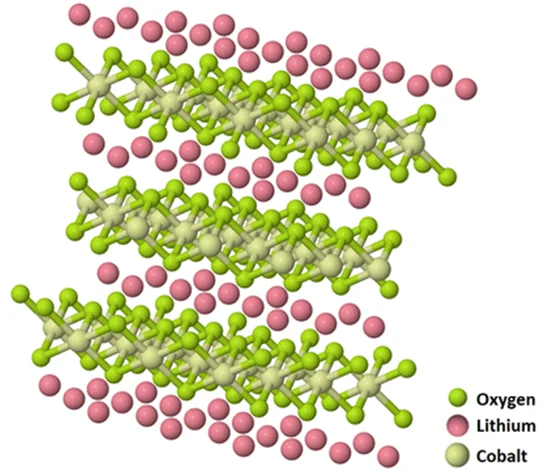
Figure 1. Schematic layered LiCoO2 structure. Image Credit: Ossila
First developed as a substitute for lithium metal cathodes, LiCoO2 offers enhanced capacity and stability, essential for the requirements of modern electronic devices.
The material’s value in the industry is underscored by its constant development and regular application, increased by its high gravimetric and volumetric energy density and outstanding operational potential.
LiCoO2 is characterized by its layered structure, where cobalt atoms are found within layers of oxygen in a trivalent oxidation state (Co3+). Lithium cations (Li+) are present among these cobalt-oxygen sheets, sustaining lithium-ion movement, which is crucial for battery operation.
For energy storage applications, the material is highly practical with an increased discharge voltage of approximately 4.2 V versus Li+/Li and a theoretical specific capacity of 274 mAh/g.
Challenges and Current Applications
Despite its advantages, LiCoO2 poses challenges in regard to structural stability and capacity retention during battery operation. An important change often happens in structural rearrangement and configurational entropy when half of the Li+ ions are removed when charging at around 4 to 4.2 V.
This shift often decreases practical capacity by around 165 mAh/g, noticeably lower than its theoretical capacity. Mitigating and understanding these consequences is crucial for enhancing the lifespan and performance of batteries utilizing LiCoO2.
In the portable electronics battery sector, LiCoO2 is the leading battery material due to its unmatched energy density and ease of processing. Despite this, variations in particle size and distribution strongly influence overall battery performance, governing the rate of capacity fading and transport efficiency.
Microscopic examination of LiCoO2, achieved using techniques such as scanning electron microscopy (SEM), is irreplaceable in the development of battery technology. The NANOS tabletop SEM functions remarkably well for this purpose.
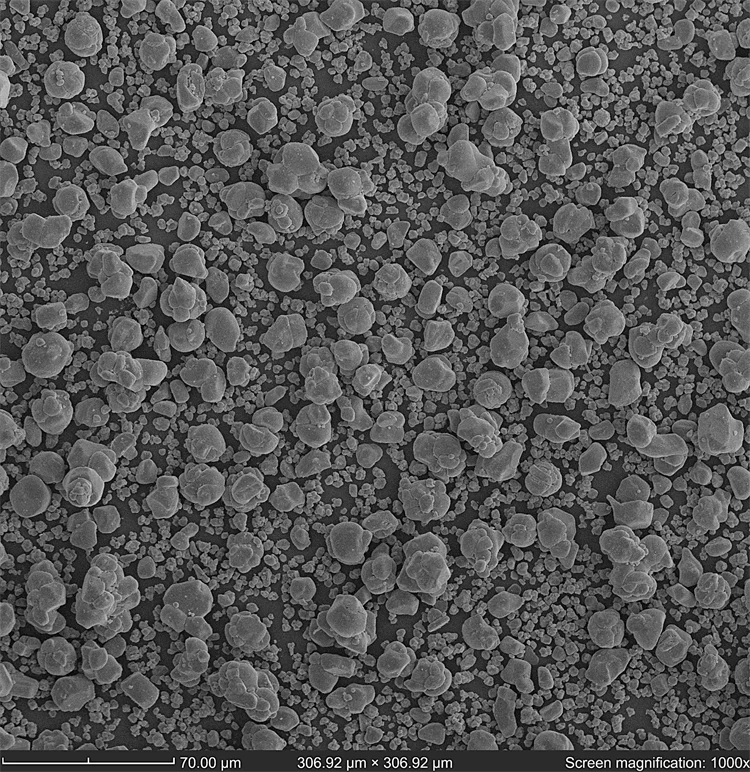
Figure 2. BSD image of LiCoO2 particles. Image Credit: Semplor
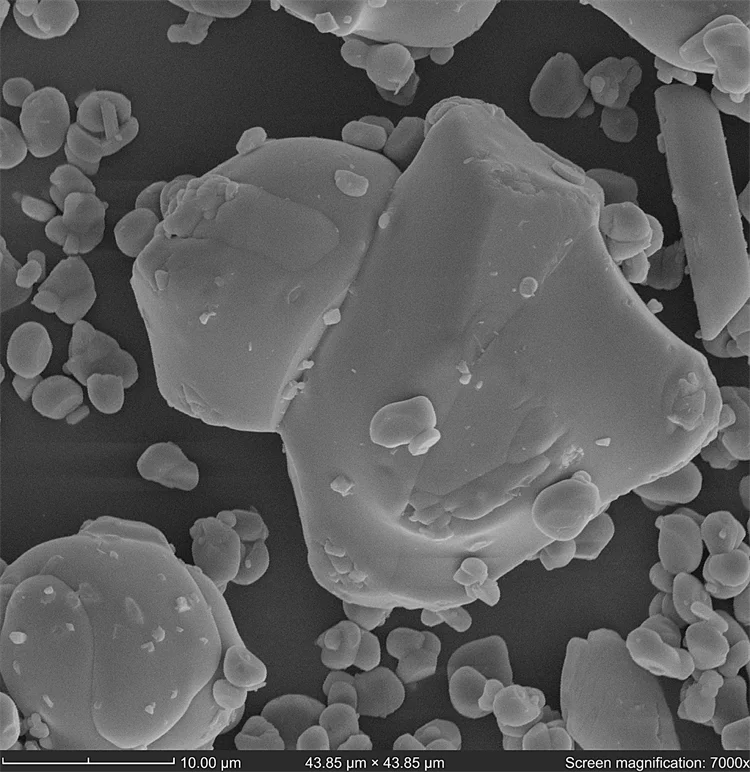
Figure 3. BSD image of an LiCoO2 particle. Image Credit: Semplor
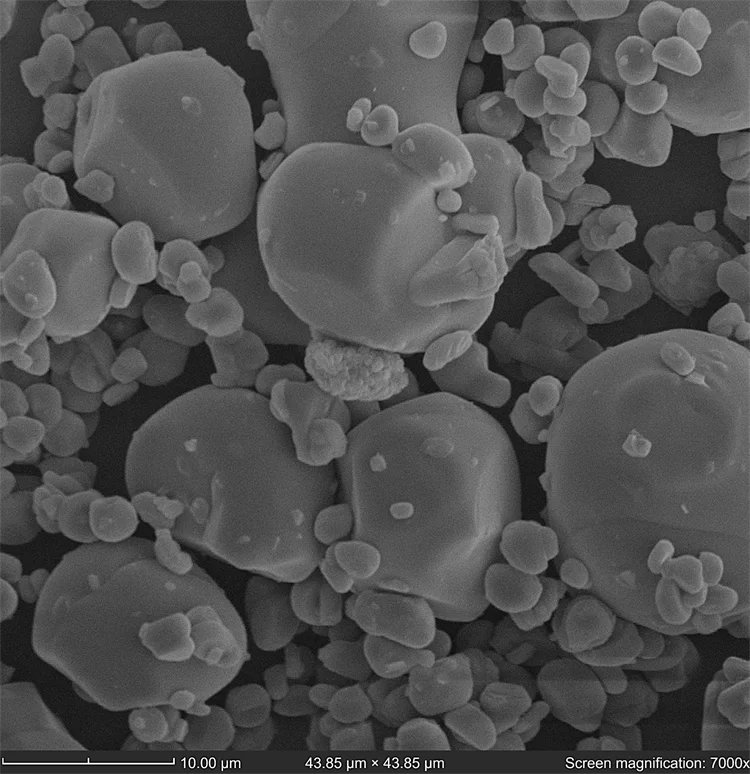
Figure 4. BSD image of smaller LiCoO2 particles. Image Credit: Semplor
As shown in Figures 2–4, the LiCoO2’s particle size is largely 10 µm, with smaller 2–3 µm particles also present.
A primary particle size (10 µm) suggests a generally uniform particle size distribution, which is beneficial for battery performance. Similarly sized particles can produce more uniform ion transport, packing density, and electrode porosity characteristics inside the battery.
Battery rate performance can be enhanced by smaller particles (2–3 µm) dispersed alongside larger particles. Smaller particles have a larger surface area relative to their volume, which can increase the rate of lithium-ion diffusion. This is particularly beneficial throughout high-rate discharging and charging, as it facilitates quicker access to the lithium ions.
Larger particles, like the 10 µm ones noted, normally undergo reduced stress during lithium deintercalation and intercalation, which could reduce the occurrence of mechanical cracking and deterioration compared to smaller particles. This may increase the stability of the battery cycle in the long term.

This information has been sourced, reviewed, and adapted from materials provided by Semplor.
For more information on this source, please visit Semplor.