CRAIC Technologies is the worlds leading developer of UV-visible-NIR range scientific instruments for microanalysis. These include the QDI series UV-visible-NIR microspectrophotometer instruments designed to help you non-destructively measure the optical properties of microscopic samples. CRAIC's UVM series microscopes cover the UV, visible and NIR range and help you analyze with sub-micron resolutions far beyond the visible range. CRAIC Technologies also has the CTR series Raman microspectrometer for non-destructive analysis of microscopic samples. And don't forget that CRAIC proudly backs our microspectrometer and microscope products with unmatched service and support.
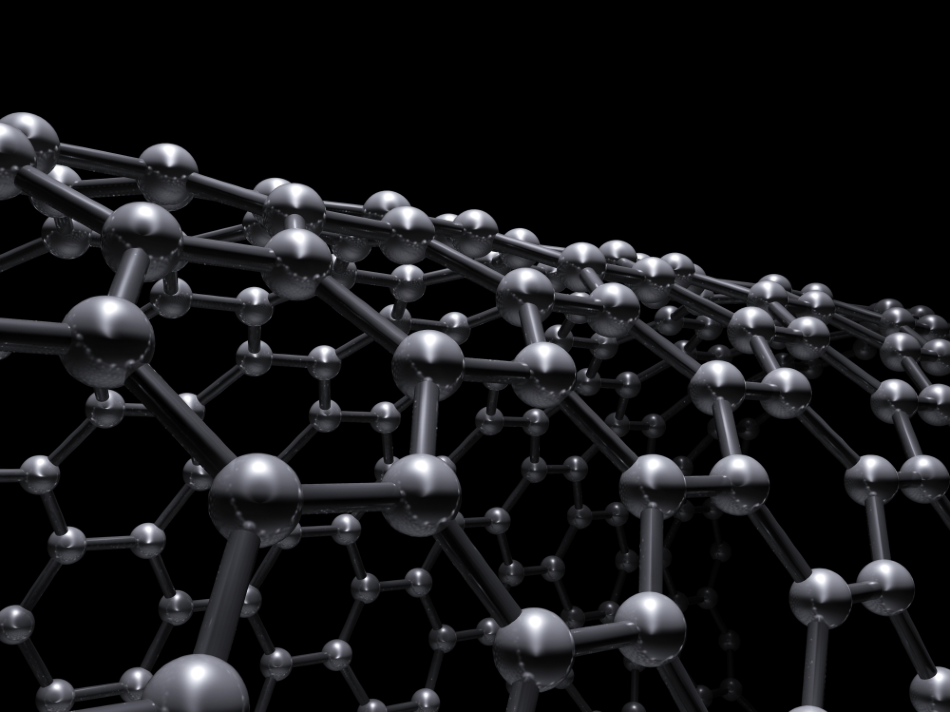
Image Credit: Shutterstock/Evannovostri
Introduction
Carbon nanotubes are extremely thin hollow cylinders made of carbon atoms. Their diameter can be as small as a few nanometers, while their length can be up to several millimeters. Nanotubes, depending on their structure, can be metals or semiconductors. They are also extremely strong materials and have good thermal conductivity. The above characteristics have generated interest in their possible use in nano-electronic and nano-mechanical devices. Other applications include optics, materials science, and architecture.
In this applications paper, we examine a sample of carbon nanotubes deposited on a circular glass cover slip. In particular, microspectral analysis in absorbance and reflectance, as well as micro imaging analysis at ultraviolet wavelengths are studied.
For microspectral analysis in absorbance and reflectance, 50 scans were averaged with each measurement, the sampling area was 14 by 14 microns, and the spectral range was 300 to 800 nm. In absorbance, the reference was acquired through an open area on the circular glass slide. For reflectance, an aluminum mirror was used as the reference. Measurements were made at several locations across the sample.
Imaging was also performed in both transmitted and reflected light. Since glass blocks ultraviolet light below ~320 nm in wavelength, the presence of the glass cover slip limited the choice of imaging wavelengths to above that cutoff. The imaging wavelengths were thus chosen as 320 nm and 365 nm. Imaging was performed with a 100X ultraviolet capable objective.
Microspectral Measurements
The following two figures display absorbance and reflectance microspectra of the carbon nanotube sample, as well as image captures. The black square in the center of each image is the sampling area (14 x 14 microns) and the field of view of each image is 480 x 430 microns.
.jpg)
.jpg)
Ultraviolet Imaging
The first two images below are shown in transmitted light at imaging wavelengths of 365 and 320 nm respectively. For reference, the field of view for these images is 84 x 64 microns.
.jpg)
.jpg)
Reflectance images at wavelengths of 365 nm and 320 nm are shown in the remaining two images below.
.jpg)
.jpg)
Results
Absorbance microspectra from the carbon nanotubes show a decrease in absorbance as the wavelength increases. This is indicative of the brown color of the sample in transmitted light. In reflected light, there is a gradual increase in reflectance with wavelength, as well as some variable peaks and valleys in wavelength below 450 nm that depend on the sample measurement location.
Ultraviolet imaging of the carbon nanotube sample reveals several distinct characteristics at the micro scale. If the sample had been mounted on a more ultraviolet transmitting material, such as quartz instead of glass, this would have allowed imaging at shorter wavelengths, and thus the opportunity to resolve smaller features.
Primary author: Dr. Jim Thorne

This information has been sourced, reviewed and adapted from materials provided by CRAIC Technologies.
For more information on this source, please visit CRAIC Technologies.