Apr 27 2009
Vicki Colvin of Rice University will give a talk titled "Nanotechnology: Its Promise and Challenges" at the U.S. Department of Energy's Brookhaven National Laboratory on Thursday, May 14, at 4 p.m. in Berkner Hall. The talk is free and open to the public. Visitors to the Laboratory age 16 and older must carry a photo ID.
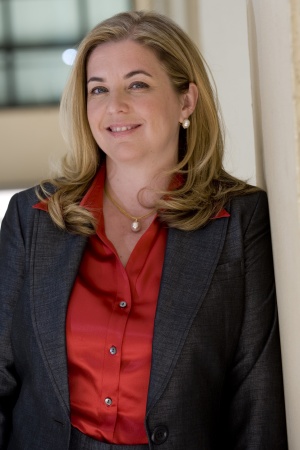 Vicki Colvin
Nanotechnology-enabled systems, with dimensions on the scale of a billionth of a meter, offer great promise for solving difficult social problems and creating enormous possibilities. Their small size, high surface area, and unique properties all provide high-value materials useful in existing industries, ranging from transportation to pharmaceuticals. Of particular interest is the potential for nanotechnology to treat cancer, clean water, and create clean energy technologies.
In addition to highlighting these innovations, the talk will also touch on the emerging debate about whether consumers want or need the lifestyle that nanotechnology may make possible. Some of these concerns are centered on the idea that nanomaterials may be a new kind of pollutant. In particular, the "safety by design" model emerging for nanomaterials' production may completely change traditional concepts of risk management.
Other issues relate to larger social concerns about whether nanotechnology could be used to enhance human performance or whether the new economies for manufacturing would disenfranchise poor people tied to the "non-nano" world. Healthy dialogue about these concerns can help create a more sustainable and socially acceptable industry.
Vicki Colvin received a Bachelor's degree in chemistry and physics from Stanford University in 1988 and a Ph.D. in chemistry from the University of California, Berkeley, in 1994. During her time at Berkeley, she was awarded the American Chemical Society's Victor K. LaMer Award for her work in colloid and surface chemistry. Colvin completed her postdoctoral work at AT&T Labs.
In 1996, Rice University recruited Colvin to expand its nanotechnology program. Currently, she is Rice's Kenneth S. Pitzer-Schlumberger Professor of Chemistry and Professor of Chemical & Bimolecular Engineering. She is also co-director of the Richard E. Smalley Institute for Nanoscale Science and Technology and director of the Center for Biological and Environmental Nanotechnology, both Rice University institutions.
Colvin has garnered numerous awards for her teaching abilities, including Phi Beta Kappa's Teaching Prize for 1998-1999 and the Camille Dreyfus Teacher Scholar Award in 2002. Also in 2002, she was named one of Discover magazine's "Top 20 Scientists to Watch," and she received an Alfred P. Sloan Fellowship. Her research in low-field magnetic separation of nanocrystals was named among the top five nanotech breakthroughs of 2006 by the Forbes/Wolfe Nanotech Report and resulted in her being named "Best and Brightest" honoree by Esquire magazine. A Fellow of the Association for the Advancement of Science, Colvin is the author of over 75 articles and holds patents to seven inventions.