Jacob Hooker, a chemist at the U.S. Department of Energy's (DOE) Brookhaven National Laboratory and resident of Mount Sinai, NY, will be honored as Brookhaven's "Inventor of the Year" by Battelle, the global science and technology company that, together with Stony Brook University, manages Brookhaven Lab. Hooker will be honored at Battelle's annual recognition program in Columbus, Ohio, on April 24, along with inventors from Battelle and from the four other laboratories it manages.
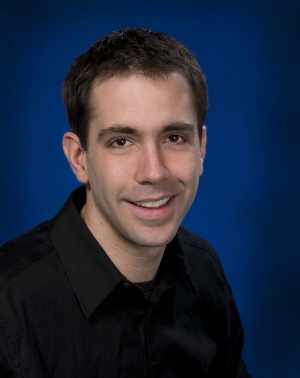
Hooker led research devising a simple, fast method for adding a radioactive “tag” to formaldehyde, a common organic chemical. Using this labeled formaldehyde, scientists can now synthesize a whole new class of radiotracers, compounds that can be tracked by positron emission tomography (PET) scanners to monitor the movement and interactions of a wide range of chemicals in the human body. These tracers may yield advances in understanding neurological disorders and diseases such as cancer.
“PET is an extremely valuable tool for understanding human physiology,” said Hooker. “But many, if not most, molecules people are interested in studying with PET cannot be radiolabeled right now, so there is a huge need for basic science to develop new strategies for making radiotracers. Our new method is part of that effort. It expands our tool kit of reagents and increases the number and types of compounds we can use to peer into the human body.”
The “tagged” atoms detected by PET scanners are challenging to incorporate in complex molecules due to their short-lived nature. Tracer molecules made from them must be synthesized and used quickly before the tracer signal disappears.
Like many existing methods for radiotracer synthesis, the new method incorporates a radioactive form of the element carbon, known as carbon-11, into the formaldehyde molecule. Carbon-11 atoms emit positrons -- particles similar to electrons but with a positive charge -- which can be tracked by a PET scanner. In many carbon-11 radiotracers, the radioactive tag is attached to “exterior” portions of the molecule rather than the carbon chains that make up the backbone of many biological molecules. Scientists have long sought ways to label this backbone, as it would greatly expand the kinds of tracers they could make. Since formaldehyde is involved in many chemical reactions that lead to the synthesis of organic, carbon-chain molecules, it has been a natural target for labeling because it can then be used to make other labeled organic compounds that can be administered to humans as radiotracers.
“Being recognized for this work is quite an honor,” said Hooker. “I feel fortunate to be part of a team working toward understanding neurochemistry through the development of new imaging technology.”
Hooker received his B.S. at North Carolina University and his Ph.D. from the University of California, Berkeley. He has won several scholarships and teaching awards and is currently a Distinguished Goldhaber Fellow at Brookhaven National Laboratory. Hooker has co-authored more than 20 peer-reviewed papers and his research has been highlighted in scientific news briefs and popular media.