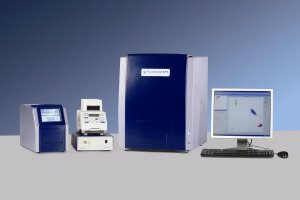
Fluidigm Corporation has announced that the U.S. Department of Agriculture's Agricultural Research Service (ARS) has purchased a Fluidigm microfluidic-based EP1™ System to help develop and validate focused 96- and 384-SNP (single-nucleotide polymorphism) panels for testing America's dairy and beef cattle. To ensure healthy cows and top quality product.
ARS scientists are collaborating with leading members of the U.S. biotechnology industry to develop low-cost, high-throughput SNP panels that can genetically indicate cattle growth rates, disease resistance, milk productivity, health and longevity. To date ARS has studied over 100 of the more than 50,000 previously discovered genetic markers for cattle. The project's goal is to turn out healthier cows that produce higher-quality milk and meat for consumers while also preserving the viability of the country's thousands of cattle ranchers and dairy farmers. Validated SNP panels are expected to be utilized routinely in livestock breeding management. There are approximately nine million dairy cows and 35 million beef cattle in the United States
"ARS purchased a Fluidigm EP1 System to perform focused SNP validation and testing of cattle samples. The flexibility of our system allows them to quickly reconfigure their SNP panels for each experiment and our low cost per data point will allow the industry to adopt Fluidigm's technology broadly. Our hope is that genetic understanding and testing of these cattle can help consumers and producers of cattle in the U.S., and around the world, increase the output of their herds and help meet the global demand for high-quality cattle," said Gajus Worthington, president and chief executive officer of Fluidigm. "Increasing our genetic understanding of plants and animals and applying that knowledge to improve the world's food supply is one of the most important developments of the 21st century."
The ARS project is led by animal geneticist Curtis P. Van Tassell. Under his leadership, ARS scientists are integrating newly identified molecular markers with existing data sources to determine how to raise the predictive accuracy of evaluated traits in cattle, thus increasing the rate of productivity improvement. The project involves top researchers in government, academia and industry to find the best and most cost-effective genetic testing markers and methods to improve the quality and productivity of the country's cattle.
Fluidigm develops, manufactures and markets proprietary Integrated Fluidic Circuit (IFC) systems that significantly improve productivity in life science research. Fluidigm's IFCs enable the simultaneous performance of thousands of sophisticated biochemical measurements in extremely minute volumes. These "integrated circuits for biology" are made possible by miniaturizing and integrating liquid handling components on a single microfluidic device (IFC). Fluidigm's systems, consisting of instrumentation, software and single-use chips, increase throughput, decrease costs and enhance sensitivity compared to conventional laboratory systems. Fluidigm products have not been cleared or approved by the Food and Drug Administration for use as a diagnostic and are only available for research use.