Malvern Panalytical has launched the Zetasizer APS, a new dynamic light scattering (DLS) system which automates size measurements of samples in 96- or 384-well microplates. Designed primarily for protein specialists, the new system is fully automated, simply requiring users to insert the plate and press start.
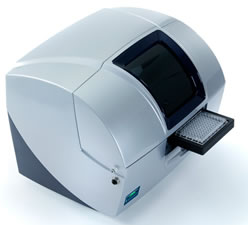
The Zetasizer APS allows quick and easy investigation of a protein's condition at different stages of the purification process, and at later stages of formulation under a range of environmental conditions. The measurement technology used delivers results with exactly the same high precision and reproducibility you would expect from a research grade batch DLS system. There is no compromise in data quality due to automating the measurement.
Dynamic light scattering measures the thermal diffusion of proteins and nanoparticles in solution, enabling accurate size determination. It also allows further characterization of the protein size distribution to determine the presence and proportion of aggregates, giving increased control over the condition of a protein during both purification and method development.
In fully automating light scattering measurements using microwell plates, the Zetasizer APS makes screening and repeating sample measurements easy, and allows different types of measurement to be made on a single plate. Once the auto level sensor has determined that there is sufficient sample in the well, the sample is transferred to a precision temperature and humidity controlled cell for measurement. The sampling system and rinse protocol ensure no sample cross-contamination, something that is tested between every sample through a background measurement. The sample is fully recoverable upon completion.
The Zetasizer APS has dual temperature control to separate out the requirements of the measurement and of sample maintenance. The fast, wide-range, programmable temperature control facilitates automated temperature trend measurements for melting point determination, protein purity or shelf-life investigations, for example. The plate temperature is controlled separately to ensure samples are held under optimum conditions before measurement.
Easy-to-use software guides the development of standard operating procedures (SOPs) for repeatable measurement procedures and provides a range of result reports, as well as the ability to customise data output.