One of the most significant applications for Malvern Panalytical’ new Zetasizer Nano ZSP dynamic light scattering system is the highly sensitive measurement of the zeta potential, or electrophoretic mobility, of proteins. The instrument delivers unique performance specifications for both size and zeta potential measurement, employing an approach to zeta potential measurement that accords with the latest industry guidance.
Published during 2012, standard guide ASTM E2865 deals with the measurement of mobility and zeta potential in systems containing biological material such as proteins, DNA, liposomes and other similar organic materials that possess particle sizes in the nanometer scale, below 100 nm. These materials are often labile, especially when subjected to an electric field, and standard electrophoretic techniques can lead to measurement of the resulting aggregates rather than the native material.
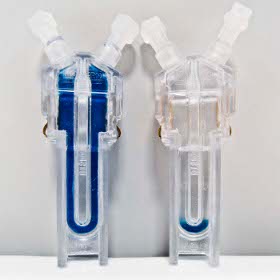
It has been shown that much of the aggregation takes place at the electrodes. In the Zetasizer Nano ZSP, use of Malvern Panalytical’s patented Diffusion Barrier Technique protects the sample by isolating it from the electrode, as recommended in the ASTM standard. Consequently the applied voltage can be switched on for longer periods to generate more reliable measurement data. The method involves the use of a unique, disposable folded capillary cell which allows measurements to be conducted on samples as small as 20 microliters.
The measurement process is simplified by the inclusion of a protein mobility measurement type in the instrument software that controls data acquisition, guides the user through the measurement and assesses and reports on data quality. Additional tools in the software also allow calculation of protein charge, as illustrated here:
Protein mobility measurements on the Zetasizer Nano ZSP
Further details of the benefits of the Diffusion Barrier Technique for protein mobility measurements can be found on the Malvern Panalytical website.
Full details of ASTM E2865 are available here.