Precision motion control and nanopositioning technologies are becoming increasingly important across applications, including laser communications, sensing, healthcare, photonics and semiconductor manufacturing, and precision engineering. With such developments comes growing demands for manufacturing systems capable of delivering the precision, stability, synchronization, and throughput required for next-generation devices.
That’s why we’ve put together the Motion Control & Nanopositioning Essentials eBook. It brings together practical insights into motion and alignment technologies that help manufacturers improve precision, productivity, and scalability.
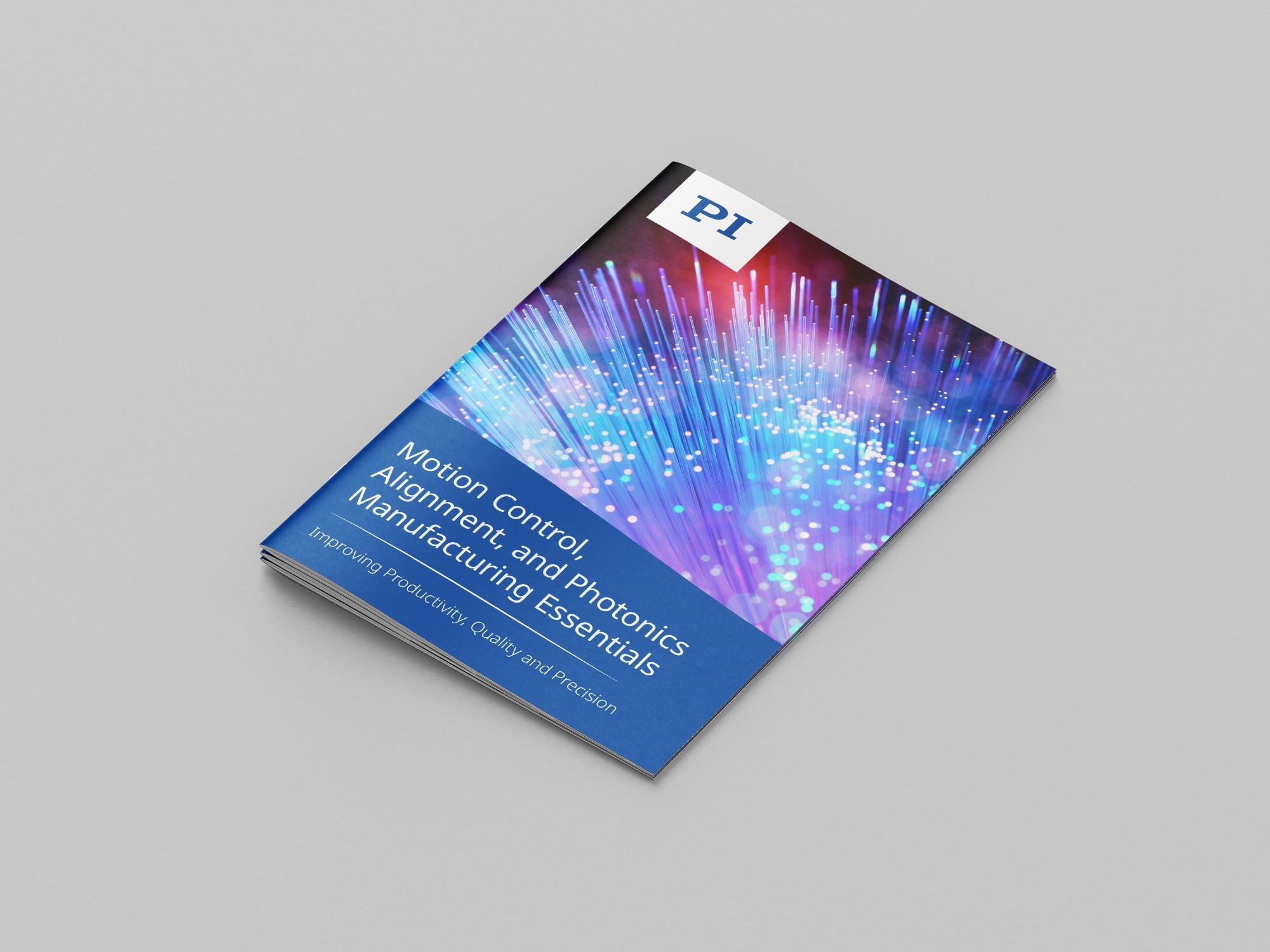
Download the eBook
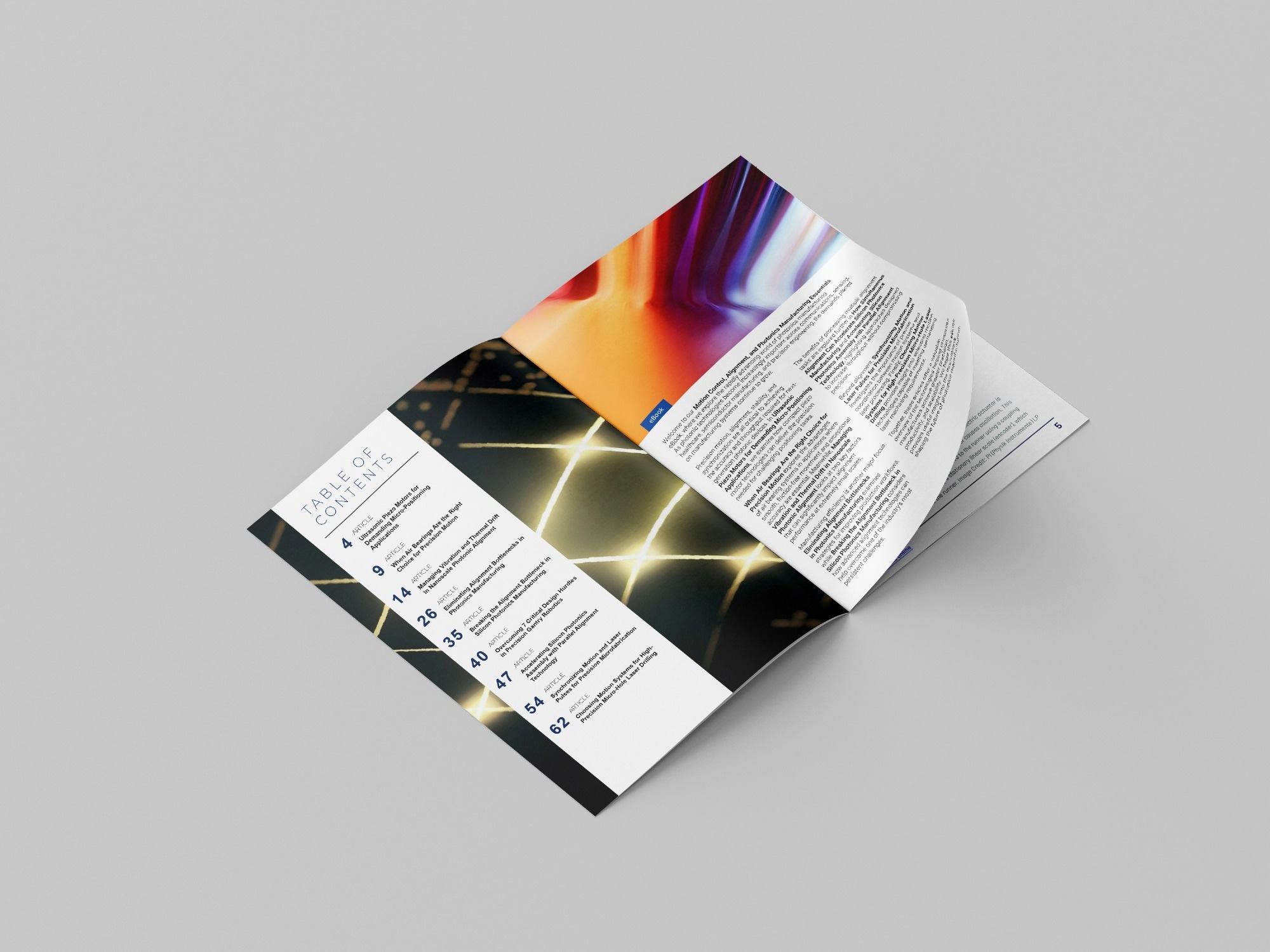
Here’s a quick look at what’s inside:
- How ultrasonic piezo motors support demanding micro-positioning applications
- When air bearings can provide smooth, friction-free motion for high-precision systems
- Approaches to managing vibration and thermal drift in nanoscale photonic alignment
- Strategies for overcoming alignment bottlenecks in photonics and silicon photonics manufacturing
- How simultaneous and parallel alignment technologies can increase manufacturing throughput
- The importance of synchronizing motion systems and laser pulses in precision microfabrication
- How to select motion systems for high-precision micro-hole laser drilling
Beyond alignment, you’ll find insights into the motion technologies that enable demanding positioning and laser-processing applications. The collection examines ultrasonic piezo motors and air bearings, as well as the importance of controlling vibration and thermal drift when working at extremely small scales.
This eBook outlines the motion technologies supporting greater precision, productivity, and scalability in photonics, optics, and semiconductor manufacturing, offering practical insights into the solutions shaping next-generation production tools.
Download the eBook

This information has been sourced, reviewed, and adapted from materials provided by Physik Instrumente.
For more information on this source, please visit Physik Instrumente.