Nov 16 2009
IBM (NYSE: IBM) scientists have created a one-step point-of-care-diagnostic test, based on an innovative silicon chip that requires less sample volume, is significantly faster, portable, easy to use and can test for many diseases, including one of world's leading cause of death, cardiovascular disease*. The results are so quick and accurate that a patient’s serum or blood sample, could be tested immediately following a myocardial infarction, commonly known as a heart attack, to enable the doctor to take a course of action and to predict the patients survival rate.
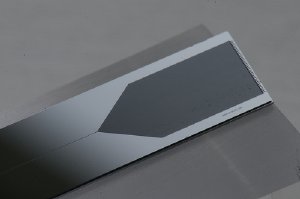 IBM scientists in Zurich have created a one-step point-of-care-diagnostic test, based on an innovative silicon chip that requires less sample volume, is significantly faster, portable, easy to use and can test for many diseases, including one of world's leading cause of death, cardiovascular disease.
As reported in Lab on a Chip, December 2009, Volume 9, Issue 23, IBM Research - Zurich scientists Luc Gervais and Emmanuel Delamarche in collaboration with the University Hospital of Basel in Switzerland have developed a new diagnostic test that uses capillary forces to analyze tiny samples of serum or blood for the presence of disease markers, which are typically proteins that can be detected in people’s blood for diagnostic purposes. Capillary action is the tendency of a liquid to rise in narrow tubes or to be drawn into small openings. An everyday example of a capillary action can be viewed by dipping a paper towel in a cup of water — the microstructures in the paper fiber enable the towel to absorb the water.
All in the chip
IBM scientists have encoded the forces of capillary action on a microfluidic chip made of a silicon compound, similar to those used in computer chips, thus leveraging IBM's vast experience in developing and manufacturing silicon semiconductor wafers. The chip, which measures 1 × 5 centimeters, contains sets of micrometer wide channels where the test sample flows through in approximately 15 seconds, several times faster then traditional tests. Uniquely, the filling speed can be adjusted to several minutes when the chip requires additional time to read a more complex disease marker.
The microfludic chip, which is based on nearly three years of research and development, consists of a microscopic path for liquids with five innovative stages:
Stage 1: A one microliter sample, 50 times smaller than a tear drop, is pipetted onto the chip, where the capillary forces begin to take effect. Stage 2: These forces push the sample through an intricate series of mesh structures, which prevent clogging and air bubbles from forming. Stage 3: The sample then passes into a region where microscopically small amounts of the detection antibody have been deposited. These antibodies have a fluorescent tag and similar to the antibodies within our body, they recognize the disease marker and attach to it within the sample. Only seventy picoliters (a volume one million times smaller than a tear) of these antibodies are used, making their dissolution in the passing sample extremely fast and efficient. Stage 4: The most critical stage is called the "reaction chamber" and it measures 30 micrometers in width and 20 micrometers in depth, roughly the diameter of a strand of human hair. Similar to a common pregnancy test, in this stage the disease marker that was previously tagged is captured on the surface of the chamber. By shining a focused beam of red light, the tagged disease markers can be viewed using a portable sensor device that contains a chip similar to those used by digital cameras, albeit this one being much more sensitive. Based on the amount of light detected, medical professionals can visually confirm the strength of the disease marker in the sample to determine the next course of treatment. Stage 5: Less a stage and more a part of the entire process is the capillary pump. The capillary pump, which has a depth of 180 micrometers, contains an intricate set of microstructures, the job of which is to pump the sample through the device for as long as needed and at a regular flow rate, just like the human heart. This pump makes the test accurate, portable and simple to use. IBM scientists have developed a library of capillary pumps so that tests needing a variety of sample volumes or test times can still be done without having to re-engineer the entire chip. "This point of care test has achieved the trifecta for medical staff in that it is portable, fast and requires a very small volume of sample," comments Emmanuel Delamarche, scientist, IBM Research - Zurich. "We are giving back precious minutes to doctors so they can make informed and accurate decisions right at the time they need them most to save lives".
Going to market
Proof positive of IBM's strategy of open collaboration, scientists in Zurich followed a “bench to bedside” strategy where ideas from their lab were tested with academic and healthcare partners. This research also would not have been possible without the generous support of KTI/CTI, an organization which fosters innovation in Switzerland.
"This microfluidic chip is the next step in the evolution of point of care devices. We look forward to working with the scientists at IBM Research - Zurich to develop this innovation even further," said Thierry Leclipteux, Chief Executive Officer and Chief Science Officer, Coris BioConcept.
IBM scientists designed the chip with flexibility in mind in both its form and uses. Due to its small size the chip can be embedded in several types of form factors, depending on the application, including a credit card, a pen or something similar to a pregnancy test. Besides diagnosing diseases, the test is also flexible enough to test for chemical and bio hazards.
Why IBM?
From a technological perspective, IBM has been a pioneer in nanoscience ever since the development of the Nobel Prizing winning Scanning Tunneling Microscope in 1981. Ever since, IBM researchers have been pushing the frontiers of scientific knowledge and manipulating at the nano scale and our work in one-step point-of-care diagnostics is a direct result of this effort. IBM is currently embarking on a grand vision called smarter planet helping industries, such as healthcare become more instrumented, interconnected and intelligent.
*According to the World Health Organization Statistics 2009.
The scientific paper entitled “Toward one-step point-of-care immunodiagnostics using capillary-driven microfluidics and PDMS substrates” by Luc Gervais and Emmanuel Delamarche, appears in Lab on a Chip, Volume 9, Issue 23, pp. 3330 to 3337 (December 2009).