Manufacturers and materials professionals can now access an online article that describes the efficient application of performance-controlling design rules through the use of expert system rheometry. Using the 'rSpace' expert software in the innovative Kinexus rheometry platform from Malvern Panalytical, the development and application of design rules is not only straightforward but allows a formulation or product microstructure to be engineered for optimal performance.
The paper is entitled 'Expert system rheometry' and was published in September by materialstoday.com. It can be downloaded following a free registration procedure from: http://www.materialstoday.com/view/4202/expert-system-rheometry
Authored by Samiul Amin, Rheologist from the Novel Measurements Group at Malvern Panalytical and Steve Carrington, Rheology Product Manager, the paper presents a more straightforward route towards engineering the next generation of complex and nanostructured fluids.
Inks, drilling fluids, shower gels and drug delivery vehicles are just a few examples of the many industrial and consumer products based on colloidal and nanostructured complex fluids. The successful formulation of these materials is promoted by understanding how rheological behaviour, which typically dictates performance, relates to underlying microstructure.
However, this knowledge can be difficult to obtain for those without the necessary expertise. Drs Amin and Carrington explain how Malvern Panalytical's Kinexus tackles this rheometry challenge head on. They also provide application examples to include the rheological characterisation of associative telechelic polymers typically used as structuring and thickening agents.
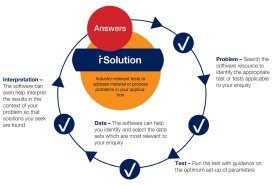
Kinexus is a unique rheometer from Malvern Panalytical designed to meet rheology needs across a wide variety of research sectors, industries and application areas, for users at every level of experience. It enables precise analysis of the rheology of materials: from liquids to soft solids, processability to product performance, temperature to time dependence. A true applications-led interface brings 'expert system' guidance and SOP-driven processes to rheological measurement, while intelligent software invites users to work at the level most appropriate to them - to solve a problem with an application-led approach, experiment using established methodologies, or design tests from scratch.