Solid-state lighting and its potential as a near-term generator of energy efficiencies will be the topic of a presentation by Julia Phillips, director of the Physical, Chemical, and Nano Sciences Center at Sandia National Laboratories, at the 2010 AAAS annual meeting. The meeting runs Feb. 18-22 in San Diego, Calif.
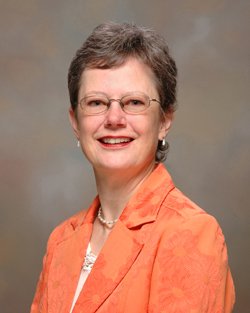 Julia Phillips will speak about solid-state lighting at the 2010 AAAS Annual Meeting.
In her talk, Phillips describes ways that solid-state lighting can better utilize existing energy sources and identifies areas of needed nanotechnology research in the ongoing work to hasten its mainstream adoption. She will discuss how further energy efficiency in technologies such as solid-state lighting could assist the nation in securing its energy future.
"Efficiency is an important interim piece of the energy puzzle as we wait for energy research to bring us new technologies," Phillips said. "It's not the only piece, but it is an important one. It's relatively low-hanging fruit compared to discovering whole new energy sources."
Sandia leads the $46 million Energy Frontier Research Center (EFRC) for solid-state lighting science, one of 46 funded by DOE's Office of Science. These centers enlist the talents and skills of the very best American scientists and engineers to address current fundamental scientific roadblocks to U.S. energy security.
Phillips said lighting represents one of the greatest opportunities for efficiency. Currently, between 75 to 95 percent of the energy used in conventional lighting is wasted. Phillips said most forms of light-production produce great amounts of heat that is wasted energy and sometimes must be dissipated through cooling.
Lighting currently consumes about 22 percent of U.S. electricity at a cost to consumers of about $50 billion per year. Though solid-state lighting is an emerging technology it has the potential to reduce energy consumption for lighting by a factor of three to six times.
Julia Phillips' talk "Realizing the Promise of Solid-State Lighting: The Role of Nanotechnology" is scheduled for Saturday, Feb. 20, as part of the "Nanotechnology: Will Nanomaterials Revolutionize Energy Applications?" panel, which will be held 8:30-11:30 a.m. in Room 1B of the San Diego Convention Center.
Sandia's Solid State Lighting Science Energy Frontier Research Center: http://ssls.sandia.gov/index.html