Mar 11 2010
Olympus, the world leader in objective-based total internal reflection fluorescence (TIRF) microscopy, continues to support scientists in their quest for knowledge about living cells with three new high-performance TIRF objectives. The new 150x ultra-magnification objective offers a numerical aperture (NA) of 1.45 for optimal magnification, resolution, light gathering ability and imaging performance. New 60x and 100x oil immersion objectives have NAs of 1.49.
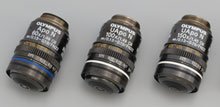
In all, Olympus now offers five specifically designed TIRF objectives, more than any other manufacturer. Olympus also is the only company to offer a 150x magnification TIRF lens, along with the world’s highest-NA TIRF objective: the 100x NA 1.65.
The new 150x UAPON NA 1.45 objective is optimized for single molecule TIRF applications. It delivers the high magnification and low background noise necessary for visualizing challenging specimens. The objective delivers crisp images from 340nm ultraviolet (UV) to near-infrared wavelengths and comes with a correction collar to help compensate for aberrations caused by coverglass thickness or variations in immersion media temperatures. The new 100x UAPON NA 1.49 objective also is newly enhanced with a correction collar, and has been updated to include near-UV performance. The 60x APON NA 1.49 provides the brightest high-resolution TIRF images available, thanks to its improved point spread function.
All Olympus TIRF objectives can take full advantage of the recently introduced Olympus cell^TIRFTM illuminator, which offers four-color, simultaneous, fully motorized control of TIRF excitation along with extraordinary ease of use.
“Scientists doing objective-based TIRF turn to Olympus because we offer nearly a dozen years’ experience designing and using TIRF microscopy to help answer important research questions. Our complement of five TIRF objectives can satisfy the widest range of applications and offers unmatched levels of overall optical performance,” said Nicolas George, Group Marketing Manager - Light Microscopes for Olympus America Inc.
Scientists adopted the TIRF technique to advance understanding of the cell membrane, where vital functions such as communication, absorption, signaling, growth and movement occur. TIRF imaging highlights only the areas of the cell that are in close proximity to the coverglass. Other areas of the cell appear black, and because of this, microscope sensitivity is increased. Olympus TIRF objectives are designed to help researchers more easily produce the evanescent electromagnetic field necessary for TIRF imaging; the objectives are competitively priced and provide the highest NAs overall for TIRF imaging.