Jun 9 2010
A physicist whose pioneering work in quantum optics has established the UK as a leader in the field is to be awarded a Royal Medal, the Royal Society has announced today.
Professor Sir Peter Knight, Imperial’s Deputy Rector (Research) who has been part of the College’s research community for over 30 years, will formally receive the prestigious prize at a ceremony on the Royal Society’s Anniversary Day on 30 November. Only three Royal Medals are awarded every year in recognition of the most important contributions to natural knowledge and to interdisciplinary or applied sciences. Previous winners include Nobel laureates Frederick Sanger, Max Perutz and Francis Crick.
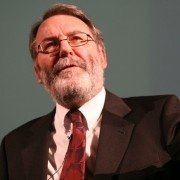
Congratulating Sir Peter, Imperial’s Rector Sir Keith O’Nions said:
“Winning the Royal Medal is a rare achievement but Peter is a rare man, so it comes as no great surprise to any of his colleagues that he has been recognised in this way. He has enormous passion not just for his own research, which is genuinely groundbreaking, but for nurturing and advancing the independent work of scientists in the early stages of their careers. Many of today’s leading physicists began their career as part of Peter’s group and I know they would agree that they could not have wished for a better start.
738award“He is also a great science leader and has been an energetic champion of Imperial’s mission to carry out and apply research that tackles global issues. On behalf of our whole community I would like to express our huge appreciation for all that he does and congratulate him on this well-deserved honour.”
Sir Peter is best known for his instrumental role in developing and establishing quantum optics in the UK, which is a field of physics that uses quantum mechanics to understand how light and matter interact. His work on how multi-electron atoms behave when driven by intense laser light has allowed scientists to understand in detail how atoms behave in super-intense laser fields. This opens the door to future use of lasers to manipulate matter at a quantum level, for example by controlling chemical reactions. His other key contribution is to understanding how quantum physics allows new ways of information processing, known as quantum computing.
“Getting quantum optics off the ground over here is something I’m really proud that my group and I were able to achieve,” Sir Peter commented. “I’ve been fortunate in my career to work with a lot of talented and enthusiastic people; the fact that the UK now leads the world in this field is down to them.”
On winning the Royal Medal, he added: “I’m delighted and stunned. It’s wonderful to be in the company of the kind of great people who have won it in the past – now I’ll have to work hard to live up to it.”
Sir Peter first joined Imperial in 1979 as a Science and Engineering Research Council Advanced Fellow, after a distinguished early career in the UK and USA at universities such as Stanford, Johns Hopkins, Royal Holloway and Sussex, where he completed his PhD in Physcs in 1972. He was promoted to Professor of Quantum Optics in 1998, became Head of Physics in 2001, Principal of the Faculty of Natural Sciences in 2005, Senior Principal in 2008 and Deputy Rector (Research) in 2009.
Over the course of his career, he has published more than 400 articles in international journals and has become one of the most highly cited quantum opticians in the world.
His previous awards and prizes include the Ives Medal of the Optical Society of America, Germany’s Humboldt Prize and the Glazebrook and Thomas Young Medals of the Institute of Physics. He is a Fellow of the Royal Society, the Institute of Physics and the Optical Society of America, and was knighted in the 2005 Queen’s Birthday Honours.
The Royal Medal last came to Imperial in 2006, when it was awarded to Professor Sir John Pendry, of the Department of Physics.