UNHT 300 Bio is an ideal nanoindentation device that is specifically tailored for analyzing the mechanical characteristics of delicate human biological tissues and softer materials.
With its unparalleled force and displacement capabilities, it provides outstanding resolution for the precise evaluation of properties such as elastic modulus, creep, and additional features of cartilages, various tissues, scaffolding materials, and hydrogels.
When positioned on a Step platform, the UNHT 300 Bio head can be paired with an additional indentation or scratch testing head, enabling it to achieve a comprehensive force range from the nanoscale to the macroscale.
- Measurement of ultra-soft to hard materials in one system
- Well suited for biomaterials, polymers, and hydrogels
- Accurate results without post-measurement corrections
- Easy-to-use software with guided workflows
Key Features
Dedicated to Research
Acquire an enhanced understanding of the mechanical properties of pliable biological substances with UNHT 300 Bio. Regardless of whether users are working to enhance disease diagnosis, develop new drugs, advance tissue engineering, or investigate biomedical applications, the system provides the reliable mechanical assessment needed to gain a clearer understanding of biological systems.
Specifically designed for biomaterials, it facilitates assessments of force and depth control modes, along with specialized measurement protocols tailored for biological specimens.
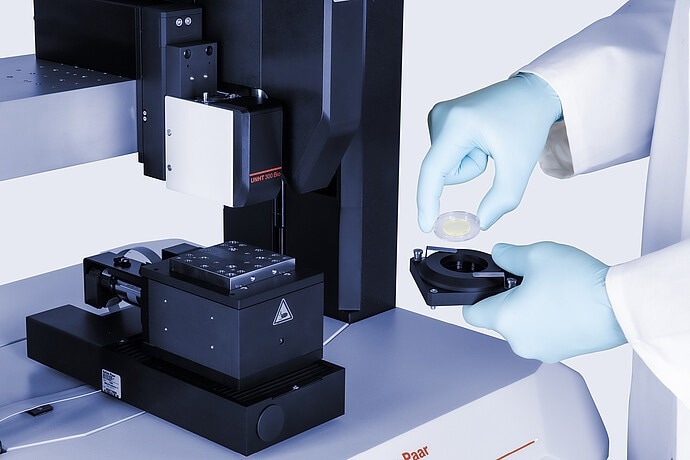
Gloved technician placing a sample dish into the stage of the Anton Paar UNHT 300 Bio beside the measurement head. Image Credit: Anton Paar GmbH
Faster Results, No Calibration Needed
Traditional nanoindentation systems need time-consuming calibration steps before measurement. With the UNHT series, frame compliance calibration is not required, saving up to 30 minutes per measurement cycle and improving overall lab efficiency without sacrificing accuracy.
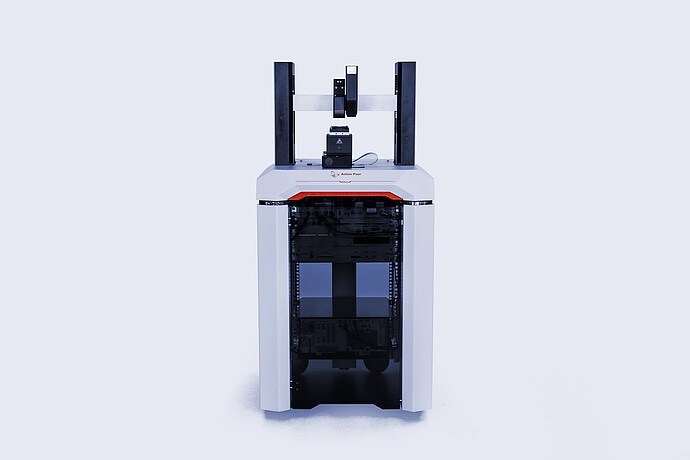
Anton Paar UNHT 300 Bio on a Step 301 surface testing platform, front view with measurement head, sample stage, and electronics rack below. Image Credit: Anton Paar GmbH
Optimized for Measurements
Created for ultimate adaptability and user-friendliness, the UNHT 300 Bio facilitates a range of applications from quasi-static indentation to sophisticated DMA assessments reaching up to 300 Hz, featuring frequency sweeps and completely customizable testing procedures.
Built-in analytical tools include the Hertz contact model and automatic evaluation of pull-off adhesion, enabling rapid characterization of soft materials. When paired with accurate, automated detection of contact points, it provides dependable results that users can rely on.
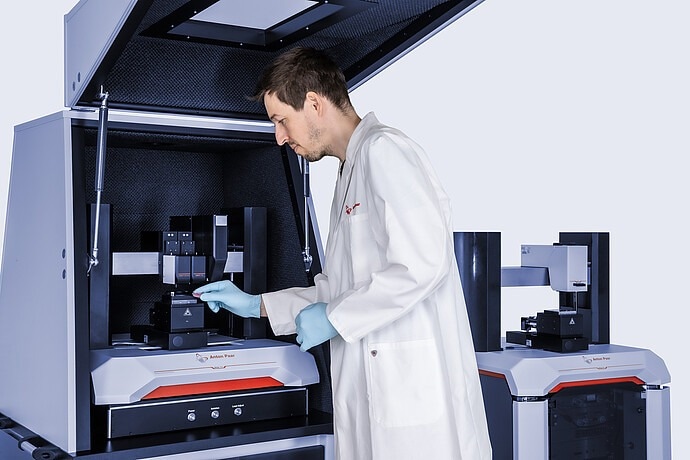
Technician in a lab coat and gloves, positioning a sample on the Anton Paar UNHT 300 Bio in an open Step 301 test enclosure. Image Credit: Anton Paar GmbH
Choose the Indenter
UNHT 300 Bio works with a range of indenters, depending on the materials and needs, from spherical indenters with radii from 0.01 mm up to 0.5 mm to larger flat-punch (flat-ended cylinder) indenters, Vickers indenters, Berkovich indenters, cube-corner indenters, and custom-made indenters for even the most demanding applications (large-radius spheres, cylinders, etc.).
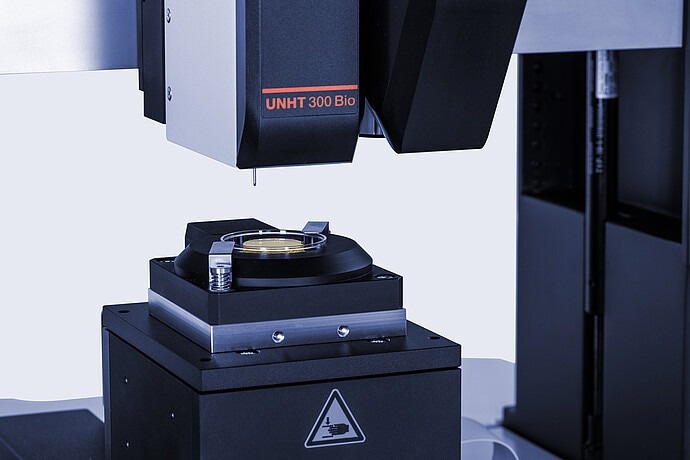
Anton Paar UNHT 300 Bio on a Step 301 surface testing platform, with a gloved technician positioning a sample in the open test enclosure. Image Credit: Anton Paar GmbH
Reimagined Software Experience
The redesigned software provides a workflow-focused user experience that cuts training time and lowers the chance of errors. With preset methods, real-time data display, and every function available in one interface, users can carry out complex measurements easily and efficiently.
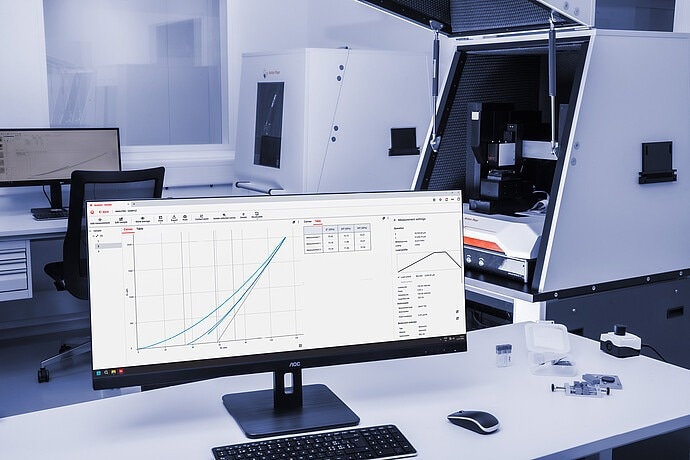
Anton Paar UNHT 700 test system in an open enclosure, with measurement curves and test settings displayed on a laboratory monitor. Image Credit: Anton Paar GmbH
Specifications
Source: Anton Paar GmbH
| |
UNHT 300 Bio |
| Step platform compatibility |
Step 301, 501, 701 |
| Low load indentation |
Down to 10 µN |
| Maximum load [mN] |
20 |
| Load resolution [nN] |
0.003 |
| Load noise floor [rms] [μN] |
≤0.003 |
| Depth range [μm] |
100 |
| Depth resolution [pm] |
0.015 |
| Depth noise floor [rms] [nm] |
≤0.25 |
| Data acquisition rate [MHz] |
2 |
| DMA frequency range |
0.1 Hz to 300 Hz |
| DMA modes |
Complete range of DMA modes |
| SPM mode |
Not available |
| Fast mapping |
Not available |
| Modulus mapping |
Not available |
| Piezo stage |
Not available |
| Positioning accuracy |
Down to 1 µm |