Litesizer DLS provides top-tier particle sizing through automatic angle selection that helps avoid errors, while MAPS technology enables the highest achievable peak resolution. Continuous monitoring of transmittance identifies sedimentation and agglomeration during analysis, improving the reliability of measurements.
Exclusive to this system, cmPALS and the Omega Cuvette enhance zeta potential accuracy and repeatability by compensating for aging effects and reducing electrical gradients.
Litesizer DLS also provides fluorescence and polarization filters for particle size measurements and particle concentration analysis in both MAPS three-angle and single-angle modes.
How to use the Litesizer DLS Dynamic Light Scattering Instrument | Quick Start Guide | Anton Paar
Video Credit: Anton Paar GmbH/YouTube.com
Litesizer DLS 701
- Particle sizing from 0.3 nm to 15 µm
- Advanced dynamic light scattering instrument supporting all modes
- Fluorescence and polarization filters are available for all angles
- High resolution enabled through multi-angle particle sizing (MAPS)
- Concentration determination for up to three distinct size classes
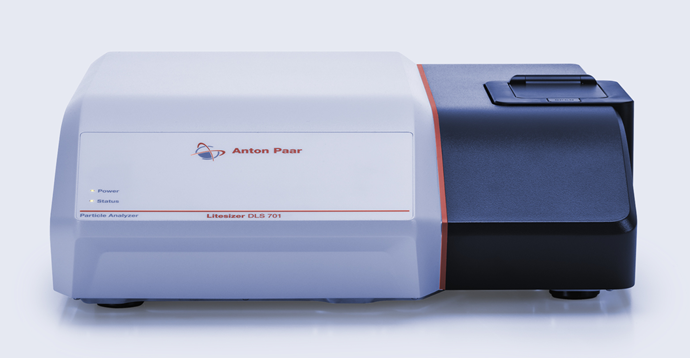
Image Credit: Anton Paar GmbH
Litesizer DLS 501
- Particle sizing from 0.3 nm to 15 µm
- Advanced dynamic light scattering using three measurement angles
- Zeta potential determination with patented cmPALS technology
- Molecular mass and refractive index measurements
- Fluorescence and polarization filters are available for all angles
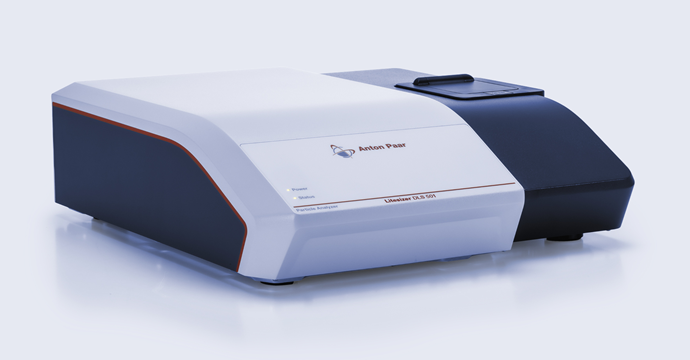
Image Credit: Anton Paar GmbH
Litesizer DLS 101
- Particle sizing from 0.3 nm to 10 µm
- Affordable introduction to dynamic light scattering
- DLS backscatter detection enables broad sample coverage
- Transmittance measurement for real-time monitoring of sample behavior
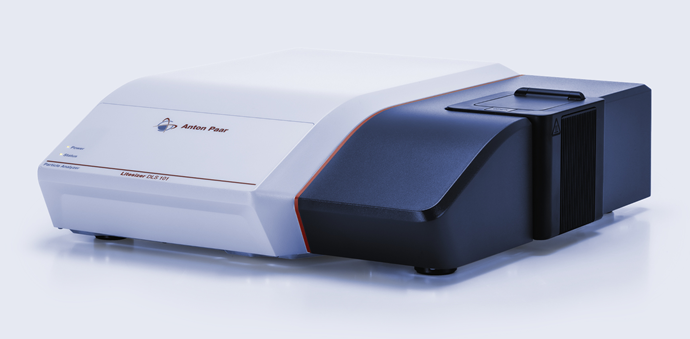
Image Credit: Anton Paar GmbH
Key Features
Three Angles, Real-Time Monitoring for Better Sizing
Litesizer DLS offers three detection angles to analyze a broad range of samples, preventing errors through automatic angle selection.
The Multi-Angle Particle Sizing (MAPS) measurement mode delivers outstanding resolution and supports advanced analytical accuracy.
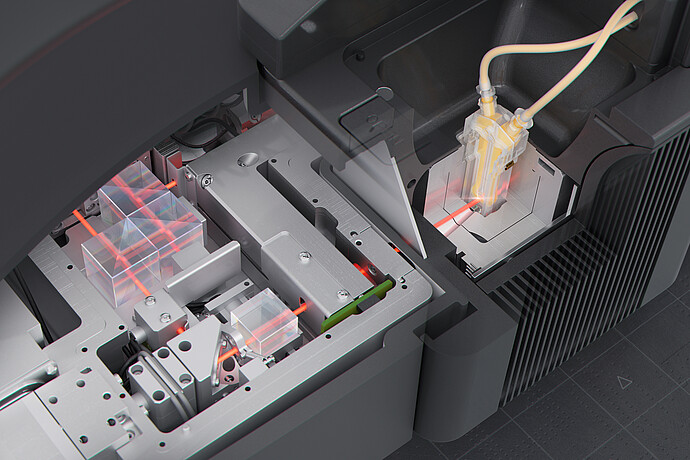
Image Credit: Anton Paar GmbH
Unique in the market, continuous transmission monitoring provides live feedback on sample behavior throughout the measurement, delivering immediate information on sedimentation or agglomeration. This insight improves measurement quality and reliability, making the system a strong choice for accurate and dependable particle analysis.
Market-Leading Zeta Potential Analysis
The patented cmPALS technique, integrated into the dynamic light scattering instrument, is specifically designed to remove reproducibility uncertainties associated with aging effects.
In addition, the innovative design of the Omega Cuvette reduces the electrical field gradient, further improving reproducibility to within ± 3 %.
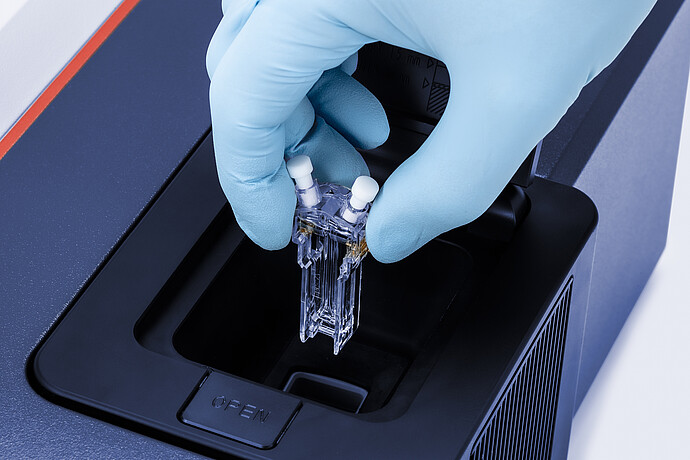
Image Credit: Anton Paar GmbH
With an industry-leading particle size range for zeta potential measurement from 1.3 nm to 100 µm, the instrument provides exceptionally broad capability, ensuring precise and consistent results across a wide range of applications.
Kalliope: The Benchmark Software for Particle Sizing
Kalliope software is designed to require minimal user training, allowing measurements to be completed in just three clicks. A distinctive one-page layout provides an immediate overview of input parameters, measurement signals, and results, presenting all essential information at a glance.
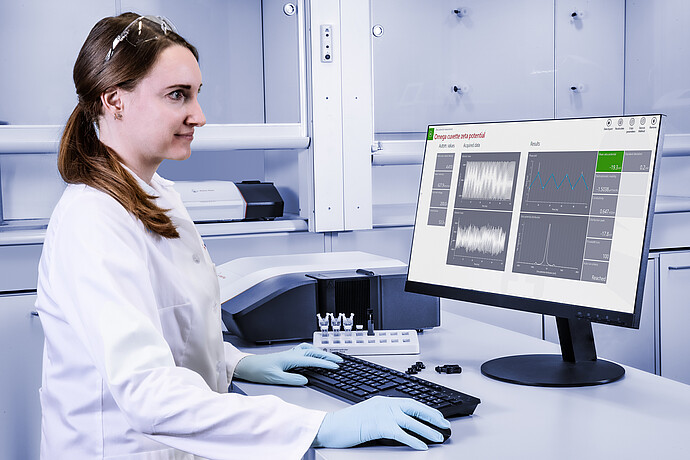
Image Credit: Anton Paar GmbH
Measurement results can be accessed quickly through predefined standard reports and organized result summaries.
For a more comprehensive evaluation, customizable report templates, Excel export options, and advanced analysis functions are available. In addition, Kalliope is fully compliant with 21 CFR Part 11, ensuring strong data integrity and regulatory compliance.
All the Measuring Modes Needed
The Litesizer DLS 701 expands analytical flexibility with a dedicated particle concentration measurement mode, enabling calibration-free determination of up to three distinct size populations within a single sample. This capability is suitable for both monodisperse and polydisperse systems over a broad concentration range and is compatible with single-angle DLS and MAPS measurements.
The instrument also allows measurement of solvent refractive index at the exact wavelength and temperature used during analysis (European Patent 3 023 770), supporting maximum accuracy in particle size and zeta potential determination. Both the Litesizer DLS 701 and DLS 501 deliver refractive index measurements with a precision of ± 0.5 %.
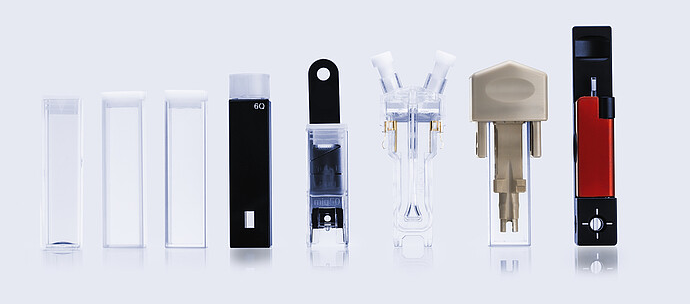
Image Credit: Anton Paar GmbH
In addition, the Litesizer DLS series offers molecular mass measurement, further extending its analytical capabilities.
Most Capable Filtering Options Available
The Litesizer DLS 701 and 501 are the only dynamic light scattering instruments available that provide a unique choice between fluorescence and polarization filters, applicable at all three detection angles.
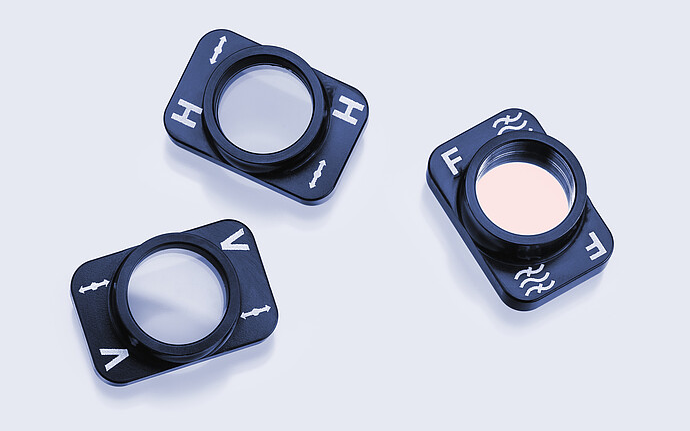
Image Credit: Anton Paar GmbH
This capability enables particle concentration analysis, along with MAPS three-angle or selected single-angle measurements using applied filters, enabling analyses not achievable with comparable instruments, such as quantum dot concentration determination.
Specifications
Source: Anton Paar GmbH
| |
Litesizer
DLS 701 |
Litesizer
DLS 501 |
Litesizer
DLS 101 |
| Particle size specifications |
| Measurement principle |
Dynamic Light Scattering (DLS) |
| Measuring range |
0.3 nm to 15 μm*
(particle diameter) |
0.3 nm to 10 μm*
(particle diameter) |
| Measurement angles |
15 °, 90 °, 175 °, Multi-angle particle sizing (MAPS) |
15 °, 90 °, 175 ° |
175 ° |
| Min. concentration |
0.1 mg/mL (lysozyme)
lower than 0.00001 % (0.1 ppm, Latex 100 nm) |
0.1 mg/mL (lysozyme) |
| Max. concentration |
50 % w/v (sample-dependent) |
| Min. sample volume |
1.5 µL |
12 µL |
| Accuracy |
Better than +/- 2 % on NIST traceable standards |
| Repeatability |
Better than +/- 2 % on NIST traceable standards |
| Particle Concentration Specifications |
| Analysis model |
Mie Theory |
- |
- |
| Measuring range |
108 - 1013 particles/mL (sample dependent) |
- |
- |
| Size limit |
1 µm |
- |
- |
| Measurement angles |
15 °, 90 °, 175 °, Multi-angle particle sizing (MAPS) |
- |
- |
| Min. sample volume |
12 µL |
- |
- |
| Accuracy |
+/- 10 % (sample dependent) |
- |
- |
| Repeatability |
+/- 5 % (sample dependent) |
- |
- |
| Zeta potential specifications |
| Measuring principle |
Electrophoretic Light Scattering (ELS) / cmPALS |
- |
| Measuring range |
>= +/- 1000 mV |
- |
| Mobility range |
10-11 m2/V.s to 2 x 10⁻⁷ m2/V.s |
- |
| Size range |
1.3 nm to 100 µm (diameter) |
- |
| Min. sample concentration |
0.1 mg/mL (lysozyme) |
- |
| Max. sample concentration |
70 % w/v (sample-dependent) |
- |
| Max. sample conductivity |
200 mS/cm |
- |
| Min. sample volume |
50 µL (sample-viscosity-dependent) |
- |
| Accuracy |
Better than +/- 10 % |
- |
| Repeatability |
+/- 3 % |
- |
| Molecular mass specifications |
| Measuring principle |
Static Light Scattering (SLS) |
- |
| Measuring range (mass) |
300 Da to 20 MDa |
- |
| Measuring range (particle size) |
Up to 40 nm (diameter) |
- |
| Measurement angle |
90 ° |
- |
| Min. sample concentration |
0.1 mg/mL (lysozyme) |
- |
| Accuracy |
+/- 10 % |
- |
| Repeatability |
+/- 5 % |
- |
| Transmittance specifications |
| Measuring range |
0 % to 100 % |
| Min. sample volume |
1.5 µL |
15 µL |
| Accuracy |
Better than +/- 1 % |
| Refractive index specifications |
| Measuring range |
1.28 to 1.50 |
- |
| Min. sample volume |
1 mL |
- |
| Accuracy |
+/- 0.5 % |
- |
| General specifications |
| Light source |
Semiconductor laser diode / 40 mW, 658 nm |
| Optical filters (fluorescence, vertical, and horizontal polarization) |
Forward, side, and backscattering |
- |
| Laser warm-up time |
6 min |
| Temperature control range |
0 °C to 120 °C |
| Ambient operating temperature |
10 °C to 35 °C |
| Humidity |
Up to 80 % non-condensing |
| Dimensions (W, D, H) |
450 mm, 505 mm, 135 mm |
| Weight |
Approx. 18 kg (40 lb) |
Approx. 16.3 kg (36 lb) |