Posted in | News | Nanomedicine | Nanomaterials

Researcher Investigates Nanoparticles to Destroy Tumors Non-Invasively

Professor Sotiris E. Pratsinis from the ETH Zurich, Switzerland, has been a visiting scientist at the Universität Duisburg-Essen (UDE) since January 2012 and carries out fundamental research on nanoparticles.
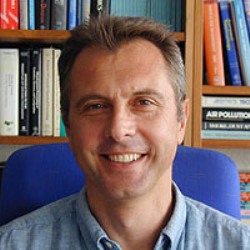
Prof. Dr. Sotiris E. Pratsinis

Pratsinis has selected the UDE and the research team of Prof. Dr. Markus, a professor for Nanoparticle Process Technology at the Institut für Verbrennung und Gasdynamik, for their excellent professors and knowledgeable students. He won the research award of the Alexander von Humboldt Foundation. Along with the prize money worth €60,000, he also got the opportunity to work with German colleagues in specific projects.

At the ETH Zürich, Pratsinis lectures process technology with focus on combustion synthesis of nanomaterials, particle technology and mass transfer. At UDE, his area of focus is conducting simulation study by gas-phase coating the nanoparticles to understand the mechanism of their bonding and the influence of the synthesis conditions on their properties, characteristics and properties in numerous applications. This will be helpful in using nanoparticles properly for applications such as biomedical applications.

Pratsinis’ team has already recognized the efficiency of nanoparticles in the healing process through a bio-detector invented in 2010. The sensor, produced from flame-synthesized mixed ceramics deposited directly on gold electrodes, is capable of detecting diabetes by measuring the acetone content in the exhaled human breath. The drug delivery efficiency of the nanoparticles depends on how they are coated. Studies conducted at the ETH Zürich demonstrated the capability of the nanoparticles to detect cancer cells. Soon the nanoparticles may be bonded with the cancer cells to destroy the cells utilizing electromagnetic radiation, thus paving the way to destroy tumors in a non-invasive manner.

Citations

Please use one of the following formats to cite this article in your essay, paper or report:

  • APA

    Chai, Cameron. (2019, February 12). Researcher Investigates Nanoparticles to Destroy Tumors Non-Invasively. AZoNano. Retrieved on January 28, 2026 from https://www.azonano.com/news.aspx?newsID=24464.

  • MLA

    Chai, Cameron. "Researcher Investigates Nanoparticles to Destroy Tumors Non-Invasively". AZoNano. 28 January 2026. <https://www.azonano.com/news.aspx?newsID=24464>.

  • Chicago

    Chai, Cameron. "Researcher Investigates Nanoparticles to Destroy Tumors Non-Invasively". AZoNano. https://www.azonano.com/news.aspx?newsID=24464. (accessed January 28, 2026).

  • Harvard

    Chai, Cameron. 2019. Researcher Investigates Nanoparticles to Destroy Tumors Non-Invasively. AZoNano, viewed 28 January 2026, https://www.azonano.com/news.aspx?newsID=24464.

Tell Us What You Think

Do you have a review, update or anything you would like to add to this news story?

Leave your feedback
Your comment type
Submit

Sign in to keep reading

We're committed to providing free access to quality science. By registering and providing insight into your preferences you're joining a community of over 1m science interested individuals and help us to provide you with insightful content whilst keeping our service free.

or

While we only use edited and approved content for Azthena answers, it may on occasions provide incorrect responses. Please confirm any data provided with the related suppliers or authors. We do not provide medical advice, if you search for medical information you must always consult a medical professional before acting on any information provided.

Your questions, but not your email details will be shared with OpenAI and retained for 30 days in accordance with their privacy principles.

Please do not ask questions that use sensitive or confidential information.

Read the full Terms & Conditions.