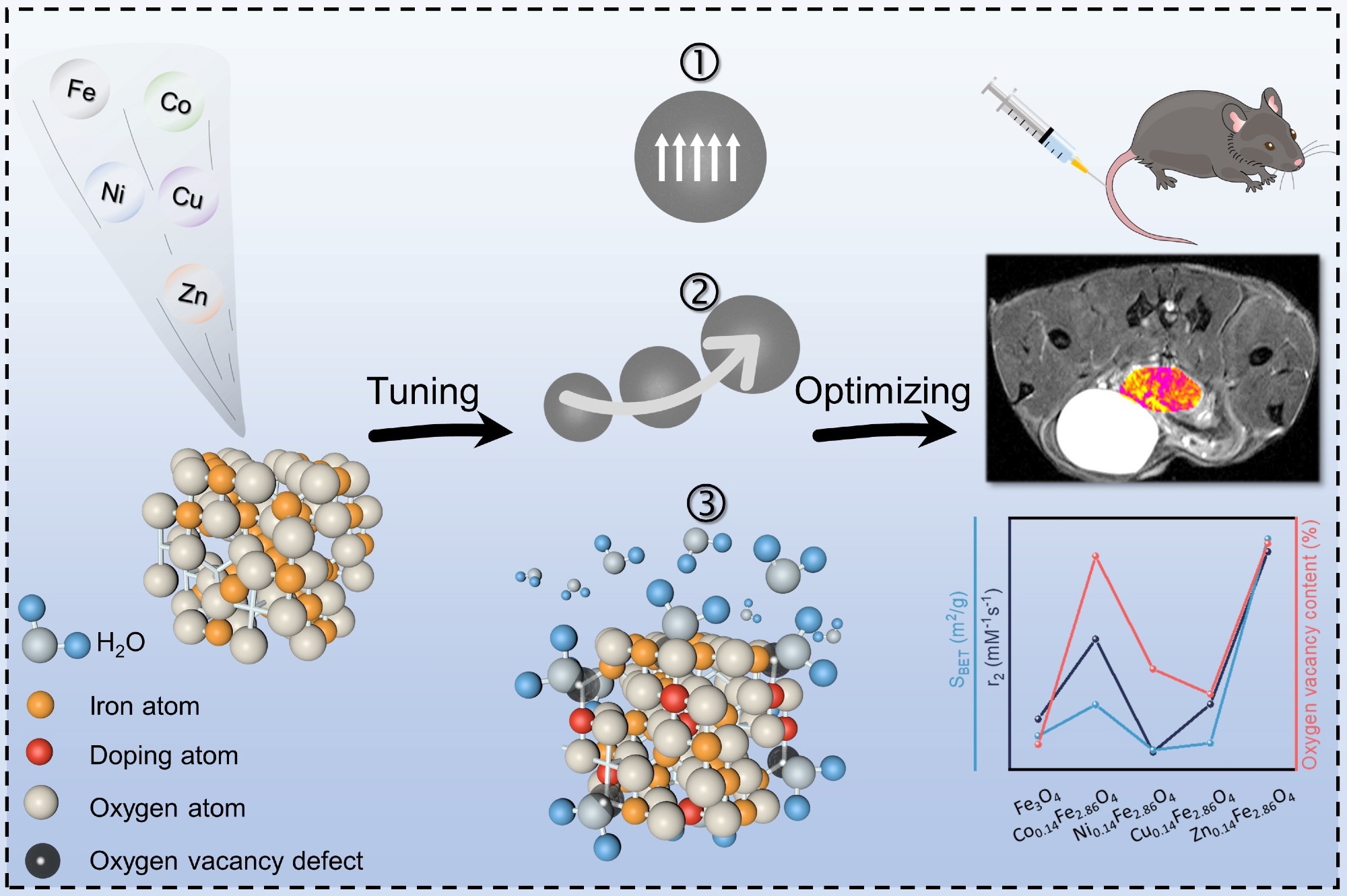
Schematic illustration. Image Credit: Wenteng Xie.
In this investigation, the researchers used a simple thermal degradation method to create a series of hydrophilic transition metal-doped iron oxide nanocrystals. They thoroughly investigated the changes in their physicochemical properties, disclosing the mechanism of the improved magnetic resonance signal of the transition metal-doped iron oxide nanocrystals.
Thereafter, the optimal sample group was chosen to test the amplification of magnetic resonance signals in an in situ prostate cancer mouse model.
This study demonstrates the mechanism of magnetic resonance signal enhancement of transition metal-doped iron oxide nanocrystals, providing new insight into the development of efficient magnetic resonance contrast agents.
The Taishan Scholars Construction Engineering, the University Synergy Innovation Program of Anhui Province, the National Natural Science Foundation of China, and the Plan for Anhui Major Provincial Science and Technology Project funded the study.
Journal Reference
Xie, W., et al. (2022) Transition metal doped hydrophilic ultrasmall iron oxide modulate MRI contrast performance for accurate diagnosis of orthotopic prostate cancer. Journal of Materials Chemistry B. doi.org/10.1039/D2TB01860H.