Art restoration is a science dedicated to the preservation of objects never designed to last. Increasingly, this field – like many others – is turning to nanotechnology to intervene at the same scale that deterioration begins.
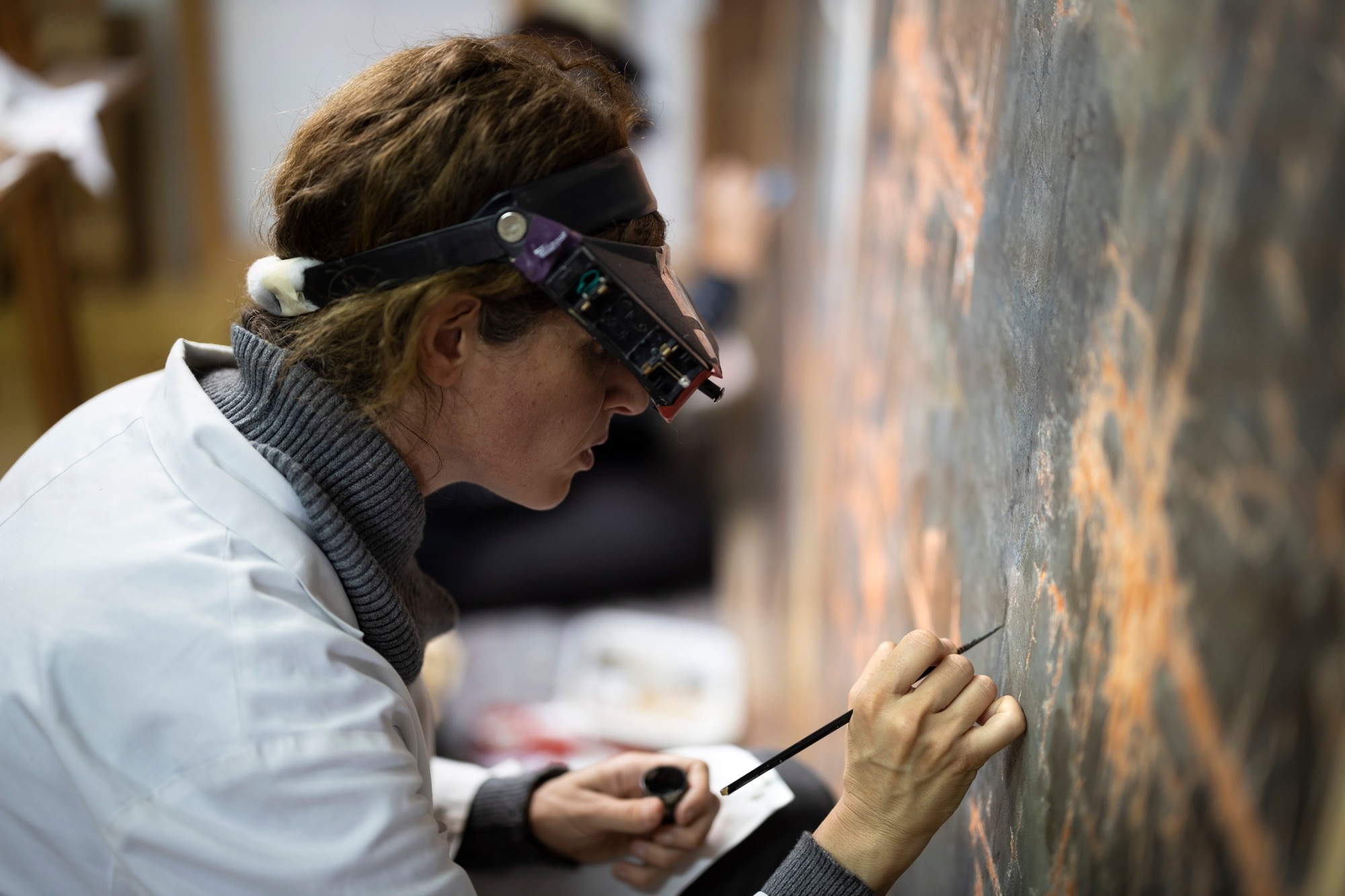 Image Credit: Fotopogledi/Shutterstock.com
Art restoration revolves around a central question: How do we preserve artwork and remove the damage of time, without introducing new risk? Nanotechnology is a somewhat radical player entering the field, which could reshape how conservators clean, stabilize, and monitor artworks.
Recent work on calcium hydroxide nanoparticles, nanogels, and nanoemulsions suggests that these tools can remove dirt, aged varnishes, and salts, and even neutralize acids, with far greater control than traditional solvent-based or mechanical methods.1-2
Saving this article for later? Download a PDF here.
Traditional Solvents Replaced by Nanomaterials
Conservation has traditionally relied on aqueous or organic solvents, poultices, and mechanical tools to remove surface deposits, old varnishes, or salt efflorescence. But these well-used methods can still cause binder swelling, pigment leaching, and cause delicate surfaces to be roughened.
Even careful testing cannot wholly prevent over-cleaning, uneven swelling of multilayered structures, or the penetration of aggressive reagents deep into the support.2
Nanotechnology provides a different approach. With engineered cleaning and consolidation systems whose components are comparable in size to pigment particles, pores in stone, or cellulose fibrils in paper, nano-engineered techniques prove in some cases to be gentler and more targeted than traditional methods.3
Colloidal dispersions of inorganic nanoparticles, together with soft nanostructured carriers such as gels, nanoemulsions, and microemulsions, can be tuned in composition, viscosity, and polarity so that they act only where needed and remain confined near the surface.
Calcium hydroxide nanoparticles are one such example. These tiny matrices can penetrate porous substrates and provide an internal alkaline reservoir while maintaining compatibility with original mineral phases.1, 4
Similarly, nanogels and nanoemulsions trap cleaning fluids within a polymer network, minimizing their free flow over sensitive paints and allowing slower, more controllable interactions with aged coatings or grime.1
Cleaning Artworks Safely with Nanomaterials
A central advantage of nanotechnology-based systems is their ability to target concern areas without being invasive, through the design of specific anti-degradation mechanisms.
Highly retentive gels formulated with low-toxicity surfactants and green solvents can confine water or solvent mixtures at the gel-surface interface, where they selectively swell and detach aged varnish or adhesive layers without flooding the underlying paint.1
One study by Bonelli et al. demonstrated how amphiphile-based nanoemulsions and microemulsions embedded in hydrogels could maintain their internal nanostructure, even when loaded with cleaning fluids. Their affinity with both water and oil-based media allows them to solubilize hydrophobic contaminants while limiting penetration into the substrate.
In the study, these properties enabled the safe removal of stubborn soil and adhesive residues from sensitive supports such as canvas, modern paint films, and inked paper, which are usually incompatible with traditional solvent mixtures.5
For salt-laden stones and frescoes, nanostructured poultices can be engineered to draw out soluble salts while leaving pigments and binders largely unaffected, thanks to controlled pore sizes and surface charges.3
By adjusting nanoparticle composition and carrier rheology, conservators can tailor the interaction time, depth of action, and mechanical stress applied to the surface, making interventions both more selective and more reversible.3
How Do the Nanoparticles Interact with Artworks?
The effectiveness of these approaches rests on how nanoparticles and nanostructured fluids interact with the microstructure of cultural heritage materials.
In paper, oxidation and acid-catalyzed hydrolysis can break cellulose chains, causing yellowing, embrittlement, and eventual loss of mechanical strength; acids originating from alum-rosin sizing, pollutants, or iron gall inks accelerate this process.2
Nano-calcium hydroxide or nano-calcium carbonate dispersions, often in alcohols or other non-aqueous solvents, can avoid this issue, penetrating paper fibers, neutralizing acidic groups, raising pH, and depositing an alkaline reserve that slows future degradation.
By tuning particle size and solvent polarity, these treatments can avoid the visible whitening and stiffening associated with high-load, micron-scale calcium carbonate poultices while still delivering sufficient buffering capacity.6
In wall paintings and frescoes, nanoparticles of calcium hydroxide dispersed in alcohols infiltrate pores and microcracks in the mortar and paint layers, where they later carbonate to form calcite, effectively recreating the mineral phase that originally bound the pigments.
This microgrouting consolidates friable surfaces and recovers mechanical cohesion without introducing foreign polymers that might age differently or impede future treatments.4
Nanogels and nanoemulsions act mainly at interfaces: Their surfactant nanodomains solubilize hydrophobic dirt, oxidized varnish, and aged adhesives, while the gel matrix controls diffusion and contact time. When surfactant head groups, tail length, and solvent composition are carefully tuned, they can gently probe target areas while limiting pigment swelling, binder loss, and color change.1
Measuring the Effect of Salt Efflorescences on Medieval Frescoes in S. Pietro a Corte, Salerno
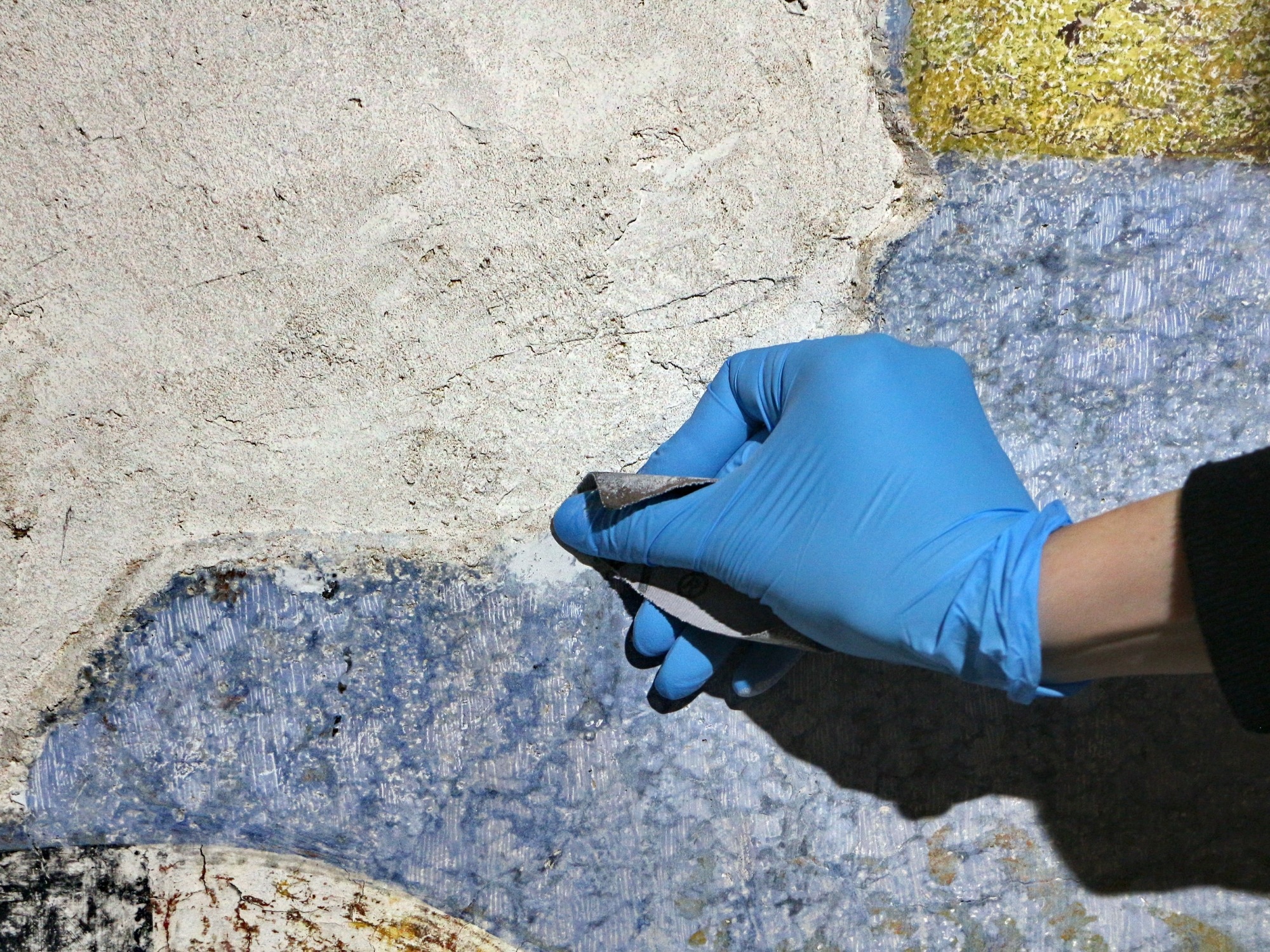 Image Credit: Keni/Shutterstock.com
In an Italian study, Ricciardi et al. investigated salt efflorescences that were damaging medieval frescoes in the hypogeum of the Monumental Complex of S. Pietro a Corte (Salerno) by combining ion chromatography, X-ray diffraction, and nitrogen stable-isotope analysis.7
Water from two nearby streams and a church well was analysed to identify the groundwater source feeding the ancient frigidarium, revealing the Rafastia River was the main contributor.
Efflorescence samples from the frescoed walls were shown to consist predominantly of potassium nitrate (saltpetre), with δ15N values around +9.3 ± 0.2 %, clearly distinct from the nitrates in well water, which had lower δ15N values consistent with agricultural fertilizers.7
This isotopic mismatch ruled out the well as the primary source of damaging salts and instead pointed to sewage-contaminated water infiltrating through overlying urban layers as the most plausible origin of the saltpetre crusts.7
Here, nano-imaging techniques aided the restoration process. Although not directly using nanomaterials, this study showed that methods from more traditional research fields can be applied to art conservation.
Nano-calcium systems for deacidifying fragile paper and parchment
Bicchieri et al. developed nano-calcium carbonate and nano-calcium propanoate specifically for deacidifying library and archival materials, testing them on model papers, 18th-century documents with iron-gall ink, and a 13th-century parchment, The Chartula of St Francis.8
Enzymatically synthesized nano-CaCO3 dispersions in propanol raised paper and ink pH by over four units, doubled calcium content in the parchment, and showed no Raman-detectable interaction with sensitive inks, while nano-calcium propanoate in propanol increased paper pH by more than three units without significant colour change.8
They concluded that these nanomaterials, with good penetration, sustained alkaline reserve, and compatibility with non-aqueous solvents, offer a promising, safer strategy for long-term stabilization of acidic paper-based heritage.8
In this study, graphene saves pigment from fading. Click here to read the article!
What are the Ethical and Long-Term Considerations?
Nano-interventions can be powerful tools, but they raise ethical concerns about reversibility, authenticity, and long-term stability. When media like nanocalcium hydroxide are applied to a painting, new mineral phases are deliberately formed within the artwork. Does this change the painting? Is it restoration, or reconstruction?3
The environmental and health impacts of nanoparticle use in heritage settings also require scrutiny. Initiatives such as the EU-funded H2020 NANORESTART project (NANOmaterials for the REStoration of works of ART) have been set up to pair new materials with life-cycle and toxicity assessments and to prioritize low-toxicity, sustainable formulations.9
Because most nanoparticle treatments are new, they have only a short application history; ageing predictions still rely on accelerated tests and limited monitoring, prompting calls for standardized protocols, shared databases, and long-term follow-up of treated artworks.9
The Next Step Could Be Nano-Sensors and Smart Monitoring
Beyond cleaning and consolidation, nanotechnology could also enable smarter monitoring of artworks via embedded or surface-mounted nano-sensors. These microelectronics can detect trace pollutants, volatile compounds, and early signs of material degradation.3
These surface-enhanced spectroscopic sensors, conductive nanodevices, and nanostructured optical coatings can track humidity, temperature, pH, and volatile degradation products around specific objects, forming low-visibility monitoring networks that complement standard museum climate control.1
Combined with digital twins and predictive models, nano-sensor data support a more preventative, risk-based conservation strategy, reducing intrusive treatments and enabling evaluation of how nano-based interventions perform over time. But is it wise to introduce this modern tech to cultural heritage?1
References and Further Readings
- Chelazzi, D., Baglioni, P. From nanoparticles to gels: A breakthrough in art conservation science. Langmuir 2023, 39(31), 10744–10755. DOI:10.1021/acs.langmuir.3c01040, https://pubs.acs.org/doi/10.1021/acs.langmuir.3c01040
- David, M. E., Ion, R.-M., Grigorescu, R. M., Iancu, L., Andrei, E. R., Nanomaterials used in conservation and restoration of cultural heritage: An up-to-date overview. Materials 2020, 13(9), 2064. DOI:10.3390/ma13092064, https://www.mdpi.com/1996-1944/13/9/2064
- Otero, J., Borsoi, G., Monasterio-Guillot, L., The boom in nanomaterials for built heritage conservation: why does size matter? Materials 2023, 16(8), 3277. DOI:10.3390/ma16083277, https://www.mdpi.com/1996-1944/16/8/3277
- Chelazzi, D., Poggi, G., Jaidar, Y., Toccafondi, N., Giorgi, R., Baglioni, P., Hydroxide nanoparticles for cultural heritage: Consolidation and protection of wall paintings and carbonate materials. Journal of Colloid and Interface Science 2013, 392, 42–49. DOI:10.1016/j.jcis.2012.09.069, https://www.sciencedirect.com/science/article/pii/S0021979712009779
- Bonelli, N., Montis, C., Mirabile, A., Berti, D., and Baglioni, P., Restoration of paper artworks with microemulsions confined in hydrogels for safe and efficient removal of adhesive tapes. Proceedings of the National Academy of Sciences 2018, 115(23), 5932–5937. DOI:10.1073/pnas.1803187115, https://www.pnas.org/doi/10.1073/pnas.1803187115
- Krora, A., Wahba, W., and Abu Elleif, M., Comparative study using calcium hydroxide and nano calcium hydroxide to deacidification of archaeological tracing paper. International Journal of Advanced Studies in World Archaeology 2020, 3(2), 1–18. (No DOI available.)
- Ricciardi, M., Pironti, C., Motta, O., Fiorillo, R., Camin, F., Faggiano, A., Proto, A., Investigations on historical monuments’ deterioration through chemical and isotopic analyses: an Italian case study. Environmental Science and Pollution Research 2022, 29(20), 29409–29418. DOI:10.1007/s11356-021-18142-6, https://link.springer.com/article/10.1007/s11356-021-18142-6
- Bicchieri, M., Valentini, F., Calcaterra, A., Talamo, M., Newly developed nano-calcium carbonate and nano-calcium propanoate for the deacidification of library and archival materials. Journal of Analytical Methods in Chemistry 2017, 2017, 2372789. DOI:10.1155/2017/2372789, https://www.hindawi.com/journals/jamc/2017/2372789/
- Baglioni, P., Chelazzi, D., Giorgi, R., Nanorestart: Nanomaterials for the restoration of works of art. Heritage Science 2021, 9(1), 5. DOI:10.1186/s40494-020-00497-9, https://heritagesciencejournal.springeropen.com/articles/10.1186/s40494-020-00497-9
Disclaimer: The views expressed here are those of the author expressed in their private capacity and do not necessarily represent the views of AZoM.com Limited T/A AZoNetwork the owner and operator of this website. This disclaimer forms part of the Terms and conditions of use of this website.