Engineered carbon nanotubes have 'gates' that can open and close reversibly in response to pH changes.
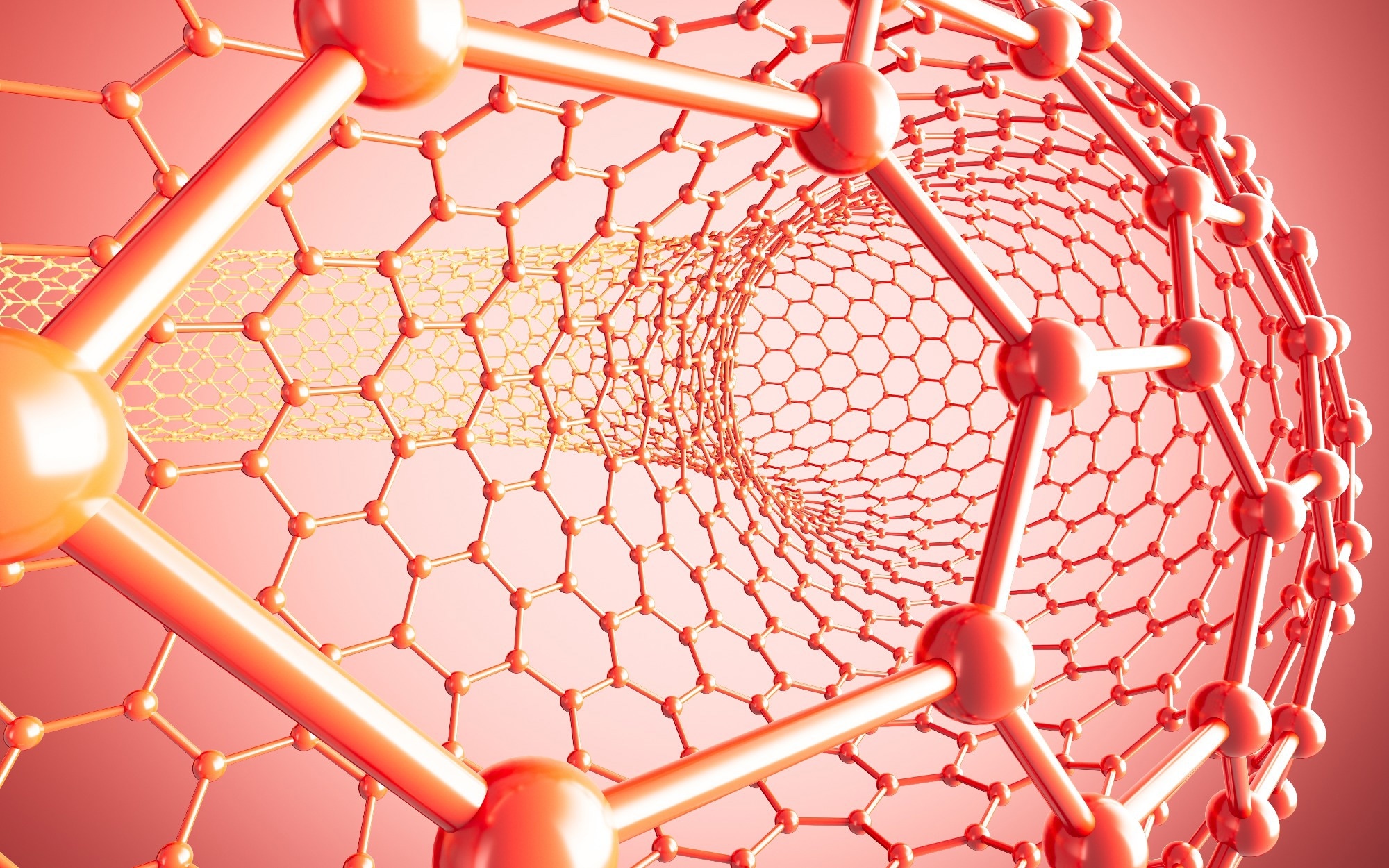 Study: Ion Transport in Carbon Nanotube Porins with a pH-Switchable Entrance Gate. Image Credit: Tina Ji/Shutterstock.com
In a recent study published in Nano Letters, researchers from Lawrence Livermore National Laboratory (LLNL) and the University of Maryland reported their results, demonstrating the synthetic "molecular gate" mechanism that emulates the behavior of barrel-shaped proteins known as porins, creating pores in cell membranes to allow specific molecules to pass through.
When water and ions traverse channels that are merely a nanometer in width, they exhibit peculiar behaviors. Within these confined spaces, water molecules align in a single file. This alignment compels ions to release some of the water molecules that typically surround them, leading to the distinctive physics of ion transport.
Biological channels are particularly skilled at this phenomenon, frequently orchestrating the opening and closing of channels to facilitate intricate functions such as signaling within the nervous system.
The researchers used a chemical method to fabricate exceptionally short, fluorescent nanotubes featuring specific lid-like structures at their ends. These minuscule tubes were then integrated into fatty membranes that mimic cell walls, forming sub-nanometer channels that compel water and ions to flow in a single-file arrangement.
The team found that by attaching a specific "lid" to the rim of the nanotube, they could regulate the flow of molecules.
We saw that at acidic pH, the molecular lid closed, physically blocking the pore. At neutral pH, the lid rotated open, allowing ions and water to pass almost unhindered.
Jobaer Abdullah, Study Author and Graduate Student, University of California, Merced
The team integrated their measurements with machine learning-enhanced first-principles molecular dynamics simulations to validate the efficacy of the lid. The simulations demonstrated how the lid's conformational changes influenced the barriers to ion entry.
Our simulations revealed that the probability of the channels staying open is significantly lowered under acidic pH conditions, directly linking molecular motion to macroscopic flow.
Margaret Berrens, Study Author and Scientist, Lawrence Livermore National Laboratory (LLNL)
The ability to design responsive nanofluidic channels, such as those proposed here, has significant implications.
Synthetic membranes that can dynamically adjust their permeability could benefit desalination, biosensing, and drug-delivery technologies, while providing new tools for studying how biological channels achieve selective ion transport.
Aleksandr Noy, Study Lead Author and Scientist, Lawrence Livermore National Laboratory (LLNL)
Author and LLNL scientist Anh Pham added, “This work expands the design space for nanofluidic systems by showing that even a single functional group, or lid, at the pore entrance can transform a static nanotube into an active, environmentally responsive gate.”
Journal Reference:
Abdullah, J. et al. (2026). Ion Transport in Carbon Nanotube Porins with a pH-Switchable Entrance Gate. Nano Letters. DOI: 10.1021/acs.nanolett.5c04234.