A head-to-head laboratory study reveals how two renewable nanomaterials offer distinct advantages and important trade-offs for the next generation of paper packaging.
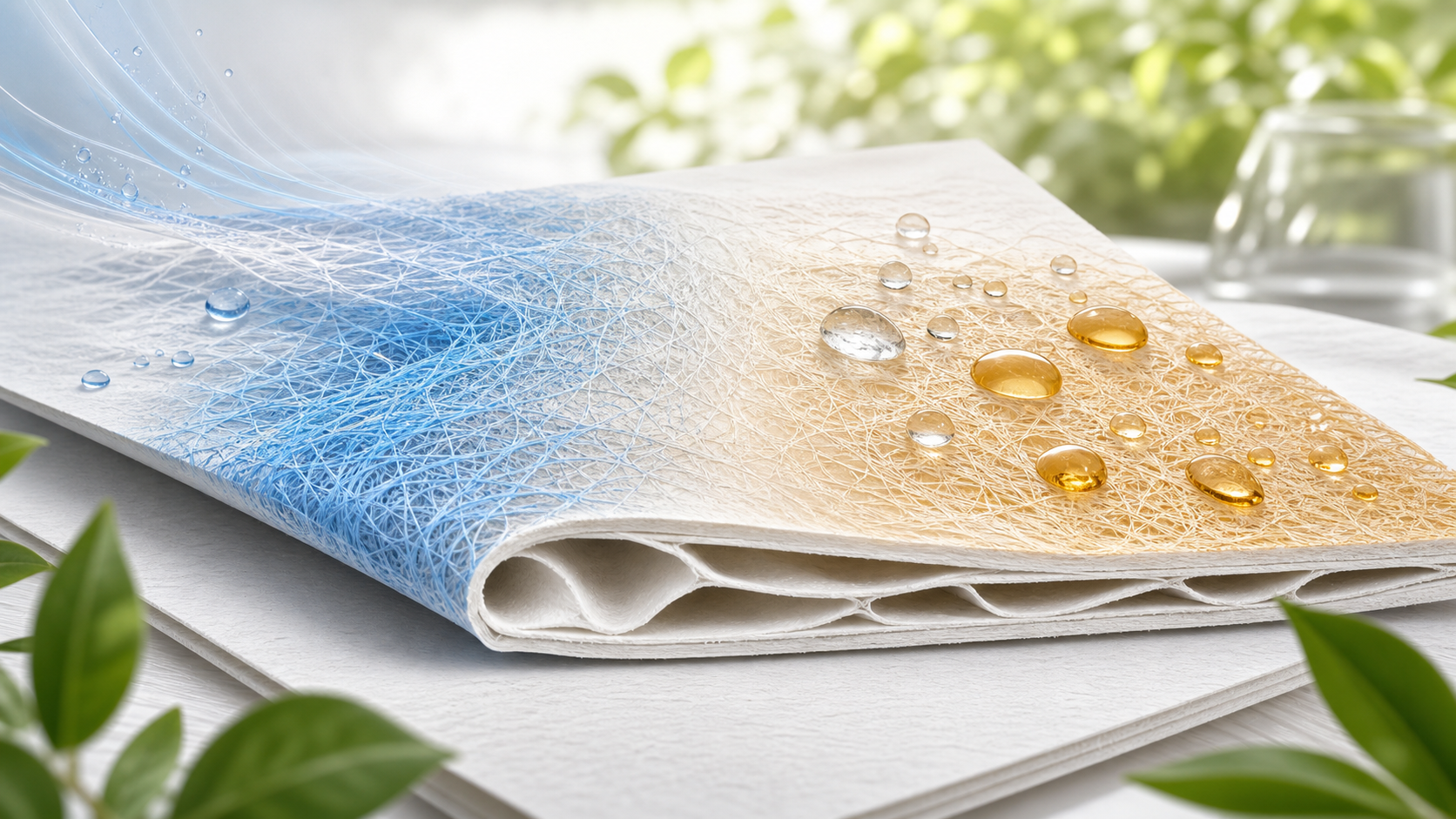
Paper: Evaluation of the properties of gel, film and paper coated with nanocellulose and nanochitin. Image Credit: AI-generated using ChatGPT/OpenAI
In a recent research article published in the journal Scientific Reports, researchers evaluated the structural, thermal, mechanical, rheological, and functional properties of nanocellulose and nanochitin films and gels, exploring their potential as sustainable bio-coatings for paper packaging applications.
Bio-Nanomaterial Context and Relevance
The growing environmental concerns and rising demand for sustainable packaging materials have heightened interest in bio-based nanomaterials, such as nanocellulose and nanochitin. Nanocellulose is derived from cellulose fibers, while nanochitin can be obtained from crustacean exoskeletons. These renewable materials exhibit unique nanoscale properties, including high surface area, mechanical strength, and biodegradability.
Their ability to form dense, interconnected networks at the nanoscale makes them promising candidates for enhancing films and paper coatings, offering potential mechanical, thermal, and barrier benefits while potentially reducing reliance on fossil-fuel-derived polymers.
The research examines native nanocellulose and nanochitin gels, the properties of their free-standing films, and their performance as laboratory paper coatings under additive-free, controlled conditions. It also explores how differences in material structure relate to their functional characteristics.
Preparation and Characterization Techniques
To compare the two materials, nanocellulose in the form of cellulose nanofibers was prepared from bleached softwood kraft pulp using a disk grinder to achieve a 3 wt% suspension, while nanochitin was sourced commercially from shrimp shells processed by super disk grinding.
Pure films were created via casting, drying nanogel suspensions under controlled temperature and humidity over three days to achieve uniform films without additives. Morphological examination employed scanning electron microscopy (SEM) with gold sputter coating.
Thermal behavior was analyzed by thermogravimetric analysis (TGA) under nitrogen, heating samples from 25 to 600°C to assess degradation profiles and the residual material, including ash and pyrolysis products. Rheological properties of nanogel suspensions at 1, 2, and 3 wt% were determined via controlled shear-rate tests from 0.01 to 100 s−1 using a rotational rheometer to evaluate flow behavior and viscosity.
Coatings were applied to A4 printing paper substrates using an automated rod coater at 5 cm/s with single- and double-layer applications of 1.5 wt% nanogel suspensions, followed by oven drying and conditioning.
Physical characterization of coated papers included measuring caliper, air permeability, the Hercules sizing test (HST) for liquid resistance, oil absorption for grease resistance, and brightness according to TAPPI standards. Statistical analysis was conducted using analysis of variance (ANOVA) and Duncan's multiple range test to determine significant differences (p < 0.05).
Film Properties and Coating Performance
SEM analysis revealed that both nanocellulose and nanochitin films exhibited generally dense, uniform nanofiber networks without cracks or agglomerates, consistent with the formation of stable material networks that could contribute to barrier and mechanical performance. Nanochitin was nevertheless described as having finer, more branched fibrils, a rougher surface, and higher porosity than nanocellulose.
Thermal stability assessments showed that nanocellulose films had a higher degradation onset temperature than nanochitin, suggesting greater thermal robustness under TGA conditions. The authors attributed the slightly lower residual mass of nanocellulose to lower extractive and ash content.
The authors reported that the tensile strength and strain of nanocellulose films were significantly higher than those of nanochitin, highlighting the superior mechanical cohesion offered by the nanocellulose fibrillar network. The reported tensile strength and strain were 203 MPa and 2.52% for nanocellulose, compared with approximately 37.04 MPa and 1.18% for nanochitin.
Rheological studies demonstrated pseudoplastic, non-Newtonian behavior for both gels, with viscosity decreasing uniformly with increasing shear rate, consistent with changes in the fibril networks under shear.
This property is useful for coating applications, where shear-thinning facilitates flow during application. The selected 1.5 wt% concentration was described by the authors as suitable for practical coating application, although comparative coating data establishing it as optimal were not presented.
Coating trials showed that, at the tested coat weights, nanochitin significantly enhanced paper barrier properties relative to nanocellulose, as confirmed by higher air resistance and greater resistance to liquid water and oil penetration. Its lower caliper at similar coat weights was a separate structural finding rather than a barrier measurement; both materials increased paper thickness relative to the uncoated reference.
The authors proposed that nanochitin's relatively planar, rigid structure enabled tighter packing and the formation of more compact coatings that obstructed liquid water, oil, and air pathways more effectively than nanocellulose's fibrillar morphology. For nanochitin, double-layer coatings further increased air, liquid-water, and grease resistance. Because double layers also contained more coating material, however, the experiment could not distinguish a layering effect from a coat-weight effect.
The Hercules sizing test demonstrated that double-layer nanocellulose and both tested nanochitin coatings improved water resistance compared with uncoated paper. The double-layer nanochitin treatment provided the highest measured resistance to liquid penetration. No single-layer nanocellulose HST result was presented, preventing a complete layer-for-layer comparison.
Brightness measurements revealed that nanocellulose coatings better preserved the optical properties of paper, which the authors attributed to higher transparency and light scattering associated with their fibrillar network, whereas nanochitin coatings caused a more pronounced decrease in brightness, consistent with their higher light absorption and lower transparency. These proposed optical mechanisms were not measured directly.
Layering effects on brightness were material-dependent: additional nanocellulose layers numerically increased brightness by enhancing surface uniformity, although the small increase was not statistically significant, whereas extra nanochitin layers further diminished brightness.
Insights on Bio-Coating Applications
This research systematically compared native nanocellulose and nanochitin gels and films, focusing on their structural, thermal, mechanical, rheological, and barrier-related characteristics as bio-coatings for paper.
The findings suggest that the contrasting nanostructures of the two materials help explain their different film and coating characteristics, with each material offering distinct advantages relevant to sustainable packaging.
Together, these results provide laboratory-scale insights for the development of prospective bio-based paper coatings. However, the research did not assess water-vapor or oxygen transmission, coated-paper durability, environmental impacts, or commercial-scale performance. The findings, therefore, demonstrate potential rather than establishing environmental superiority or packaging readiness.
Source:
- Dehghani Firouzabadi, M., Bousfield, D., and Tajvidi, M. (2026). Evaluation of the properties of gel, film and paper coated with nanocellulose and nanochitin. Scientific Reports. DOI: 10.1038/s41598-026-62541-z. https://www.nature.com/articles/s41598-026-62541-z