Scientists in Focus brings attention to the people whose ideas, methods, or experiments shaped modern nanoscience. Instead of celebrating individual moments of discovery, this series examines how specific contributions changed what researchers could measure, build, or understand at the nanoscale.
Each article places a scientist’s work in context, tracing its influence across disciplines and into the tools and concepts that underpin the field today. Our first scientist is Professor Mildred Dresselhaus, a woman who helped lead carbon science to where it is today.
Professor Mildred Dresselhaus
Professor Mildred Dresselhaus kick-started a transformation in nanoscience with her research on the electronic structures of semimetals. Without her resilience and determination, who knows where the field would be today?
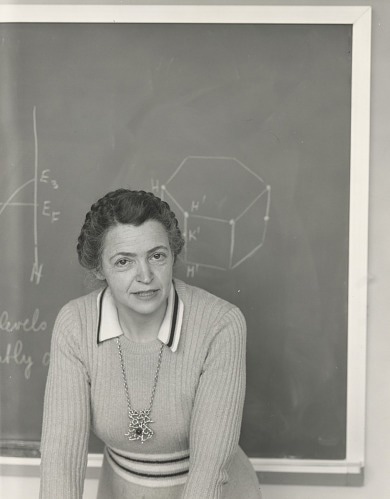 Image Credit: Georgia Litwack/Schlesinger Library, Harvard Radcliffe Institute
It's funny to think there was a time when carbon was out of fashion. Since the invention of carbon nanotubes and graphene, the field of nanoscience has been inundated with advances relating to the element. But before Professor Mildred Dresselhaus investigated the electronic structures of semimetals, carbon was an element non grata.
In the 60s, the materials 'a-go-go' were semiconductors like silicon.
As Mildred, better known as Millie, herself mentioned after winning the Kavli Prize in 2012, "there were advantages for me to work in a less competitive research area". While balancing childcare and research, her work on semimetals, graphite, and group V semimetals at the Lincoln Laboratory led to some very "fruitful and interesting" work indeed. Millie's exploration of their electronic structure laid some of the foundations for condensed-matter physics studies of these semimetals at the time.
Speaking to Professor Maia Weinstock, Deputy Editor at MIT News and author of the book 'Carbon Queen: The Remarkable Life of Nanoscience Pioneer Mildred Dresselhaus, ' added further context to Millie's work.
Millie liked the challenge of taking on something that others weren’t as interested in – both because of what she perceived as a golden opportunity to be a leader in a less-crowded field and also because she’d feel less pressure to keep up with competing research teams at a time when she was raising four young children.
Professor Maia Weinstock, Deputy Editorial Director at MIT News and Lecturer in Women's and Gender Studies
Get all the details: Grab your PDF here!
Why Carbon?
When Mildred was welcomed onto campus at MIT towards the end of the decade, her introduction to the nano-world really began, and it was here that she would carry out the work that earned her the name "Carbon Queen".
It’s certainly not an official title, but Millie came to be known as the "Carbon Queen" later in her career in honor of the foundational research she performed that elucidated many properties of carbon. While she in fact worked with a number of materials throughout her career, she specialized in carbon for the majority of that time, and the insights she gleaned were highly influential.
Professor Maia Weinstock, Deputy Editorial Director at MIT News and Lecturer in Women's and Gender Studies
While carbon was considered a mundane element by most scientists when Mildred's research began, a nudge from her husband, Gene, prompted her interest.
When Millie reached a crossroads early in her career where she was looking for a new subject to dive into, her husband and fellow physicist Gene Dresselhaus suggested that carbon seemed to be hiding some interesting properties.
At the time, the element was considered less sexy and more difficult to study than silicon, which many others were scouring for its potential uses in computing.
Professor Maia Weinstock, Deputy Editorial Director at MIT News and Lecturer in Women's and Gender Studies
The First Hints at Graphene – or Graphene Intercalation Compounds
Millie began studying graphite, which is made up of layers of graphene, in the 1960s. However, during that time, it was difficult to separate graphite into individual layers of only a single atom thick.
And yet, many of the studies Millie did on graphite in the early 1960s were way ahead of her time; indeed some were essentially redone later, at the turn of the century, when isolating single- or few-layer samples of graphene became much easier.
Millie's observations led to the discovery of balls of carbon known as fullerenes or buckyballs, which then led to the discovery of carbon nanotubes, which are essentially elongated fullerenes. In essence, graphene is what you'd get if you sliced open a carbon nanotube, unrolled it, and laid it out flat, so there is quite a bit of overlap in terms of the physics involved in each of these systems, and Millie played a major role in deciphering some of the specific properties within them.
Professor Maia Weinstock, Deputy Editorial Director at MIT News and Lecturer in Women's and Gender Studies
When she became a permanent member of the MIT faculty in the School of Electrical Engineering, Millie started working on intercalation compounds.
To begin with, these involved electronic structure – as before – but in 1974 the scientist shifted her research to vibrational spectra of donor and acceptor compounds. Here, graphene layers of the intercalation compound could be doped either p-type or n-type.
Making use of the staging effect, the insertion of guest species like Li+ between layers of a host material, Millie was able to synthesize intercalated superlattices, in which the intercalate layer was only a single atom thick.
Further investigation of these lattices showed that the behavior of monolayer graphene was different from all the others. This finding triggered numerous research papers, PhD theses, and a highly cited review article on graphite intercalation compounds in 1981, still cited today.
Bucky Balls to Carbon Nanotubes
Nowadays, nanotubes are used across many areas in STEM, even aerospace and defence. But when they were first developed, carbon nanotubes were less adaptable.
One of Millie’s biggest contributions to the science of carbon nanotubes was discovering that nanotubes with different atomic configurations would have very different properties. Looking from afar, nanotubes might appear the same, but if you zoom into the atomic level, you’d see them in different configurations, and depending on those configurations, the nanotubes might be better heat conductors, or might be physically stronger, or might be better electrical conductors.
These are things that've been important to know for the development of technologies that incorporate carbon nanotubes, such as batteries, coatings, resins, and all sorts of other materials.
Professor Maia Weinstock, Deputy Editorial Director at MIT News and Lecturer in Women's and Gender Studies
Millie's structural analysis and the reconstruction of her early experiments by later scientists have led to the advanced technologies we see in aerospace, defence, battery tech, and even in medicinal work, where they have been used in drug delivery to tissue scaffolding. The power is in these carbon nanomaterials' adaptability.
Saving this article for later? Grab a PDF here.
Lessons for Future Physicists
For Millie, problem-solving was an innate skill. She liked to be challenged, as she told MIT, and "welcomed the hard questions and having to come up with good explanations on the spot".
In writing Millie’s biography, one of the biggest takeaways I gleaned from her life story was the power of perseverance. She did not have an easy path, and she faced several significant roadblocks. But she was a gifted scientific and mathematical thinker from a young age, and highly determined to make the most of the opportunities she did have – and to pay forward opportunities to others that came after her.
Professor Maia Weinstock, Deputy Editorial Director at MIT News and Lecturer in Women's and Gender Studies
On top of her academic prowess and resilience, Millie and her husband, Gene, created a congenial atmosphere in a field not prone to niceties. Their efforts in balancing research demands and professional relationships left another positive mark on Physics and the wider research community.
Millie and Gene demonstrated great leadership by inviting colleagues and students to be part of something like a research family – they took pains to bring a familial atmosphere to their collaborations, where everyone was welcomed and regularly supported rather than left alone to sink or swim.
Professor Maia Weinstock, Deputy Editorial Director at MIT News and Lecturer in Women's and Gender Studies
References and Further Reading
- How Millie Dresselhaus Paid It Forward. MIT Technology Review, 21 October 2025.
https://www.technologyreview.com/2025/10/21/1124731/how-millie-dresselhaus-paid-it-forward/
- Advanced Electronic Materials, Article e202000981.
DOI:10.1002/aelm.202000981, https://onlinelibrary.wiley.com/doi/10.1002/aelm.202000981
- Dresselhaus, M. Autobiography. Kavli Prize.
https://www.kavliprize.org/mildred-dresselhaus-autobiography
- Dresselhaus, M. S. (1981). Reports on Progress in Physics, 44(4):351–422.
DOI:10.1080/00018738100101367, https://www.tandfonline.com/doi/10.1080/00018738100101367