Nanoplatforms have the capacity to turn biologics into real medicines by protecting payloads, steering them to the right cells, and making advanced therapies manufacturable.
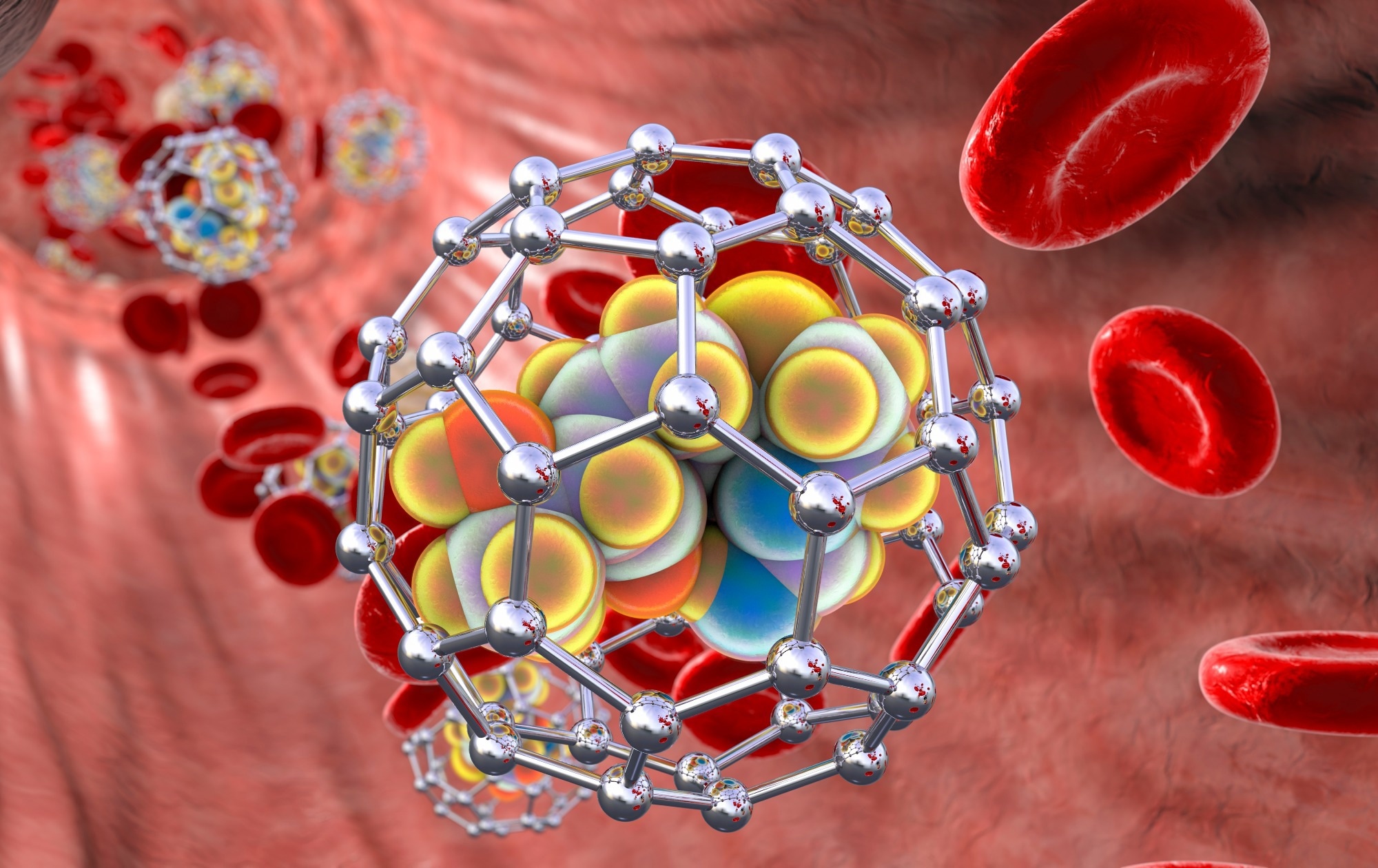 Image Credit: Kateryna Kon/Shutterstock.com
At the same time, only a small fraction of nanomedicines successfully translate to the clinic, making it essential to understand which platforms matter now, where they are being applied, and what it takes to move from benchtop innovation to scaled manufacturing.1
Get all the details: Grab your PDF here!
Biopharmaceutical pipelines are increasingly dominated by monoclonal antibodies, RNA therapeutics, viral vectors, and gene-editing systems, which are potent but often fragile and hard to deliver efficiently.2
Nanoplatforms address this by protecting labile cargos, improving pharmacokinetics, and enabling targeted delivery to tissues or cell subsets, thereby expanding the therapeutic index of advanced biologics.2
Several converging trends make this especially important now.
Post-pandemic momentum in lipid nanoparticle (LNP) and mRNA vaccines has validated nanoscale carriers at a global scale and accelerated regulatory familiarity.
Growing interest in gene editing, cell reprogramming, and immuno-oncology requires tools that can safely deliver nucleic acids and proteins into specific cells in vivo.
Pressure to improve manufacturability and cost of goods for complex biologics is pushing the field toward modular, scalable nanoformulation strategies that can be reused across programs.2
Types of Emerging Nanoplatforms
Nanoplatforms can be thought of as a small number of families with distinct strengths and constraints.
Lipid-Based Nanoplatforms
Lipid-based systems, including classic liposomes, solid lipid nanoparticles, and modern LNPs, are now the most clinically mature nanoplatforms for biopharmaceutical delivery.
They form self-assembled structures that can encapsulate small molecules, peptides, proteins, and nucleic acids, offering biocompatibility, tunable size, and well-characterized manufacturing routes.3
Key applications of lipid-based nanoplatforms include mRNA vaccines and RNA therapeutics, where ionizable LNPs protect RNA and promote endosomal escape for efficient cytosolic delivery, as well as delivery of siRNA and antisense oligonucleotides to the liver and other tissues using tailored lipid compositions and targeting ligands.3
They also enable improved formulations of protein biologics and small molecules through liposomes and lipid-like nanocages that control release, reduce immunogenicity, and enhance tumor accumulation.3
Polymeric and Inorganic Nanoplatforms
Polymeric nanoparticles, micelles, dendrimers, and nanogels are a more flexible platform for design. They can incorporate responsive chemistries that change conformation, solubility, or degradation rates in specific microenvironments. They are used in cancer and autoimmune diseases for controlled release, combination delivery, and to evade efflux-mediated drug resistance.
They also support oral and mucosal delivery of biologics using mucoadhesive or pH-responsive polymers that protect cargos through harsh barriers and release them at defined sites. In addition, they enable long-acting injectables for peptides and proteins by using slow polymer erosion to maintain therapeutic levels over extended periods.
Inorganic and hybrid platforms, such as mesoporous silica, magnetic nanoparticles, and metal-organic frameworks, provide structurally defined frameworks with high surface areas. They can integrate imaging or theranostic functions.
These systems show promise in precision oncology, enabling targeted hyperthermia and image-guided delivery with magnetic nanoparticles.
They are also useful for combination therapies, where mesoporous silica can load multiple agents and release them in response to pH or redox cues.
For both polymeric and inorganic systems, successful translation requires simplified chemistries to reduce heterogeneity, careful assessment of long-term biodistribution and clearance, and reliable standardized assays for corona formation, immunogenicity, and off-target accumulation.
Bio-Derived Nanoplatforms
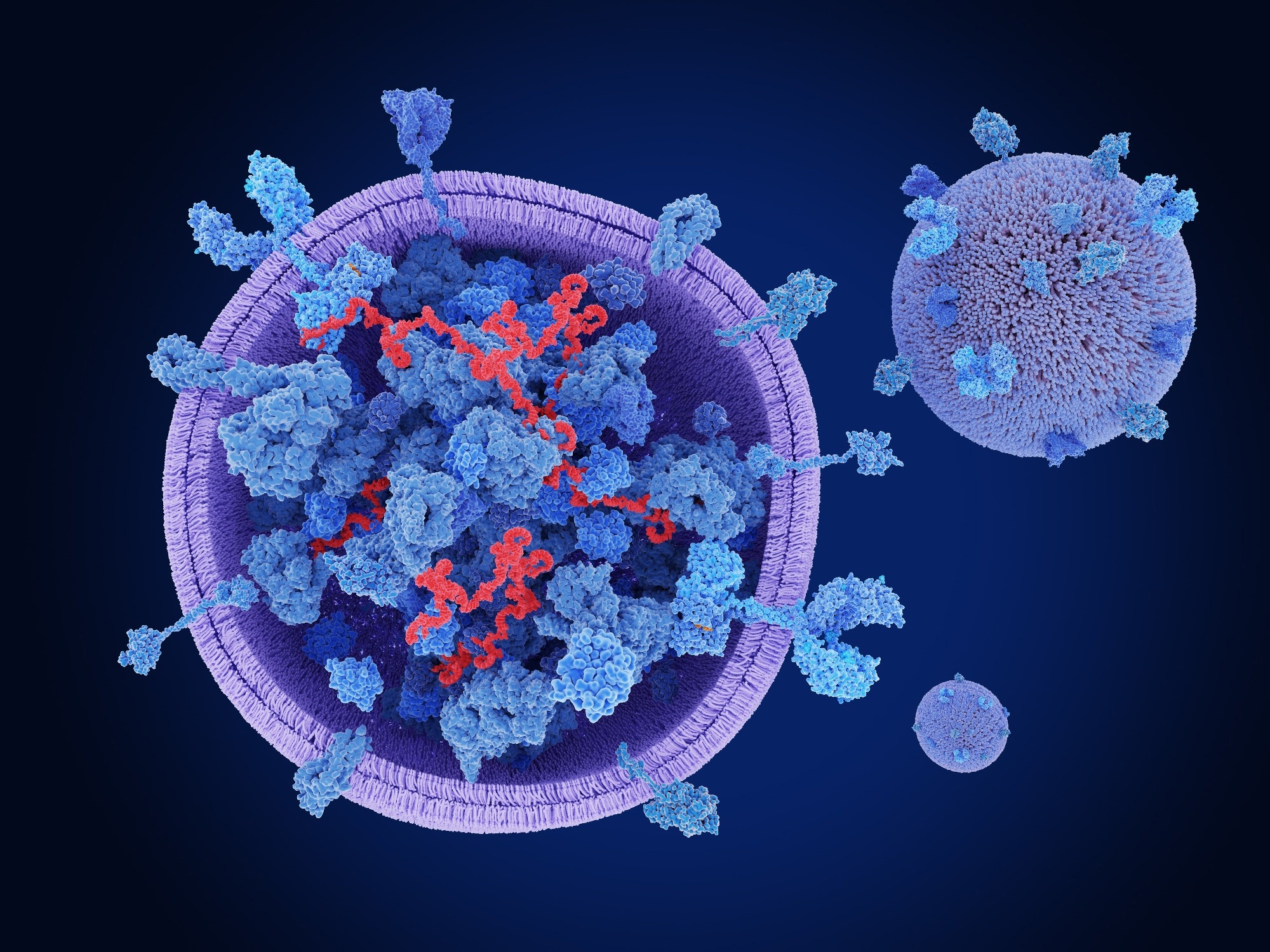 Image Credit: Juan Gaertner/Shutterstock.com
Bio-derived nanocarriers harness or mimic the body’s own transport systems, offering superior biocompatibility and natural biodistribution patterns. Exosomes are nanoscale vesicles secreted by cells.
Often called nature's LNPs, they provide intrinsic stability and low immunogenicity. Exosomes enable excellent membrane penetration for proteins, RNAs, and small molecules.
On top of this, they have built-in targeting via surface proteins and lipids. These targeting effects can be engineered using ligands or PEG to improve circulation and specificity. They also serve dual therapeutic and diagnostic roles, such as in liquid biopsies.
Protein-based nanoparticles, such as albumin, ferritin, and silk fibroin, work similarly. They provide biocompatible, biodegradable scaffolds. These can load drugs or biologics and add targeting decorations.
However, clinical and manufacturing translation demands solutions for scalable sourcing and purification with consistent composition, standardized loading methods ensuring high encapsulation without aggregation or dysfunction, and clear regulatory definitions of identity, potency, and release criteria for these complex biological nanosystems.
Smart, Stimuli-Responsive and Precision Nanoparticles
Smart nanocarriers are increasingly being designed across all nanoplatform families to respond to specific stimuli such as pH, redox state, enzymes, temperature, or external fields, thereby controlling when and where a therapeutic is released.
These systems aim to align pharmacology with disease biology, concentrating active drug at sites of pathology while limiting systemic exposure.
Emerging examples include environment-responsive micelles and nanogels that disassemble in acidic tumors or inflamed tissues. Multifunctional theranostic nanoparticles combine imaging agents, targeting ligands, and therapeutic payloads for real-time tracking and adaptive dosing.
However, these conceptually powerful platforms increase the complexity of synthesis and quality control, demanding close integration between materials design, preclinical modeling, and manufacturing science.
Saving this article for later? Grab a PDF here.
What’s Needed for Translation and Scalable Manufacturing?
Translation to the clinic and reliable commercial manufacturing across nanoplatforms face common challenges organized into four interlocking domains: design, evidence, manufacturing, and regulation/business.
Rational design emphasizes modular, reusable nanocarrier chassis for multiple drug candidates with minimal tuning, incorporating translational constraints like available excipients, scalable operations, and established analytics early rather than prioritizing preclinical efficacy alone.
Robust preclinical evidence addresses gaps between animal models and human outcomes. It uses better modeling of physiology, immunity, and microenvironments. It also includes systematic checks of biodistribution, protein corona, and long-term safety. These define biomarkers for dosing and patient stratification.
Industrialization needs quality-by-design frameworks. These define CMAs, CPPs, and CQAs. They rely on high-resolution analytics and simple synthetic routes. Formulation complexity often conflicts with GMP standards.
Regulatory and business alignment involves early regulator engagement on classification and analytics, plus models accounting for costs, cold-chain, and reimbursement, particularly for personalized or exosome products, while DELIVER-style frameworks link design, evidence, manufacturing, regulation, and risk mitigation to de-risk development and accelerate clinical impact.
| Platform Family |
Best For |
Strengths |
Bottlenecks |
Manufacturing Maturity |
| Lipid-based (LNPs, liposomes) |
mRNA/siRNA/AZOs; some small molecules |
Clinically proven; scalable; tunable; can enable endosomal escape |
Targeting beyond the liver, stability, and immune effects |
High |
| Polymeric (micelles, dendrimers, nanogels) |
Controlled release; combo delivery; long-acting |
Highly designable; responsive chemistries; depot formats |
Heterogeneity, reproducibility, and degradation safety |
Medium |
| Inorganic/hybrid (silica, magnetic, hybrids) |
Theranostics; multi-drug loading |
Defined structure; imaging integration |
Clearance, biodistribution persistence, safety |
Low-Medium |
| Bio-derived (exosomes, protein NPs) |
Biologics needing biocompatibility/uptake |
Natural trafficking; low immunogenicity potential |
Sourcing/Purification, identity/potency, regulatory clarity |
Low-Medium |
| Stimuli-responsive (cross-family) |
Site-specific release |
Precision + reduced systemic exposure |
Synthesis/QC complexity, GMP analytics burden |
Low-Medium |
Emerging nanoplatforms now map a distinct, functional landscape. Lipid-based systems remain (for now) the clinical workhorses, proven at scale and validated in patients. Polymeric and inorganic hybrid carriers power finely tuned, controlled delivery. Bio-derived vesicles and protein particles point toward a new class of highly biocompatible vectors.
Across all categories, stimuli-responsive designs are pushing precision from lab to practice. To move these platforms forward, developers must weigh manufacturability and regulatory readiness as heavily as biological performance.
Integrated science–engineering–policy thinking is no longer optional. Such thinking is a prerequisite for biopharmaceutical success in the coming decade.
The next wave of progress is predicted to converge on hybrid architectures, AI-accelerated design workflows, and standardized CMC frameworks that further close the gap between the research lab and the clinic.
References and Further Readings
- Herdiana, Y. Bridging the gap: the role of advanced formulation strategies in the clinical translation of nanoparticle-based drug delivery systems. International Journal of Nanomedicine 2025, 13039-13053.
- Wu, K. et al. Recent advances in nanoplatforms for the treatment of osteosarcoma. Frontiers in Oncology 2022, 12, 805978.
- Lin, X. et al. The Evolution of Lipid Nanoparticles: Paving the Way for Next-Generation Nucleic Acid Medicines. Asian Journal of Pharmaceutical Sciences 2026, 101121.
Disclaimer: The views expressed here are those of the author expressed in their private capacity and do not necessarily represent the views of AZoM.com Limited T/A AZoNetwork the owner and operator of this website. This disclaimer forms part of the Terms and conditions of use of this website.