By varying LDH platelet size, surface chemistry, and filler loading, researchers traced how nanoscale structure shapes heat resistance, stiffness, and UV transmission in transparent PMMA.
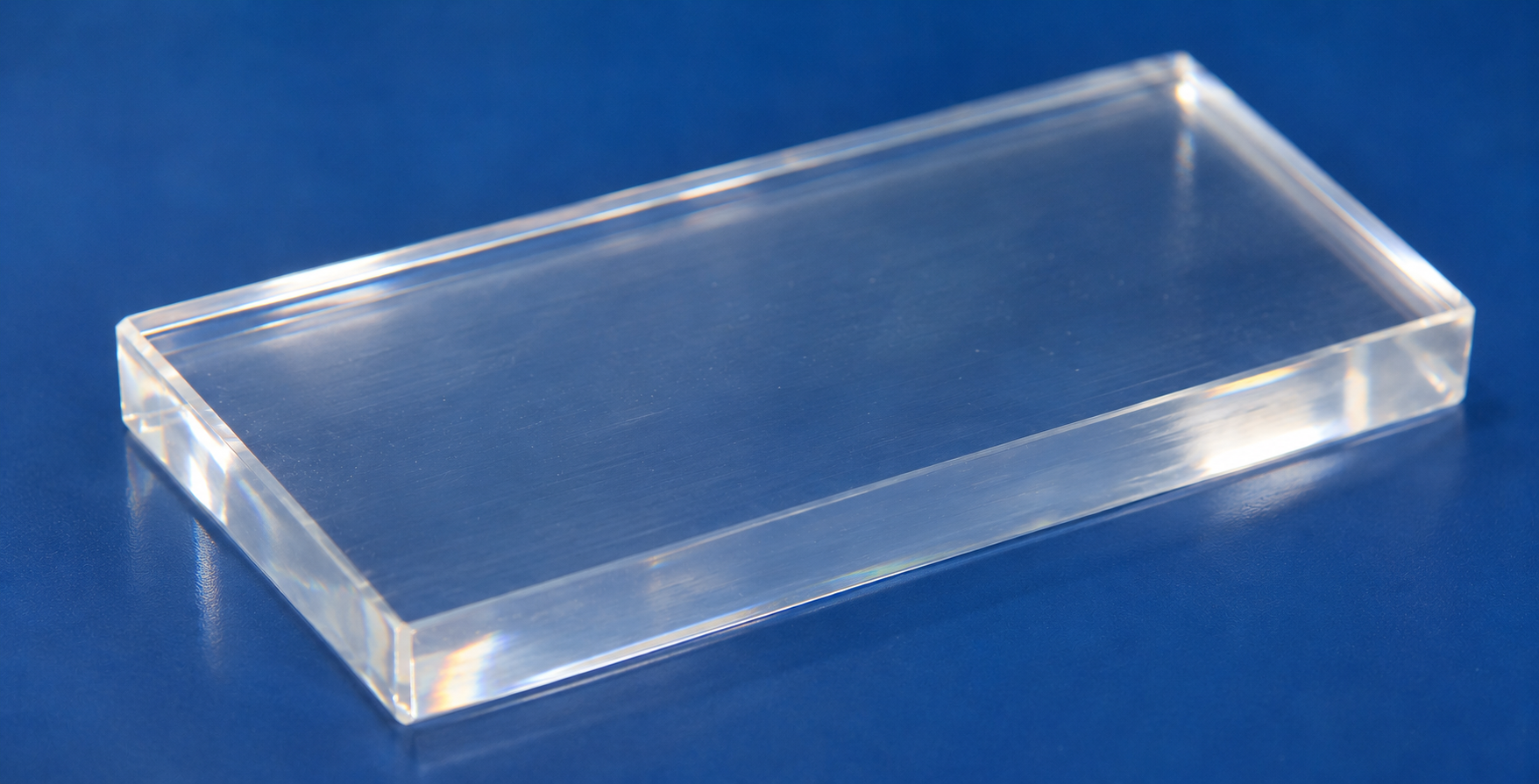
Paper: Size-Controlled and Surface-Modified LDH Nanofillers Enable Multifunctional Transparent PMMA Nanocomposites with Enhanced Thermal Stability and UV Shielding. AI-generated abstract conceptual image created using ChatGPT/OpenAI
*Important notice: This news reports on an unedited version of an accepted paper and is awaiting final editing. Therefore, the paper should not be regarded as conclusive or treated as established information.
In a recent research article published in the journal International Journal of Molecular Sciences, researchers investigated how size-controlled and surface-modified layered double hydroxide (LDH) nanofillers affect the thermal stability, UV shielding, and mechanical properties of transparent poly(methyl methacrylate) (PMMA) nanocomposites.
PMMA and LDH context
Poly(methyl methacrylate) (PMMA) is a widely used transparent polymer valued for its excellent optical clarity, but its thermal stability and ultraviolet (UV) protection are limited. Incorporating nanofillers can improve PMMA’s functionality without sacrificing transparency.
Among various nanofillers, layered double hydroxides (LDHs) are transparent, two-dimensional layered materials with tunable metal compositions and exchangeable interlayer anions.
These characteristics allow LDHs to improve thermal resistance and UV shielding when embedded in polymer matrices while retaining optical clarity. Still, achieving uniform nanoscale dispersion and good interfacial compatibility between LDH platelets and PMMA remains difficult.
This study examined how LDH platelet size and surface modification with different organic agents influence the microstructure, dispersion, and multifunctional properties of PMMA/LDH nanocomposites prepared through emulsion polymerization.
LDH synthesis and modification
Two types of LDHs, MgAl-LDH and ZnAl-LDH, were synthesized by aqueous co-precipitation with nucleation and hydrothermal treatments tailored to control platelet size and crystallinity.
The researchers adjusted nucleation time and hydrothermal conditions to produce LDHs with different size distributions and degrees of crystalline order, following the LaMer nucleation-growth model.
The LDHs were then modified with three chemically distinct sulfonate-containing agents: sulfanilic acid sodium salt hydrate (SAS), sodium dimethyl 5-sulfoisophthalate (DMSI), and calcium dodecylbenzene sulfonate (CDS).
Because the modifiers differ in molecular size, rigidity, flexibility, and hydrophobicity, the researchers could test how their chemistry affected LDH-PMMA compatibility and interlayer structure.
The modified LDHs were incorporated at loadings from 0.5 to 5 phr into PMMA matrices via emulsion polymerization, which promotes close filler-matrix contact. The resulting nanocomposites were characterized by X-ray diffraction, Fourier-transform infrared spectroscopy, thermogravimetric analysis, DMA, scanning and transmission electron microscopy, polarized optical microscopy, and UV-visible spectroscopy.
The analysis linked LDH platelet size, intercalation levels, and modifier chemistry to platelet distribution within the polymer and changes in composite properties.
Nanocomposite structure-property analysis
X-ray diffraction confirmed successful synthesis of LDHs with controllable platelet sizes.
Samples subjected to longer hydrothermal treatment and shorter nucleation times showed sharper and more intense basal reflections, indicating increased crystallinity and improved layer stacking. ZnAl-LDHs were sensitive to hydrothermal duration, with the highest crystallinity reached at a particular treatment time before longer exposure led to structural degradation.
Surface modifications affected interlayer spacing and intercalation to different degrees. The CDS-modified MgAl-LDHs had the largest interlayer expansion and highest intercalation but the poorest dispersion within PMMA. The proposed intercalation arrangements were conceptual models based on XRD, FTIR, and TGA results rather than directly resolved molecular structures.
The authors attributed the poor distribution of CDS-modified LDHs to their long hydrophobic alkyl chains, which reduced interfacial compatibility and promoted platelet aggregation, as seen by polarized optical microscopy and transmission electron microscopy.
SAS and DMSI produced a more even distribution of LDH platelets and prevented large aggregates. XRD showed loss of ordered LDH stacking but could not distinguish full exfoliation from partial intercalation. TEM gave direct evidence of effective exfoliation for the SAS-modified MgAl-LDH formulation.
In the PMMA matrix, low LDH loadings of 1 to 3 phr generally allowed more uniform platelet distribution and improved nanocomposite properties, whereas 5 phr led to significant aggregation. The study also found that greater intercalation or wider interlayer spacing did not guarantee better platelet distribution or thermal performance when interfacial compatibility was poor.
Thermogravimetric analysis found that medium-sized SAS-modified MgAl-LDH platelets at 3 phr raised the temperature at which 5% mass loss occurred (T5d) by about 22 °C compared with neat PMMA.
This shift showed improved thermal stability and was consistent with well-dispersed LDHs acting as barriers to thermal degradation.
The ZnAl-M-SAS formulation at 1 phr reached a T5d of 324.0 °C, compared with 300.4 °C for neat PMMA, showing that the most favorable loading differed between the MgAl and ZnAl systems.
By comparison, CDS-modified LDH composites had lower thermal stability than pure PMMA because of platelet agglomeration and the lower thermal resistance of the organic modifier.
The paper identifies poor platelet distribution and agglomeration as the main causes, with the lower thermal resistance of the CDS alkyl chains playing a secondary role.
DMA mechanical testing showed substantial increases in storage modulus (about 54-56%) for nanocomposites containing SAS-modified LDHs with favorable dispersion. The measurements indicate higher stiffness and more efficient stress transfer at the nanoscale. The poorly dispersed MgAl-L-CDS formulation had a lower storage modulus than neat PMMA, consistent with reduced reinforcement.
Optical measurements showed that, according to the abstract, the authors' selected nanocomposites retained more than 85% visible-light transmittance while achieving a 27% improvement in UV-shielding efficiency.
The results also show a trade-off: PMMA/MgAl-M-SAS-3 phr provided the best balance between visible transparency and UV shielding, while MgAl-L-CDS-3 phr and ZnAl-SAS at 1.5 phr produced stronger UV blocking. For example, MgAl-M-SAS at 3 phr retained 88.8% visible transmittance, compared with 92.1% for neat PMMA, while UVA and UVB transmittance fell to 81.6% and 74.7%, respectively. ZnAl-M-SAS at 1 phr retained 89.5% visible transmittance and reduced UVA and UVB transmittance to 68.8% and 61.7%, respectively.
Two mechanisms contributed to the UV response. The larger ZnAl-LDH platelets scatter UV light through Mie scattering because their dimensions approach UV wavelengths. Intercalated aromatic modifiers also absorb UV radiation through π→π* and n→π* electronic transitions.
Design principles and applications
This work shows that controlling LDH platelet size and surface chemistry can improve thermal, mechanical, and UV-shielding properties while preserving transparency when the filler is well dispersed. Interfacial compatibility and platelet distribution were the main factors linked to thermal stability, stiffness, transparency, and UV shielding, with intercalation level alone carrying less explanatory weight.
The authors propose further study of additional LDH chemistries and hybrid surface treatments to improve dispersion stability, durability, weathering resistance, and UV shielding. The paper identifies possible applications in optics, energy devices, coatings, and biomedical materials, as well as other transparent engineering polymers.