By Vladimirs ZenkoReviewed by Louis CastelMar 4 2026
Polymer materials have transformed modern engineering by offering lightweight, corrosion-resistant, and cost-effective alternatives to metals and ceramics. However, they are limited by their intrinsic properties.1 Researchers and manufacturers are exploring nano-structural modifications to overcome these constraints and strengthen the role of polymers in advanced engineering applications.
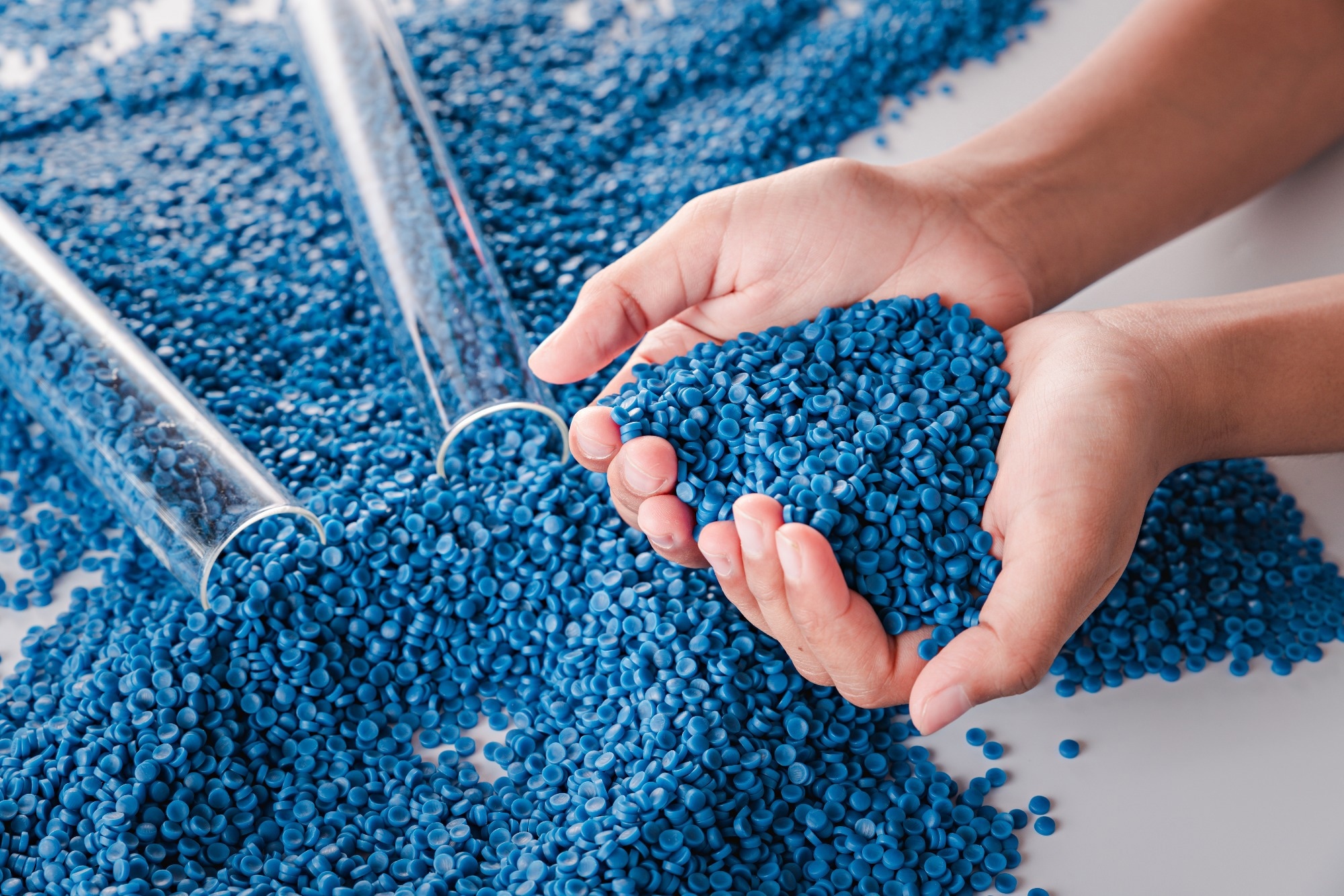
Image Credit: Meaw_stocker/Shutterstock.com
The Rise of Polymer Engineering
The era of modern plastics began in 1907 with the discovery of Bakelite, the first fully synthetic polymer.2 Durable, heat-resistant, and electrically non-conductive, it quickly became a key material for radios, telephones, and early industrial electronics.2 Plastic started to push traditional materials out of the market.
The structural nature of polymers was later clarified by H. Staudinger, who described them as macromolecules composed of repeating units with high molecular mass.3 By varying the matrix of a polymer (base molecules and chain architecture), materials with distinct mechanical and chemical properties could be produced. As polymer chemistry advanced, materials such as polyamide and polycarbonate emerged.4,5 This marked the rise of polymers designed for structural and functional performance, known as engineering plastics.
No time now? Download your PDF for later
Fundamental Limitations of Polymers
The low density, corrosion resistance, and ease of processing of polymers have enabled their partial replacement of metals in many applications. However, the increasing mechanical, thermal, and electrical demands of modern technology soon revealed several limitations.1
Most polymers have lower stiffness than metals, which restricts their use in automotive or aircraft frames.1 Many polymers also gradually deform (creep) under stress,1 reducing their mechanical stability and making them unsuitable for gears, bearings, and fasteners. Thermally, their low heat resistance limits operation in technology where temperatures can exceed the softening point, such as engines. On the other hand, their low thermal conductivity hinders heat dissipation in batteries and electronic casings.6 Most polymers are also insulators,7 making them unsuitable for conductive tasks or energy storage components without modification. Last but not least, many polymers gradually let gases and moisture in,8 reducing long-term performance in tanks, packaging and protective coatings.
Overcoming these constraints is essential if polymers are to compete with conventional engineering materials and is the main motivation for the development of reinforced polymer systems.
Composite Materials Solution
A practical way to overcome the limitations is through composite design. In a polymer composite, the matrix forms the continuous phase that transfers load, while a dispersed reinforcement phase provides added functionality.9 When this reinforcement is introduced at the nanoscale, a large interaction area allows significant property changes at relatively low filler content.9,10 Several filler options can be considered, based on the output functionality.
Carbon fillers such as nanotubes and graphene particles improve mechanical stiffness by transferring load from the matrix to the high-modulus carbon framework. Even small additions can significantly reduce creep. These conductive carbon networks also create electrical pathways at sufficient concentration, enabling electromagnetic shielding or antistatic behaviour. Finally, their high intrinsic thermal conductivity assists heat dissipation in electronics and battery systems.6,9–11
Non-carbon options provide even more versatility. Metal oxide nanoparticles such as silica or alumina enhance stiffness and thermal stability by restricting molecular mobility within the matrix,12 while nanoclays slow gas and moisture diffusion.8,13 Cellulose nanocrystals provide renewable reinforcement, increasing mechanical strength while maintaining low density.14
But to achieve maximum efficiency, these features can work in tandem; hybrid composites combine two or more nanofillers to achieve balanced performance.15 For example, graphene may provide conductivity while nanoclay improves barrier properties, or metal oxides enhance thermal resistance alongside carbon-based fillers.
By tuning filler types, size, and dispersion within the matrix, polymers can be engineered to approach the mechanical, thermal, electrical, and barrier performance of conventional engineering materials, and in some applications exceed them.9,12

Image Credit: Production Perig/Shutterstock.com
Future Applications
Nanofiller-reinforced polymers are moving from laboratory studies into industrial use across a wide range of applications, bringing a new standard of manufacturing into focus.
For example, Goodrich Corp. has patented carbon nanotube-enhanced composite materials designed to improve electrical conductivity and lightning strike protection in aircraft structures,16 reducing reliance on metal meshes while maintaining low weight. SABIC has also adapted their designs to conductive thermoplastic compounds for electromagnetic shielding in consumer and industrial devices.11 These two examples alone indicate a strong shift of interest towards nanostructured polymers in industries that prioritise lightweight, safe design. In a more recent example involving energy storage, conductive graphene-modified polymers were used for battery housings and current-carrying components, improving heat management and durability.13
Putting aside electrical, mechanical and thermal advantages, barrier performance improvements are also reaching market scale. In 2012 Inergy/Plastic Omnium has patented polymer-nanoclay fuel tank materials that reduce hydrocarbon permeation and meet stricter emission standards without switching to metal tanks.17
However, scaling these materials remains challenging. Reviews report that uniform nanofiller dispersion is difficult to achieve due to particle agglomeration, which reduces mechanical and electrical gains.13 Cost is another barrier, as high-purity CNTs and graphene remain significantly more expensive than conventional fillers.13,18 Finally, one of the biggest concerns regarding modified plastics is their recyclability, since nanofillers can complicate melt reprocessing and property retention, causing potential environmental threats and raising concerns over sustainability of this manufacturing direction.19 Overall, balancing performance improvement with manufacturability and cost control remains central to wider industrial adoption.
Conclusion
Polymers have progressed from basic insulating materials to widely used engineering plastics, yet inherent mechanical, thermal, electrical, and barrier limitations continue to restrict their full structural potential. Nanofillers and hybrid composite strategies offer a direct solution via polymer matrix modification. But while industrial and academic case studies confirm feasibility of the approach, challenges in dispersion, processing compatibility, cost, and recyclability remain significant. The future of engineering plastics therefore depends not only on material innovation, but on achieving scalable, economically viable manufacturing routes that translate nanoscale advantages into reliable performance.
Keep this article with you - download the PDF here
Bibliography
- Ashby MF, Jones DRH, eds. Engineering Materials 1: An Introduction to Properties, Applications, and Design. 4th ed. Butterworth-Heinemann; 2012.
- Baekeland LH. The Synthesis, Constitution, and Uses of Bakelite. J Ind Eng Chem. 1909;1(3):149-161. doi:10.1021/ie50003a004
- Staudinger H. Über Polymerisation. Berichte Dtsch Chem Ges B Ser. 1920;53(6):1073-1085. doi:10.1002/cber.19200530627
- Carothers WH. Synthetic Fiber. US2130948A. https://patents.google.com/patent/US2130948A/en
- Schnell Hermann, Bottenbruch Ludwig, Krimm Heinrich. Thermoplastic aromatic polycarbonates and their manufacture. US3028365A. https://patents.google.com/patent/US3028365A/en
- Xu Y, Wang X, Hao Q. A mini review on thermally conductive polymers and polymer-based composites. Compos Commun. 2021;24:100617. doi:10.1016/j.coco.2020.100617
- Yang J, Wang S, Lu H, et al. Non-Stationary Viscoelastic Modeling of Compression Creep Behavior in Composite Bolted Joints. Polymers. 2025;17(10):1382. doi:10.3390/polym17101382
- Bruce Duncan, Jeannie Urquhart, Simon Roberts. Review of Measurement and Modelling of Permeation and Diffusion in Polymers. NPL. https://eprintspublications.npl.co.uk/3221/1/DEPC_MPR12.pdf
- Paul DR, Robeson LM. Polymer nanotechnology: Nanocomposites. Polymer. 2008;49(15):3187-3204. doi:10.1016/j.polymer.2008.04.017
- Potts JR, Dreyer DR, Bielawski CW, Ruoff RS. Graphene-based polymer nanocomposites. Polymer. 2011;52(1):5-25. doi:10.1016/j.polymer.2010.11.042
- Marnik Vaes, Leen-Pieter Deurloo, Dr Martin Sas. POLYMERIC EMI SHIELDING: PROVIDING A MORE SECURE FUTURE FOR PATIENTS. ONdrugDelivery. Published online June 2020.
- Hanemann T, Szabó DV. Polymer-Nanoparticle Composites: From Synthesis to Modern Applications. Materials. 2010;3(6):3468-3517. doi:10.3390/ma3063468
- Mirabedini A, Ang A, Nikzad M, Fox B, Lau K, Hameed N. Evolving Strategies for Producing Multiscale Graphene-Enhanced Fiber-Reinforced Polymer Composites for Smart Structural Applications. Adv Sci. 2020;7(11):1903501. doi:10.1002/advs.201903501
- Moon RJ, Martini A, Nairn J, Simonsen J, Youngblood J. Cellulose nanomaterials review: structure, properties and nanocomposites. Chem Soc Rev. 2011;40(7):3941. doi:10.1039/c0cs00108b
- Jinhu CHEN, Krzysztof Kazimierz Koziol, Catharina PAUKNER. Carbon nanotube / graphene composites. Published online December 8, 2020.
- Teresa M. Kruckenberg, Vijay V. Pujar. Lightning strike protection. Published online October 22, 2013:US20110049292A1.
- Philippe Martin, Pierre De Keyzer. WO2012045762A1. Published online April 12, 2012.
- Dr Conor O’Brien. Billion Dollar Carbon Nanotube Market Continues to Grow. June 7, 2025.
- Hosseinnezhad R, Khalaji M, Elumalai D, Vozniak I. Sustainable Recycling of Polymer Nanocomposites: Challenges and Innovations. Adv Ind Eng Polym Res. Published online January 2026:S2542504826000023. doi:10.1016/j.aiepr.2026.01.002
Disclaimer: The views expressed here are those of the author expressed in their private capacity and do not necessarily represent the views of AZoM.com Limited T/A AZoNetwork the owner and operator of this website. This disclaimer forms part of the Terms and conditions of use of this website.