A biodegradable peptide-based coating could address some of PEG’s long-standing drawbacks in mRNA delivery, but its performance beyond cultured cells remains untested.
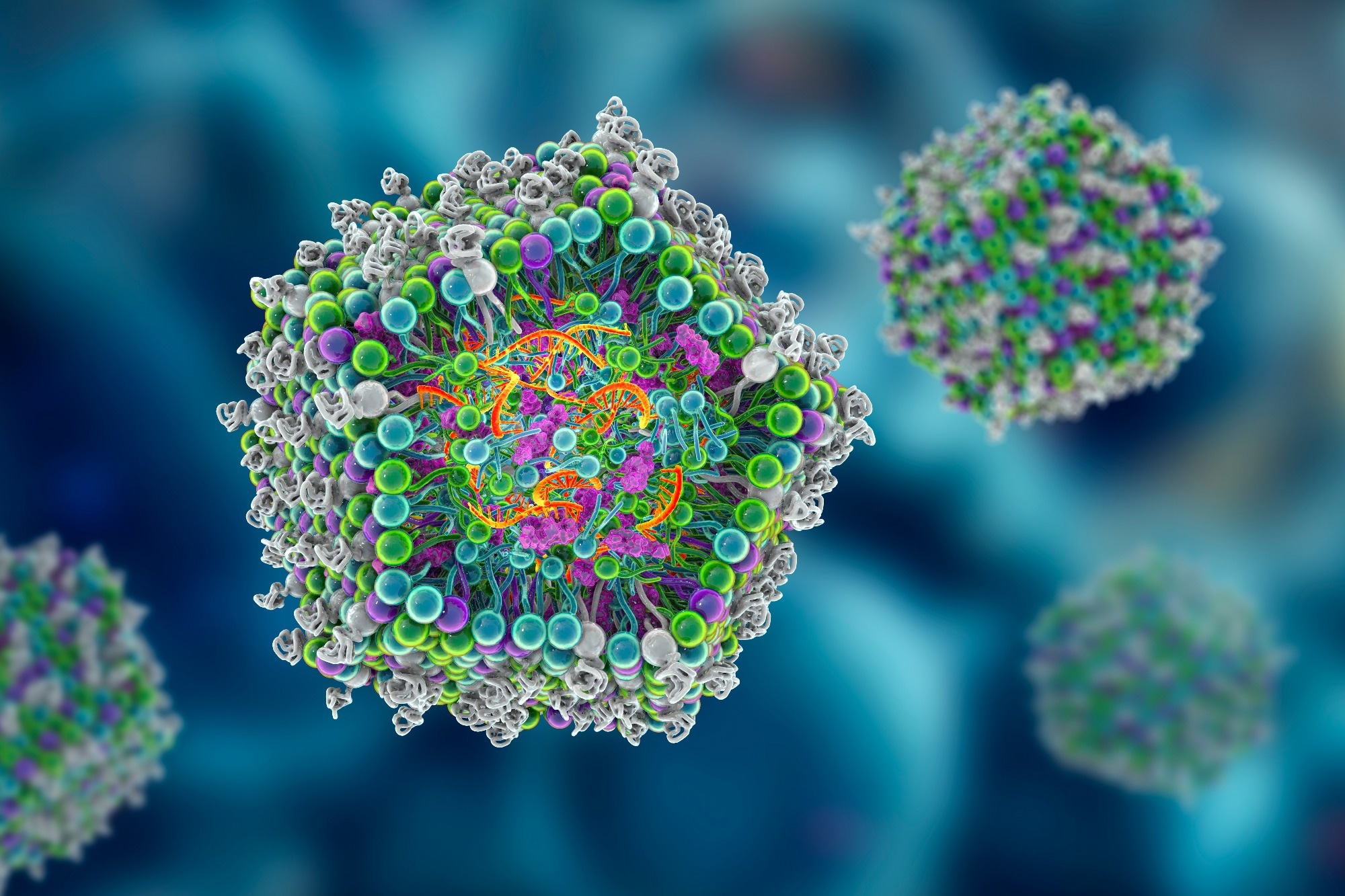
Paper: Pro/Ala/Ser (PAS) peptides as an alternative to polyethylene glycol (PEG) for the surface shielding of lipid nanoparticles (LNPs) carrying therapeutic mRNA. Image Credit: Kateryna Kon / Shutterstock
In a recent research article published in the journal Scientific Reports, researchers developed and characterized a PASylated lipid with a biodegradable peptide component as a potential alternative to polyethylene glycol for surface shielding of lipid nanoparticles that deliver therapeutic mRNA.
Challenges of PEG in mRNA-LNPs
Lipid nanoparticles (LNPs) have become important vehicles for delivering therapeutic mRNA, as shown by the success of COVID-19 mRNA vaccines. Typically, LNPs incorporate ionizable cationic lipids, phospholipids, cholesterol, and polyethylene glycol (PEG)-conjugated lipids on their surfaces. PEGylation helps stabilize nanoparticles and can prolong their circulation by providing a hydrophilic steric shield.
PEG is a non-biodegradable synthetic polymer that can accumulate intracellularly, raising concerns about biocompatibility and immunogenicity. Anti-PEG antibodies found in many individuals can contribute to accelerated blood clearance of PEGylated formulations, and PEG has also been linked to hypersensitivity reactions.
These concerns have increased interest in other surface-shielding agents that can mimic PEG's beneficial properties while minimizing immunogenicity and providing biodegradability.
PASylation, which involves attaching conformationally disordered polypeptides composed of the natural amino acids proline, alanine, and serine (PAS), is a promising substitute because prior studies support its biodegradability and biocompatibility, and its physical properties resemble those of PEG.
This study examines the development of a novel PASylated lipid, PAS-DTA, to replace PEG-lipids in LNP formulations and assesses its effects on nanoparticle characteristics and mRNA delivery, with a focus on in vitro expression of a PASylated interferon candidate motivated by previous hepatitis B research. The present experiments did not test antiviral efficacy.
Synthesis and LNP Formulation
The investigators synthesized a PASylated lipid by conjugating a 40-residue PAS peptide to a ditetradecylamine lipid anchor, creating PAS-DTA. This lipid was designed to substitute commonly used PEGylated lipids such as ALC-0159 and PEG2000-C-DMG in established LNP formulations.
mRNA encoding proteins of interest, including enhanced green fluorescent protein (eGFP) and PASylated murine interferon alpha-11 (mIFNα11) carrying a V5 tag and a secretion signal derived from α1-acid glycoprotein (AGP), was produced through in vitro transcription using plasmid templates bearing the required coding sequences and regulatory elements.
The PAS200 sequence fused to the interferon was separate from the PAS40 peptide used on the lipid surface.
The mRNAs were enzymatically capped and purified to produce translationally competent transcripts. LNPs were formulated using a published procedure based on the lipid composition of the approved siRNA drug patisiran, incorporating ionizable lipid Dlin-MC3-DMA, DSPC, cholesterol, and either PAS-DTA or PEGylated lipids at identical molar ratios.
Physicochemical analyses of the resulting mRNA-loaded nanoparticles included DLS measurements of hydrodynamic diameter and polydispersity, zeta potential measurement via phase analysis light scattering, mRNA encapsulation quantification using a fluorescence-based assay, and assessment of mRNA integrity by agarose gel electrophoresis.
Immunochemical properties were assessed by surface plasmon resonance to detect antibody binding specific to PEG or PAS on the LNP surface.
Functional delivery and protein expression were tested in HepG2 and HEK293E cells. Secreted PAS-mIFNα11 was detected by western blotting, with ELISA used for quantitative comparison of the three LNP formulations in HepG2 cells.
Biophysical and Functional Analyses
The study demonstrated successful synthesis of a uniform PAS-DTA lipid, with mass spectrometry showing a discrete species without the heterogeneity typical of PEG polymers.
Substituting PEG-lipids with PAS-DTA in LNP formulations was compatible with the established preparation procedure, yielding nanoparticles with hydrodynamic diameters between 85 and 125 nm, comparable to those made with conventional PEGylated lipids, and low polydispersity indices.
Zeta potentials ranged from about −4 to −13 mV and closely matched those of the corresponding PEG-LNPs in each experiment, showing similar surface charge profiles.
Encapsulation efficiencies of mRNA in PAS-containing LNPs were comparable to those of PEG formulations, ranging from 39% to 54% across the comparative experiments when calculated relative to input mRNA. Agarose gel electrophoresis showed that the encapsulated mRNA remained intact in the PAS-LNPs.
Surface plasmon resonance revealed selective antibody recognition: the anti-PEG monoclonal antibody tested strongly interacted with PEG-LNPs but not PAS-LNPs, whereas the anti-PAS monoclonal antibody bound only to PAS-LNPs. This showed no cross-reactivity in the antibody system tested but did not establish that PAS-LNPs are non-immunogenic.
Functionally, PASylated mRNA-LNPs produced eGFP in HepG2 cells and secreted the AGP-V5-PAS200-mIFNα11 protein from transfected HepG2 and HEK293E cells.
For the interferon construct, PAS-DTA LNPs produced secretion comparable to ALC-0159 and slightly higher than PEG2000-C-DMG under the conditions tested.
The main comparison used a refined mRNA construct with a 97-nucleotide poly-A tail. Earlier experiments with a 40-nucleotide tail produced much less interferon, showing that mRNA design also affected protein output.
PAS-LNPs retained the main physicochemical characteristics of the PEG formulations and delivered functional mRNA in cultured cells. The study did not directly compare cellular uptake rates, endosomal escape, biodistribution, or pharmacokinetics.
The lack of recognition by the tested anti-PEG antibody supports further tests of whether PASylated LNPs can reduce problems linked to pre-existing anti-PEG antibodies. PEG derivatives have been widely used to improve LNP circulation times, but concerns about their immunogenicity and non-biodegradability have driven the search for other surface-shielding materials.
PAS peptides are hydrophilic, uncharged, and structurally disordered, properties that can provide PEG-like steric shielding. Prior work supports PAS biodegradability, but PAS-DTA degradation and larger-scale manufacturing were not tested here.
PASylated Lipids as PEG Alternatives
This investigation provides proof-of-concept evidence that PASylated lipids can serve as a viable substitute for PEG-lipids in the tested in vitro mRNA-LNP system.
Future studies will need to investigate the in vivo pharmacokinetics, biodistribution, degradation, immune responses, and therapeutic efficacy of PASylated mRNA-LNPs before their clinical relevance as an mRNA delivery platform can be assessed.
Source:
- Makbul C., Friedrich L., et al. (2026). Pro/Ala/Ser (PAS) peptides as an alternative to polyethylene glycol (PEG) for the surface shielding of lipid nanoparticles (LNPs) carrying therapeutic mRNA. Scientific Reports 16, 38299. DOI: 10.1038/s41598-026-80364-w, https://www.nature.com/articles/s41598-026-80364-w