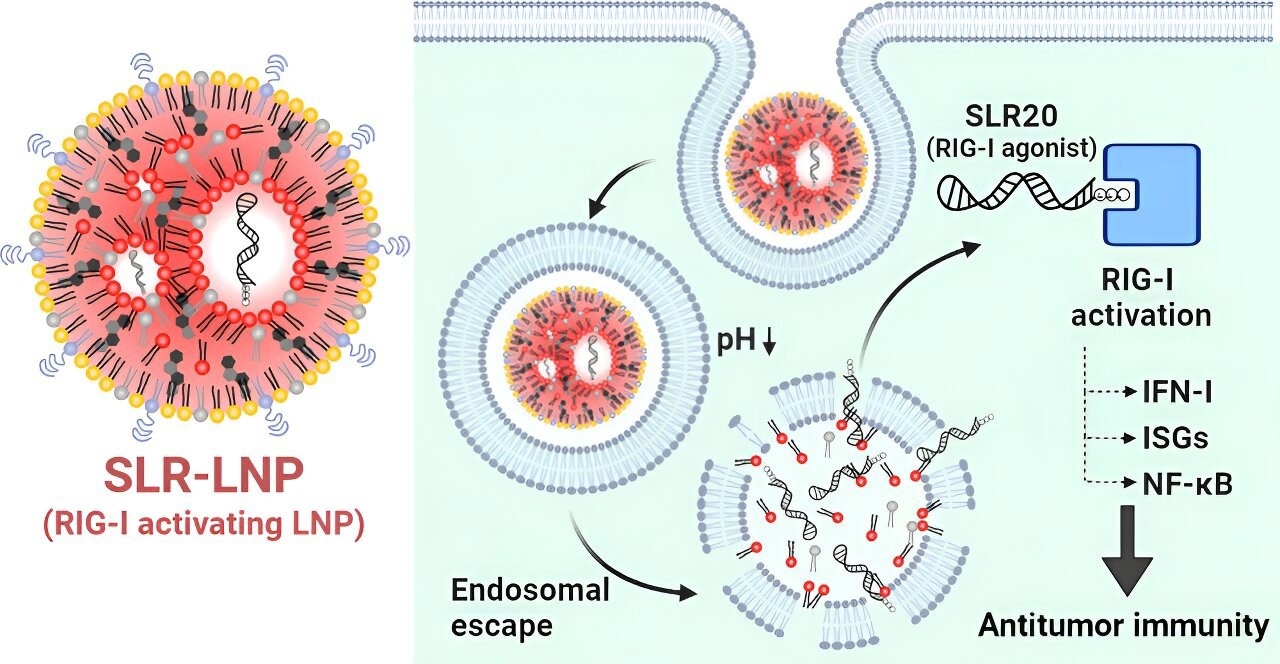
Image Credit: ACS Nano (2024). DOI: 10.1021/acsnano.3c06225
According to the researchers, nucleic acid triggers the retinoic acid-inducible gene I, or RIG-I, pathway, which is generally employed by the body to identify foreign viruses like influenza and aid the immune system in mounting a response.
The researchers were able to significantly activate the RIG-I pathway and direct the immune system's attention toward eliminating cancer cells in mouse models of breast cancer and melanoma by encasing this protein within lipid nanoparticles to enhance its transport to the cytosol of cells.
RIG-I is commonly activated to help the body combat viral infections, and there is compelling evidence that this same pathway can be harnessed to stimulate the immune system to fight cancer.
John T. Wilson, Associate Professor, Vanderbilt University
The authors highlighted that millions of COVID-19 mRNA vaccine recipients have already been administered lipid nanoparticles and that other drugs that activate RIG-I have progressed into clinical trials, paving the way for possible clinical testing. However, much work remains before such technology can be advanced to treat human cancers.
Wilson concluded, “We observed very nice responses even without doing a lot of optimization to the system, and so this sets the stage for future work to develop technologies that can do this even more effectively and also safely.”
Journal Reference:
Wang-Bishop, L., et. al. (2024) Nanoparticle Retinoic Acid-Inducible Gene I Agonist for Cancer Immunotherapy. ACS Nano. doi:10.1021/acsnano.3c06225