A new review shows how copper nanoparticle additives could turn biodegradable vegetable oils into higher-performing lubricants, but long-term stability, safety, and life-cycle evidence remain critical hurdles before industrial use.
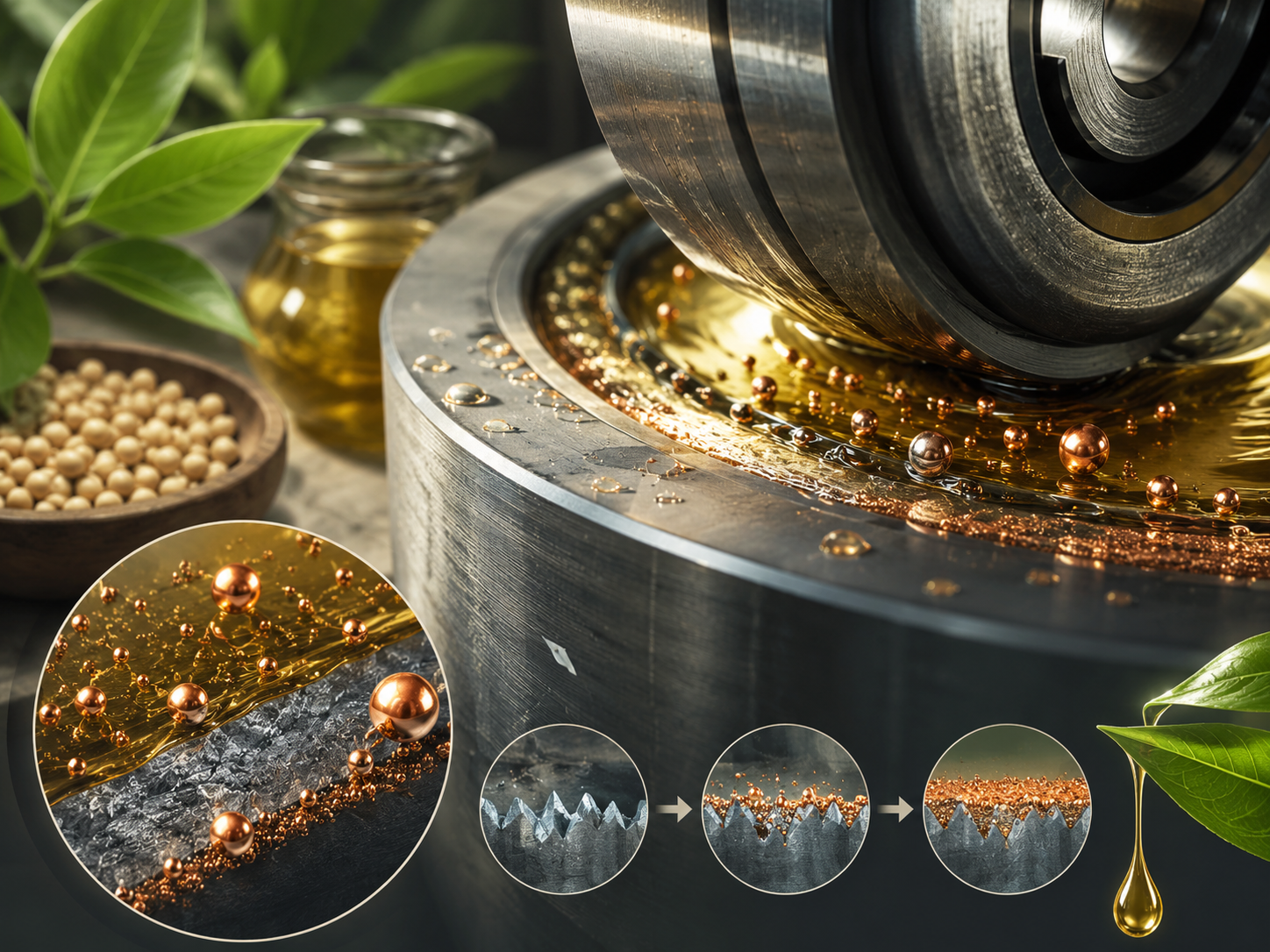
Review: Toward sustainable tribological systems: Copper nanoparticle-enhanced vegetable oil nanolubricants. Image Credit: ChatGPT / OpenAI
The demand for sustainable industrial infrastructure has positioned green tribology at the forefront of mechanical engineering research. A recent review published in the journal Next Nanotechnology examined the integration of copper nanoparticles (CuNPs) into vegetable oils to develop potentially more sustainable alternatives to petroleum-based lubricants.
Published studies indicate that these nanolubricants can reduce friction and wear while addressing some performance limitations of conventional bio-lubricants. This advancement could support more energy-efficient operations across automotive, industrial manufacturing, and industrial machinery applications, helping industries respond to stricter environmental regulations.
Environmental Concerns of Traditional Lubricants
For more than a century, heavy industry and transportation have relied on petroleum-based lubricants to reduce friction, dissipate heat, and prevent component wear. Despite their good load-bearing capacity, these lubricants pose environmental risks due to their toxicity, low biodegradability, and persistence in soil and water after spills.
As sustainable alternatives, vegetable oils such as palm, soybean, sunflower, rapeseed, coconut, and olive have gained significant attention. They offer high viscosity indexes and rapid biodegradation. However, their use is limited because the unsaturated fatty acids in these oils undergo thermal oxidation and polymerization under high temperatures and prolonged mechanical stress, degrading the lubricating film and accelerating wear.
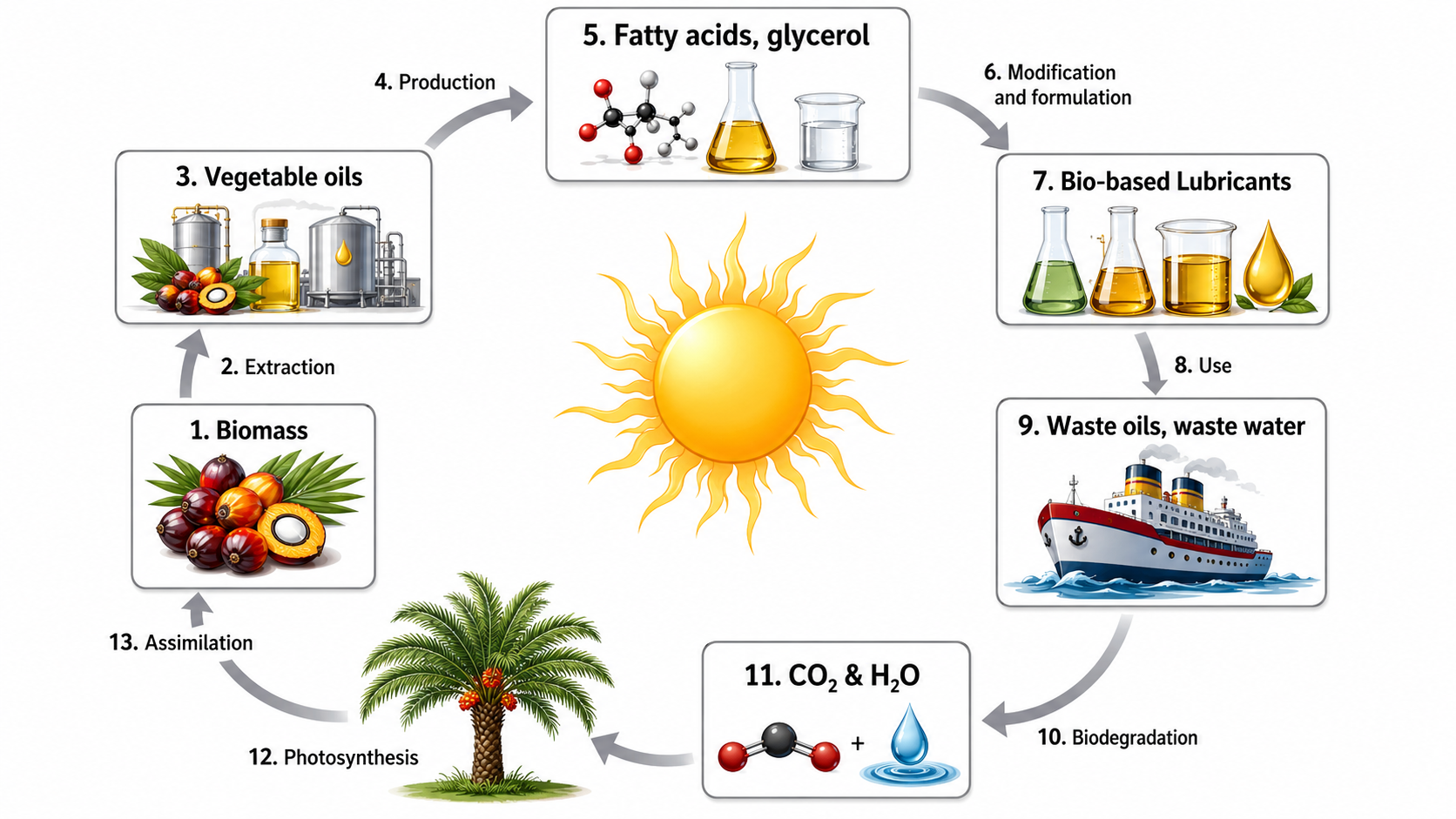
Life cycle of bio-lubricants. Image Credit: Adapted from Islam, M. M., & Saadi, M. M. U. (2026). Toward sustainable tribological systems: Copper nanoparticle-enhanced vegetable oil nanolubricants. Next Nanotechnology, 10, 100573. DOI: 10.1016/j.nxnano.2026.100573 using ChatGPT
Enhancing Bio-Lubricants through Chemical Modification
To improve the performance of bio-based lubricants, researchers have combined chemical modification with nanoparticle engineering. The first is the transesterification of vegetable oils, which converts triglycerides into fatty acid methyl esters, diglycerides, and monoglycerides. This reduces molecular complexity and improves low-temperature flow, although it does not fully prevent oxidation under severe boundary lubrication conditions.
To further enhance lubricant performance, CuNPs can then be dispersed in vegetable or chemically modified oils. Their properties depend on the synthesis method: chemical reduction is cost-effective for producing nanoparticles sized between 10 and 100 nm, but increases the risk of oxidation. Thermal decomposition yields highly pure, sub-50 nm metallic particles under inert conditions, whereas electrochemical synthesis provides precise control over particle sizes between 10 and 50 nm at a higher cost.
Green synthesis methods using plant extracts, ascorbic acid, or glucose offer sustainable alternatives by eliminating the need for toxic reducing agents. However, due to their high surface energy, CuNPs naturally aggregate in liquid media. To maintain stable dispersion, the particles are often coated with oleic or stearic acid, which can improve dispersion and reduce agglomeration, although long-term colloidal stability remains a major research gap.
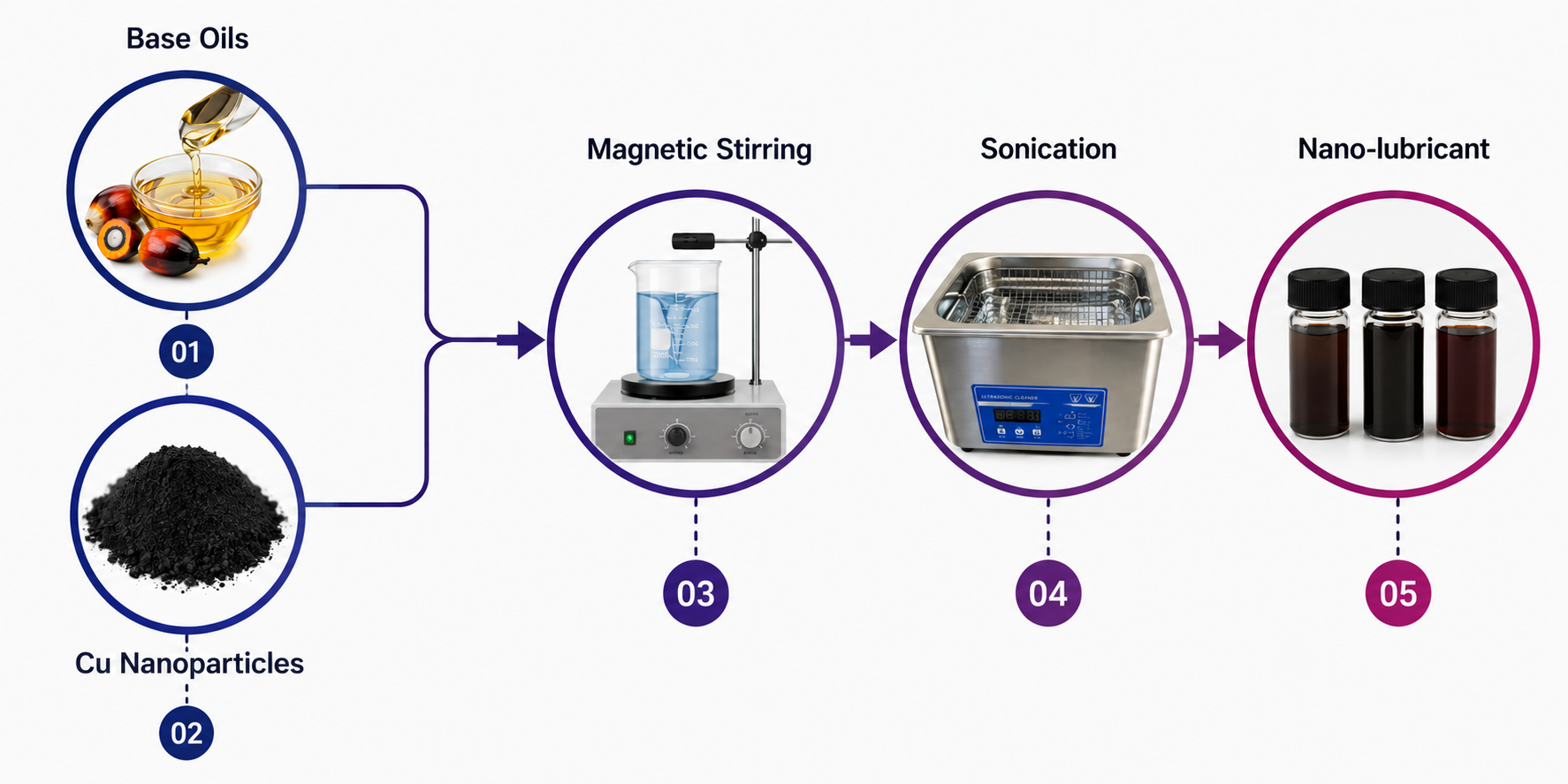
Synthesis of copper nano-lubricant. Image Credit: Adapted from Islam, M. M., & Saadi, M. M. U. (2026) using ChatGPT / OpenAI
Mechanisms of Lubrication Improvement with CuNPs
When dispersed in vegetable oil at appropriate concentrations, CuNPs can enhance lubrication via both physical and chemical mechanisms. Their spherical shape allows them to act as microscopic ball bearings between sliding steel surfaces, reducing friction and filling surface defects. The high temperatures and shear stresses at the contact interface promote tribochemical reactions among the nanoparticles, the metal surface, and the vegetable oil, forming a protective tribofilm reported to be approximately 20-50 nm thick.
The review identifies a preliminary design range of 0.1-0.5 wt%, which is commonly reported to improve tribological performance. Within this range, formulations based on palm oil reduced the coefficient of friction by about 20% and wear scar diameter by approximately 25% in selected studies. At concentrations above 0.5-1 wt%, however, nanoparticle agglomeration becomes significant, producing abrasive clusters that increase surface wear and reduce lubrication performance. The authors emphasize that the optimal concentration remains condition-dependent and varies with base oil chemistry, nanoparticle size, surface chemistry, load, speed, and test geometry.
Diverse Applications of Copper Nanolubricants
The improved load-bearing capacity and thermal stability of bio-lubricants have potential applications across multiple industries. In the automotive sector, nanolubricants may reduce friction in internal combustion engines and transmission systems, lowering fuel consumption and extending component life. In manufacturing, they may be used in metalworking fluids to minimize tool wear and improve surface finish during machining operations.
The renewable energy sector may also benefit from these lower-toxicity, bio-based formulations in wind turbine gearboxes, extending maintenance intervals and reducing risks associated with lubricant leaks. They can also be used as additives for water-based drilling fluids to improve thermal stability, reduce rock corrosivity, and enhance lubrication under downhole conditions.
Challenges and Future Directions for Commercialization
In summary, this review concludes that CuNP-reinforced vegetable oils offer a promising alternative to conventional petroleum-based lubricants. By combining biodegradable base oils with copper nano-additives, these nanolubricants can potentially reduce friction and wear while reducing some environmental concerns associated with lubrication.
Despite this potential, several challenges must be addressed before large-scale commercialization. Future work should focus on improving long-term colloidal stability under realistic operating conditions, developing standardized industrial testing protocols, and advancing scalable, green synthesis methods. Comprehensive life-cycle assessments covering raw material sourcing, manufacturing, energy consumption, and end-of-life recycling will be crucial to determining the environmental sustainability of these lubricants. Ecotoxicological testing and real-world durability studies will also be needed to confirm their safety, reliability, and regulatory suitability. Overall, addressing these challenges will accelerate the adoption of high-performance, environmentally responsible nanolubricants across various applications.
Disclaimer: The views expressed here are those of the author expressed in their private capacity and do not necessarily represent the views of AZoM.com Limited T/A AZoNetwork the owner and operator of this website. This disclaimer forms part of the Terms and conditions of use of this website.