The Park NX1 is a compact AFM designed for high-resolution, dependable imaging. The system combines a thermally stable body with a mechanically robust framework to enable atomic-scale imaging under ambient conditions, while maintaining the ease of use associated with Park Systems' equipment.
A tiny mechanical loop between the probe and the sample improves mechanical stability. The AFM core body uses Kovar to reduce thermal drift. The system also includes an XYZ tube scanner for imaging and a tungsten (W) carbide stick-slip stage with kinematic contacts for Z approach.
The sample can be positioned using stick-slip XY motion, while an on-axis optical microscope can be used to see the sample and the probe during operation. The system supports both standard AFM probes and optional qPlus (quartz tuning fork) sensors.
Key Features
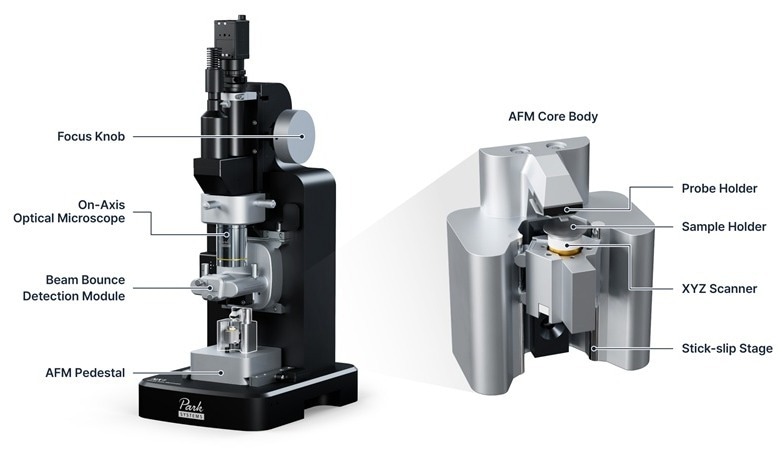
Image Credit: Park Systems
Optimized AFM Architecture
The NX1's compact, mechanically rigid design minimizes the probe-to-sample mechanical loop, enabling low noise and outstanding stability. Kinematic connections, a precise XYZ tube scanner, and a tungsten carbide stick-slip stage enable stable orientation. Materials with low thermal expansion reduce drift, enabling accurate atomic-resolution imaging.
Intuitive Laser Beam Alignment
The NX1 uses a beam-bounce detection technology with a separate detection module to ensure measurement stability. The quick laser positioning on the cantilever allows stable signal detection, as does the simple setup made possible by the intuitive alignment design.
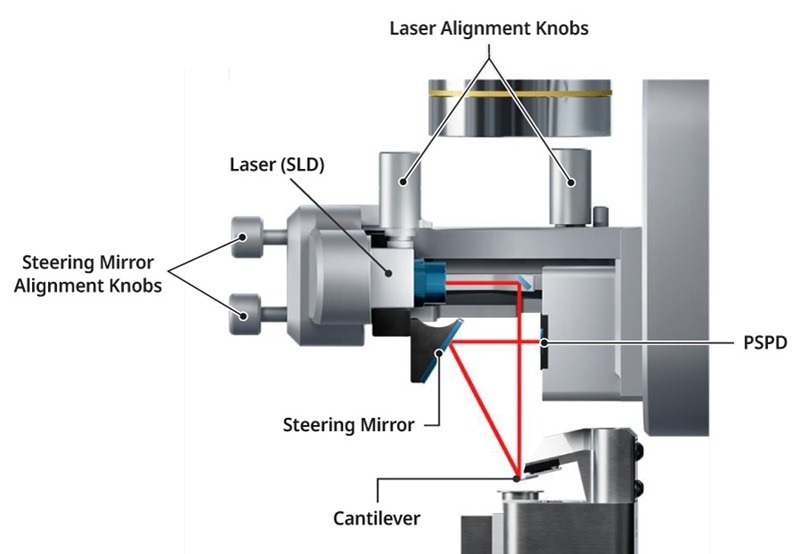
Image Credit: Park Systems
Low Noise Performance
The NX1 achieves a noise level approximately an order of magnitude lower than that of conventional AFM systems due to its optimized architecture. This low noise level provides a stable measurement environment that supports atomic-resolution imaging and dependable signal detection.
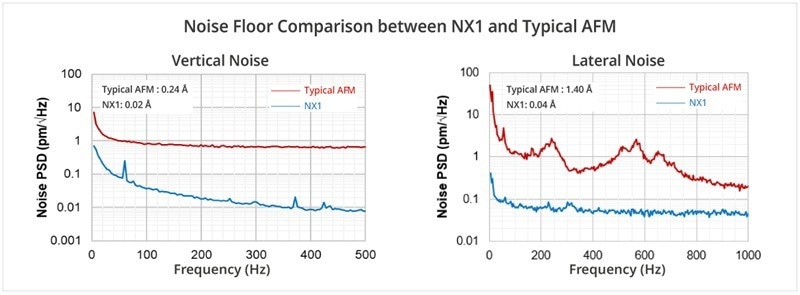
Image Credit: Park Systems
On-Axis Optical Microscope
The NX1's high-resolution on-axis optical microscope provides a direct view of the probe and sample, enabling precise tip alignment and efficient sample movement. Integrated illumination, which provides good visibility across sample types, facilitates setup and supports accurate measurements.
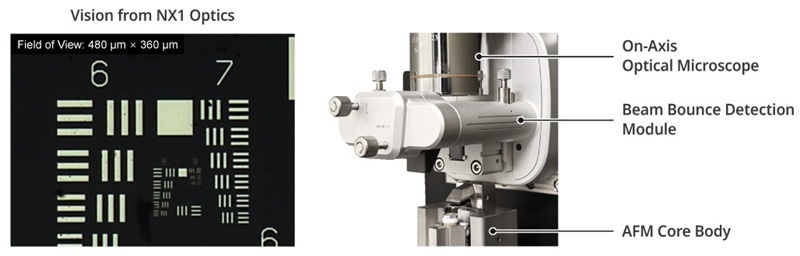
Image Credit: Park Systems
qPlus® Sensor Option
The NX1 supports an optional quartz tuning fork-based qPlus sensor for complex atomic-scale measurements. Its high stiffness reduces jump-to-contact by allowing it to function steadily at picometer-scale amplitudes.
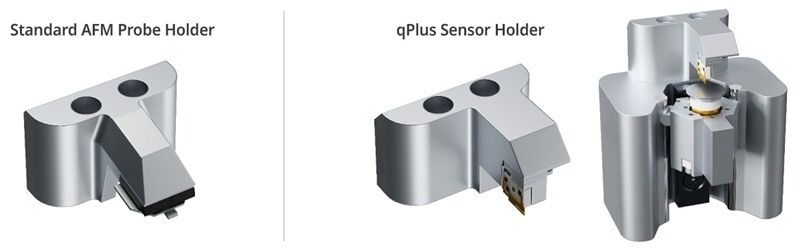
Image Credit: Park Systems
Softwares
Park SmartScan™
Park SmartScan™ streamlines AFM operations with an intuitive UI and automated workflows, enabling faster setup and high-quality imaging with less human effort.
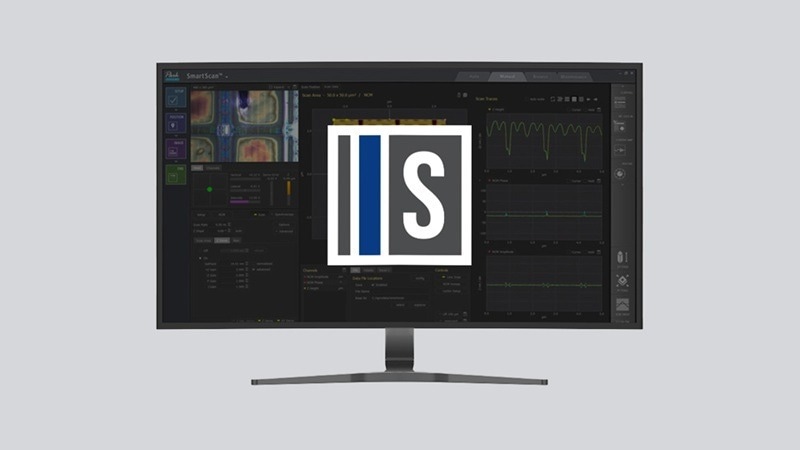
Image Credit: Park Systems
Park SmartAnalysis™
Park SmartAnalysis™ offers rapid and comprehensive data processing, enabling clear result visualization and efficient interpretation. Its advanced features offer comprehensive research in a user-friendly process.

Image Credit: Park Systems
Applications
MoS2 Single Crystal: 2D Materials
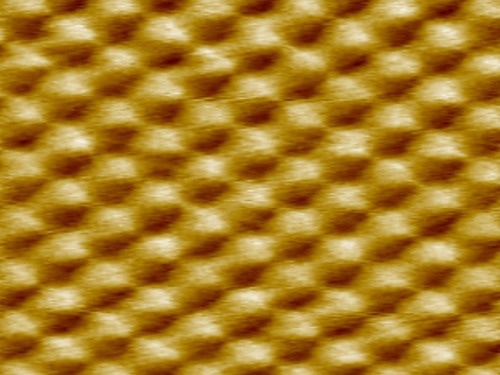
Image Credit: Park Systems
Twisted Bilayer Graphene: 2D Materials
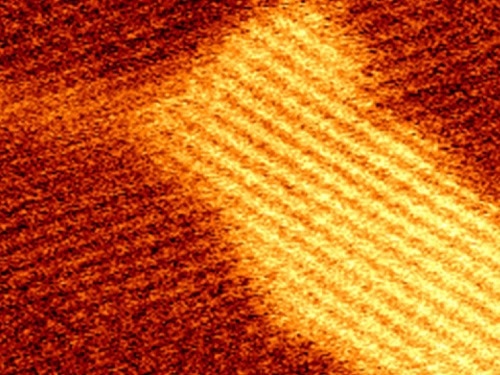
Image Credit: Park Systems
HOPG: 2D Materials
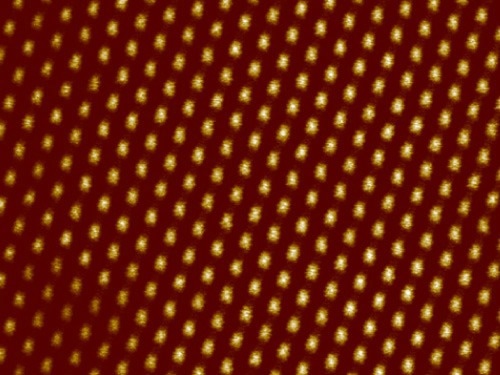
Image Credit: Park Systems
WSe2 on Graphene: 2D Materials
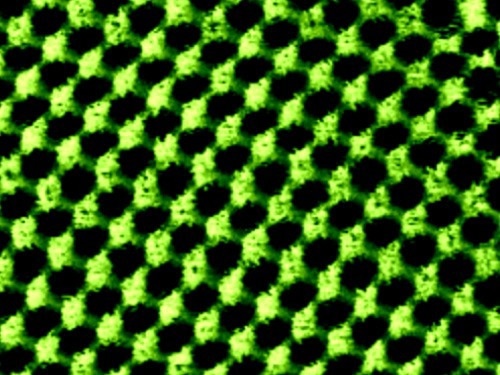
Image Credit: Park Systems