From protein-coated nanoparticles to AI-driven toxicity models, two decades of research reveal why assessing nanoscale materials requires far more than conventional toxicology.
Paper: Two Decades of Nanotoxicology: Evolution, Impact, and Future Challenges
In recent times, the integration of nanoscale materials into consumer and industrial products has accelerated rapidly, with StatNano reporting more than 11,100 nanotechnology products available worldwide in 2026. As their applications expand, understanding their safety has become an important scientific priority. In a narrative review recently published in the journal ACS Omega, researchers examined two decades of nanomaterial safety studies. They traced how assessment methods have evolved from identifying basic hazards to using complex artificial intelligence (AI) models that can help predict toxicological outcomes and prioritize nanomaterials for further testing.
The Unique Challenges of Nanoscale Materials
Nanotechnology operates at an exceptionally small scale, where materials display distinctive behaviors, high surface-to-volume ratios, and quantum effects. These characteristics make engineered nanomaterials valuable in various sectors, including medicine, electronics, and agriculture, while also leading to novel interactions with biological systems.
The field of nanotoxicology formally emerged in 2004 to investigate these effects, building on earlier research into airborne ultrafine particles. As human and environmental exposure increases through inhalation, ingestion, and dermal contact, scientists have recognized that traditional toxicological approaches and dose metrics are insufficient to fully characterize the complex behavior of nanoscale materials, creating a need for specialized safety frameworks.
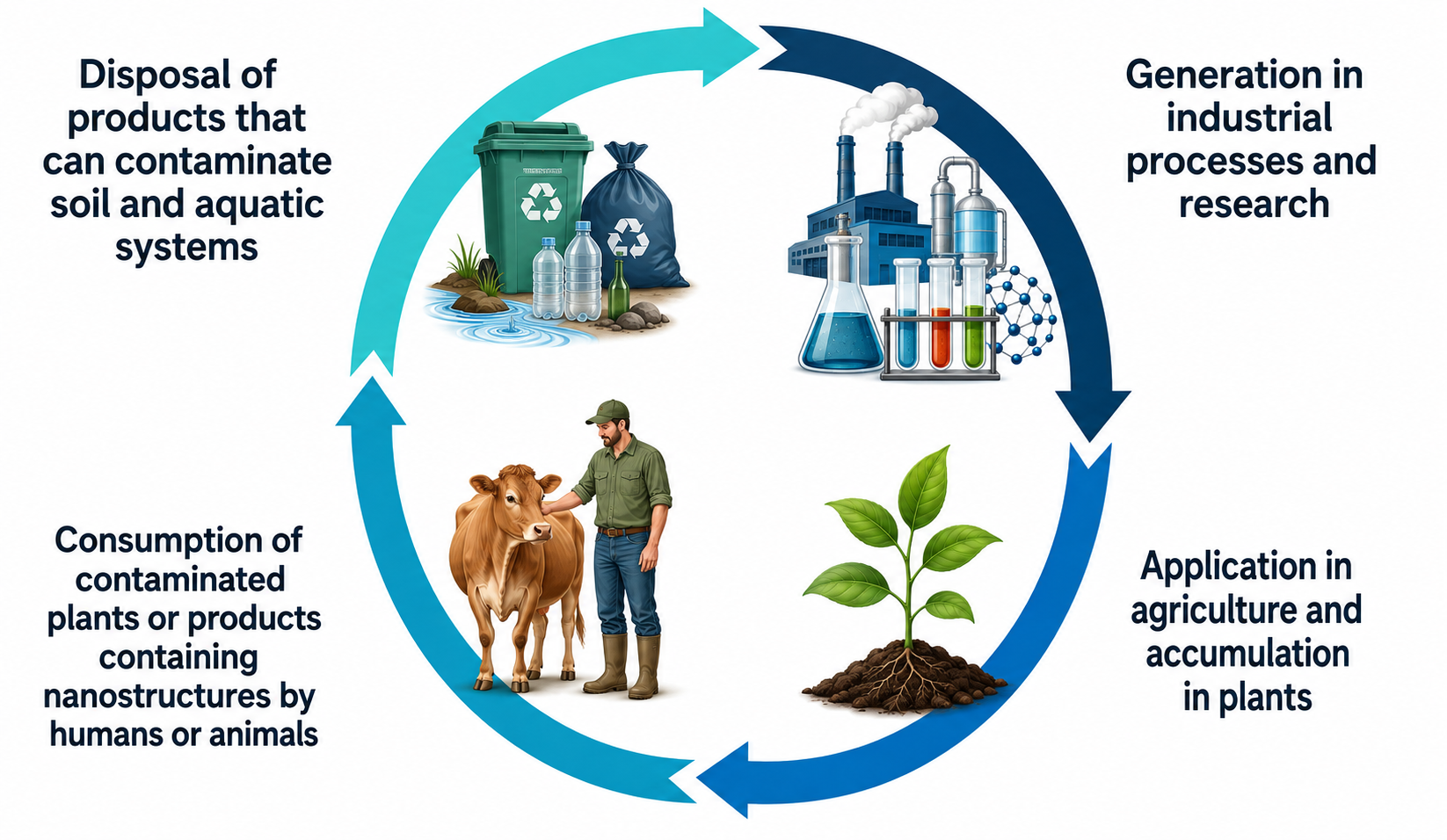
Routes of exposure of humans and the environment to nanostructures.
Methodological Evolution in Nanotoxicity Assessment
To synthesize historical developments in nanotoxicology, researchers conducted a narrative review covering the field from 2004 to 2025. They evaluated 220 scientific publications and regulatory documents and selected 161 for analysis. The literature was retrieved from scientific databases using search parameters focused on exposure pathways, protein corona formation, and machine-learning (ML) applications. These selected studies were then organized chronologically to trace methodological advancements.
Early studies relied on conventional cytotoxicity assays to assess cell viability, alongside methods that examined cellular internalization in two-dimensional (2D) cultures. Fluorescent probes were also increasingly used to measure oxidative stress and reactive oxygen species. As the field progressed, scientists introduced three-dimensional (3D) models, including spheroids and organoids, which better replicate human tissue environments while reducing reliance on animal testing. However, the review emphasizes that in vivo studies remain essential for assessing biodistribution, biopersistence, systemic toxicity, and other organism-level effects.
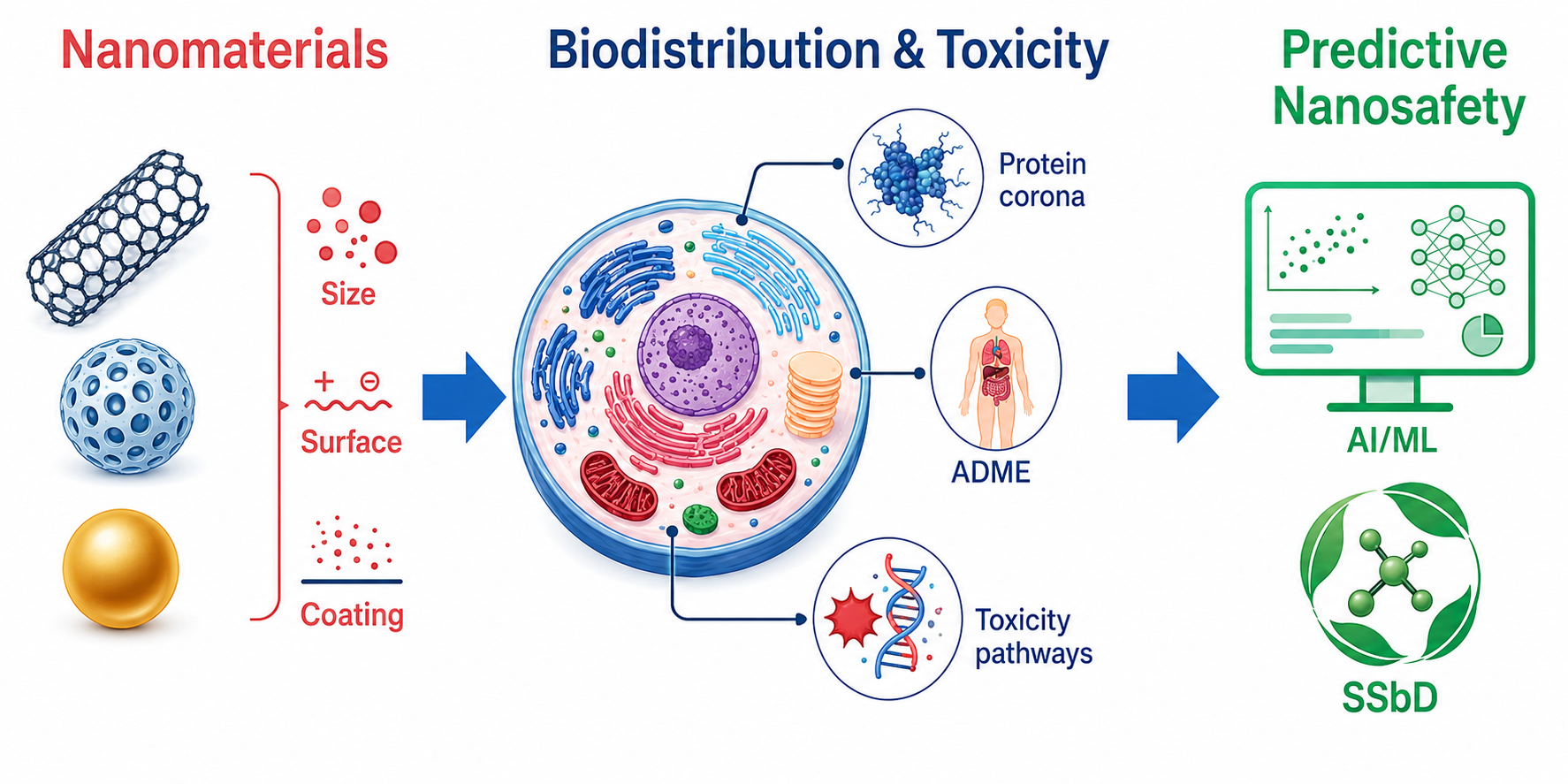
Recent frameworks examine nanomaterial behavior across absorption, distribution, metabolism, and excretion (ADME) pathways. Techniques such as liquid chromatography coupled with tandem mass spectrometry can identify and quantify proteins involved in protein corona formation. AI and ML methods are increasingly applied to large datasets to develop predictive models for nanomaterial properties and toxicity, enabling rapid screening and complementing experimental testing.
Discoveries in Biological Interactions
The review identified several key findings regarding how nanomaterials interact with biological and environmental systems. Across multiple studies, particle size emerged as a strong and reproducible predictor of toxicity, although toxicological outcomes also depend on factors such as composition, surface chemistry, coatings, exposure conditions, and biological context. Silver and gold nanoparticles measuring 10-20 nanometers showed greater tissue retention, altered biodistribution, and higher genotoxicity than larger particles in the approximately 50-100 nanometer or larger range.
The review also highlighted the importance of protein corona formation. When nanomaterials enter biological fluids, proteins rapidly adsorb onto their surfaces, altering their interactions. For example, serum protein coating reduced reactive oxygen species (ROS) generation by nearly 80% for titanium dioxide nanotubes, largely preventing phototoxicity under ultraviolet exposure. Conversely, protein adsorption doubled the specific toxicity of certain citrate-stabilized silver nanoparticles.
The review also highlighted the environmental mobility of nanostructures, which can undergo weathering and dissolution after entering natural systems. Evidence shows that in mice, 50-nanometer polystyrene nanoparticles administered at 10 milligrams per kilogram accumulated more extensively in the liver, spleen, and intestine and were associated with altered liver, kidney, and cardiac function. Separately, 24-nanometer polystyrene nanoparticles were transferred through an aquatic food chain from algae to zooplankton and then to fish, where altered lipid metabolism was observed. Despite this, globally harmonized, legally binding exposure limits remain lacking.
Predictive Toxicology for Safer Designs
Integrating ML techniques into nanosafety protocols could offer practical benefits for industrial manufacturers and regulatory agencies. By linking physicochemical properties with toxicological outcomes, these models can enable rapid virtual screening of newly engineered nanomaterials. This predictive approach could support a proactive safety-by-design framework, allowing developers to assess hazards earlier in the development process. However, the review cautions that predictive performance remains constrained by heterogeneous datasets, limited independent validation, potential overfitting, and difficulties interpreting some ML models.
Materials scientists could use these models to optimize nanoparticle performance while reducing potential cellular and environmental risks. During early-stage design, developers could adjust particle dimensions or surface coatings based on predicted toxicity, helping produce nanomaterials with desirable functional properties and improved safety profiles.
A Sustainable Framework for Nanotechnology
In summary, nanotoxicology has evolved from basic studies into a predictive and mechanistic field. Understanding the relationships among particle dimensions, biological transformations such as protein corona formation, and environmental weathering is essential for evaluating the risks associated with engineered nanomaterials.
Future work should prioritize standardized testing protocols and harmonized international regulatory frameworks. Improving risk assessment and establishing reliable exposure thresholds will require integrating 3D cellular models, appropriate in vivo testing, realistic chronic low-dose exposure studies, and ML predictions supported by high-quality standardized datasets. Ultimately, sustainable nanotechnology will depend on aligning new material design with comprehensive risk assessment to ensure that next-generation nanomaterials provide societal benefits while minimizing risks to human health and the environment.
Disclaimer: The views expressed here are those of the author expressed in their private capacity and do not necessarily represent the views of AZoM.com Limited T/A AZoNetwork the owner and operator of this website. This disclaimer forms part of the Terms and conditions of use of this website.