What Are MOF Thin Films?
Why Have They Been Misunderstood?
What Does the Most Recent Research Say About Them?
What Does This Mean?
What New Applications Does This Lead To and Why?
Any Other Research?
References and Further Reading
Metal-organic frameworks (MOFs) are best known for their porosity. They are built from metal nodes and organic linkers and have enormous internal surface areas, making them best suited to applications in gas storage, catalysis, sensing, separations, and drug delivery. However, recent research is challenging a long-held belief about MOF thin films.
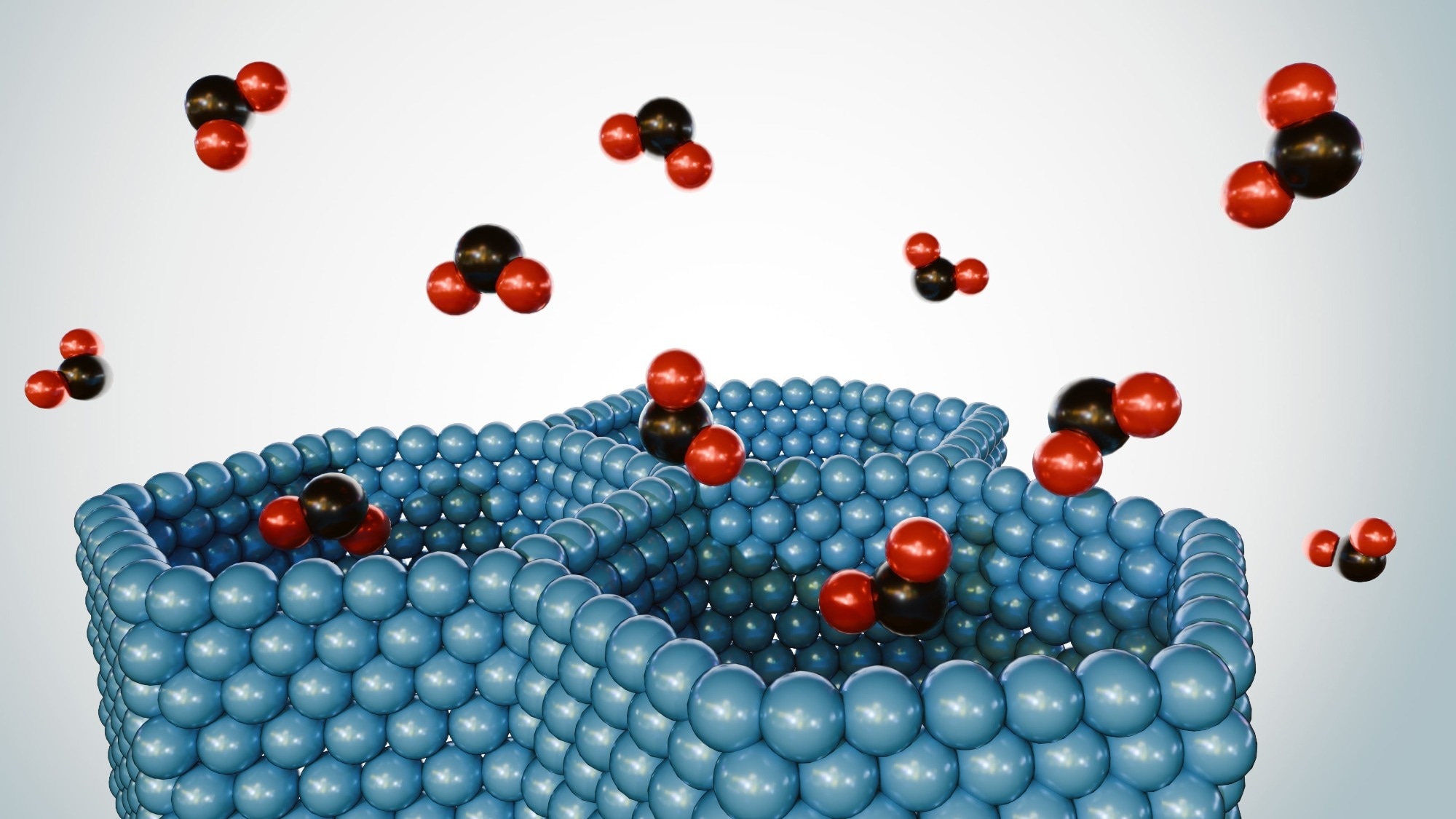
Image Credit: Love Employee/Shutterstock.com
A 2026 study on copper terephthalate (Cu(bdc)) thin films showed that some widely studied coatings are not porous. Instead, they exist as dense coordination networks with fundamentally different properties than previously believed.1
This discovery has significant implications for how researchers interpret transport, adsorption, stability, and device performance in MOF thin films, highlighting that thin-film structures can differ substantially from their bulk crystalline counterparts and therefore require direct structural characterization.
Click here to download a PDF copy of this page
What Are MOF Thin Films?
MOF thin films are crystalline coatings grown via layer-by-layer (LbL), liquid-phase epitaxy, or vapor deposition. Unlike bulk MOF powders, thin films are engineered for device integration in sensors, membranes, and microelectronics.2,3
Among the best-known examples are Cu(bdc) thin films, where copper ions are linked by benzene-1,4-dicarboxylate (bdc) molecules.
Researchers have long assumed that thin films replicate bulk MOF crystal structures with open channels and accessible pore networks. Therefore, Cu(bdc) films have been interpreted as porous materials suitable for host-guest chemistry and molecular transport applications.2,3 This assumption became widely accepted and influenced expectations regarding guest molecule uptake, adsorption behavior and chemical functionality, despite several experimental observations that suggested the actual structure and resulting properties could be significantly different.
Why Have They Been Misunderstood?
Thin-film structures were assumed to mirror known bulk MOF crystal structures. Diffraction data matched MOF-2 structures and were widely accepted, but experiments contradicted this.2
Dyes or guest molecules could enter only during film growth, not after synthesis. Furthermore, Cu(bdc) films showed an unexpected resistance to water, whereas theoretical calculations predicted that water should destabilize the conventional porous framework.4,5
Additional evidence came from magnetic measurements. The films showed ferromagnetism rather than the antiferromagnetism expected from paddle-wheel structures. Infrared spectroscopic studies suggest alternative copper-carboxylate bonding arrangements inconsistent with accepted porous models.4,6
What Does the Most Recent Research Say About Them?
Taghizade et al. (2026) combined rotating grazing-incidence X-ray diffraction, X-ray reflectivity, infrared spectroscopy, and density functional theory simulations to investigate Cu(bdc) thin films prepared by both layer-by-layer and ceramic-to-MOF growth methods.1
The researchers systematically evaluated all previously proposed porous structures and found that none adequately matched the experimental data. Instead, they identified a previously unknown structure, designated Cu(bdc)-TF*, with a stoichiometry of Cu2(OH)2(bdc). This structure consists of densely packed copper-hydroxide layers linked by terephthalate groups and lacks a continuous accessible pore network.1
One of the most compelling findings was obtained from X-ray reflectivity experiments. The electron density of the Cu(bdc) films was approximately 2.6 times higher than that of a known porous Cu2(bdc)2(dabco) film. Such a high density does not match a porous structure and instead suggests a compact, non-porous material. The new structure explained the diffraction patterns, water stability, infrared spectra, and ferromagnetic properties that earlier models could not.1
What Does This Mean?
The discovery forces researchers to reconsider assumptions surrounding MOF thin films. For many years, Cu(bdc) films were assumed to possess transport and adsorption properties similar to those of their porous bulk counterparts. The new evidence demonstrates that this assumption is incorrect for solution-grown Cu(bdc) thin films.
The work highlights an important principle in materials science that thin-film growth can generate crystal structures that differ significantly from those observed in bulk materials. As a result, characteristics such as permeability, sorption behavior, diffusion rates, and chemical stability cannot automatically be inferred from bulk structures.1
What New Applications Does This Lead To and Why?
At first glance, the lack of porosity seems disappointing, but it opens new possibilities.
Dense coordination networks typically show stronger chemical stability. The compact Cu2(OH)2(bdc) structure restricts water intrusion and explains its environmental stability, making it suitable as a protective coating in high-demand industrial settings.1,5
Ferromagnetic behavior enables applications in spintronics and magnetic data storage. The Cu(bdc)-TF* framework exhibits a ferromagnetic ground state consistent with previous experimental observations, potentially opening opportunities in magnetic information storage and quantum materials research.1,4
In addition, the dense framework could provide a stable platform for controlled in-situ guest incorporation during growth. Instead of relying on molecular diffusion through pores, functional molecules can be embedded directly during synthesis, potentially enabling improved optical, sensing, and photonic devices.1
Any Other Research?
Similarities were found with new zinc terephthalate networks. Multiple Zn2(OH)2(bdc) phases are densely packed and non-porous, indicating that compact coordination networks are more prevalent.1
Grazing-incidence diffraction, computational modeling and vibrational spectroscopy now allow determination of thin-film structures that cannot be determined using traditional crystallographic approaches. The Cu(bdc) thin film was solved using a combination of these complementary techniques.1
As MOF technologies continue to move into commercial devices, accurate structural determination will become increasingly important. The results suggest that future thin-film design should focus on achieving desired compositions and verifying the actual crystal structures formed during fabrication.
References and Further Reading
- Taghizade, N., et al. (2026). Resolving the Cu(bdc) conundrum: Identifying non-porous packing of prototypical coordination-network thin films combining advanced diffraction techniques and computational modelling. Advanced Functional Materials. e76075. https://doi.org/10.1002/adfm.76075
- Liu, J., et al. (2012). A novel series of isoreticular metal–organic frameworks: Realizing metastable structures by liquid phase epitaxy. Scientific Reports, 2, 921. https://doi.org/10.1038/srep00921
- Falcaro, P., et al. (2017). Centimetre-scale micropore alignment in oriented polycrystalline metal–organic framework films via heteroepitaxial growth. Nature Materials, 16(3), 342–348. https://doi.org/10.1038/nmat4815
- Friedländer, S., et al. (2016). Linear chains of magnetic ions stacked with variable distance: Ferromagnetic ordering with a Curie temperature above 20 K. Angewandte Chemie International Edition, 55(41), 12683–12687. https://doi.org/10.1002/anie.201606016
- Brandner, L. A., et al. (2023). Water sensitivity of heteroepitaxial Cu-MOF films: Dissolution and re-crystallization of 3D-oriented MOF superstructures. Chemical Science, 14(43), 12056–12067. https://doi.org/10.1039/D3SC04135B
- Baumgartner, B., et al. (2021). Infrared crystallography for framework and linker orientation in metal–organic framework films. Chemical Science, 12(27), 9298–9308. https://doi.org/10.1039/D1SC02370E
Disclaimer: The views expressed here are those of the author expressed in their private capacity and do not necessarily represent the views of AZoM.com Limited T/A AZoNetwork the owner and operator of this website. This disclaimer forms part of the Terms and conditions of use of this website.