
Scientists in Focus brings attention to the people whose ideas, methods, or experiments shaped modern nanoscience. Instead of celebrating individual moments of discovery, this series examines how specific contributions changed what researchers could measure, build, or understand at the nanoscale.
Each article places a scientist’s work in context, tracing its influence across disciplines and into the tools and concepts that underpin the field today. Next in the series is Professor Gerd Binnig, a scientist praised for his creativity and, of course, for the development of the scanning tunnelling microscope.
Saving this article for later? Grab a PDF here.
The Nobel Prize Winning Invention
The development of the first Scanning Tunelling Microscope was the result of a team of different scientists – Henrich Rohrer, Gerd Binnig, Christoph Gerber, Edmund Weibel, and separately Cal Quate and his research team.
All are notable – and rightly deserve their own spotlight – but this article tunes into Professor Gerd Binnig's influence. A lover of music and science, Gerd’s creativity shines throughout his storied academic history.
Gerd developed the STM probe in answer to a question: how can we see at the atomic level? At the time, in 1981, the closest scientists could get to this was the microscale. This just wasn’t good enough.
As Gerd said, “seeing is believing”, and to understand the theories of atomic-level biochemistry, they needed to see what was happening on that scale.
In a round table discussion with Christoph Gerber in 2016, Gerd explained: “We were trying to solve a problem. IBM was working on a new type of semiconductor chip, and the insulator, which keeps the electric current from escaping the semiconductor, was leaking. But no one knew why.
“So Heinrich Rohrer, who was working at IBM Zurich, hired me. I looked at all the available instruments, and none of them could study materials on such a fine scale to find out.”
So the two of us thought, well, okay, we'll invent something.
Professor Gerd Binnig to Christoph Gerber in the Kavli Prize 2016 Round Table Talk
“We thought we could take advantage of something called quantum tunneling. Quantum tunneling is when an electron tunnels through a conducting material and comes out the other side. We developed STM to map the surface of the material by measuring where electrons emerged on the other side. Only later did we realize that we could move our probe from one spot to cover the entire surface.”
This problem-solving, can-do attitude is a key thread in Gerd’s success.
Why the STM was So Impactful
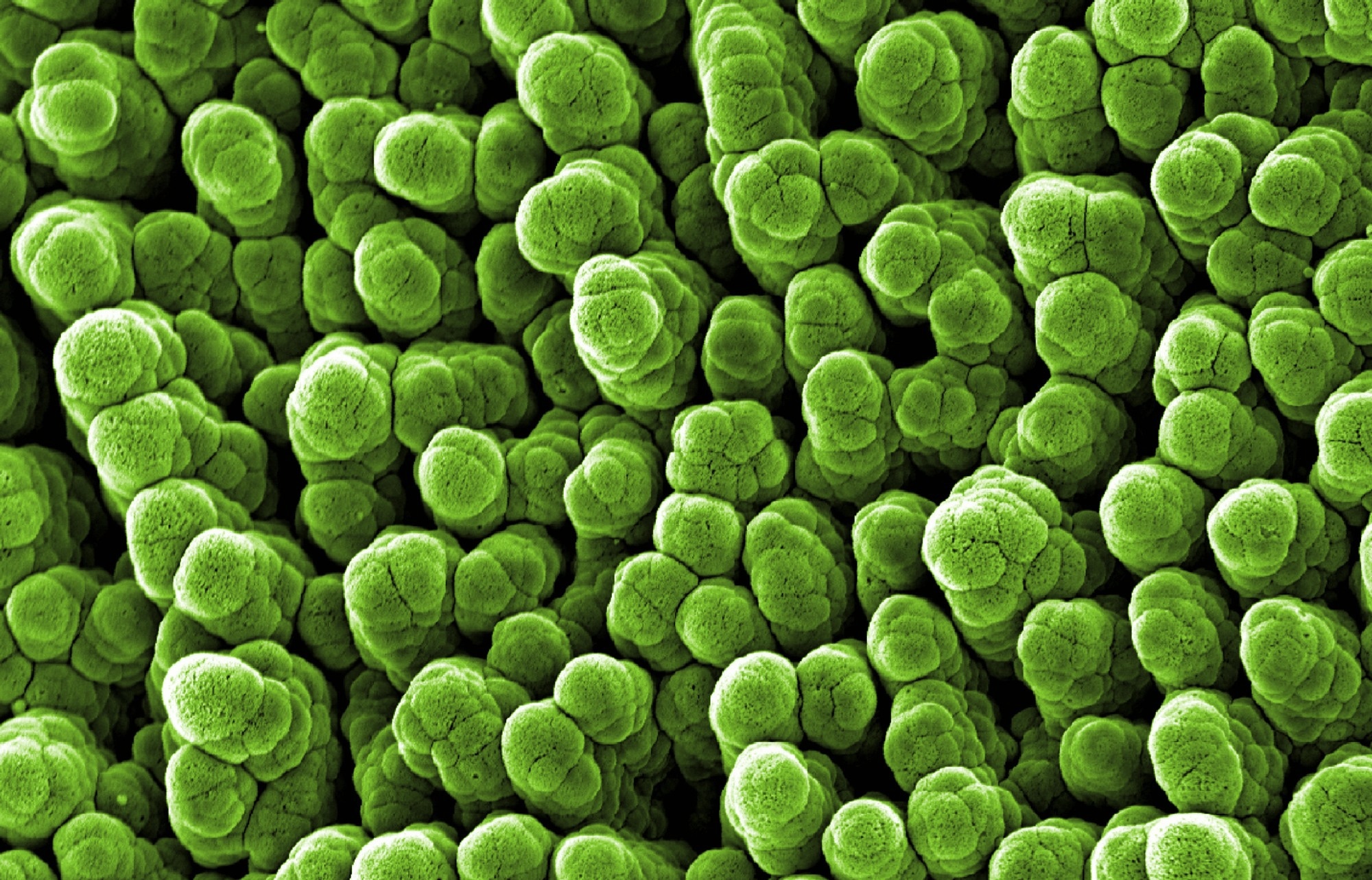 Image Credit: Georgy Shafeev/Shutterstock.com
There was little progress in nanotechnology after the early ideas of Richard Feynman until 1981, when Gerd and Heinrich invented the STM at IBM Zurich Research Laboratory.
The STM was a new type of microscope, one with a sharp tip that moves so close to a conductive surface that the electron wave functions of the tip's atoms overlapped with those of the surface atoms.
When a voltage is applied, electrons “tunnel” through the vacuum gap from the atom of the tip into the surface (or vice versa). In 1983, the group published the first STM image of a Si(111)-7 × 7 reconstructed surface, which is now easily and routinely imaged.
The development of the STM in turn led to AFM, SPM, even TEM. These microscopes have been used in everything from graphene studies to cancer research and electronics.
AFM is used so widely [now] in so many different fields. I never imagined that would happen. And it keeps getting better and better, and shows us more and more.
Professor Gerd Binnig to Christoph Gerber in the Kavli Prize 2016 Round Table Talk
After successfully developing the STM, Gerd and Christoph invented AFM as a solution to another question. STM could only be used on conductive surfaces but the pair wanted to be able to image everything else on this level too - living organisms, ceramics, plastics, and biomolecules. To do this, they had to find a way to measure the forces between an atom sitting on a surface and an atom sitting on the tip of a probe.
They were just as successful here, and Gerd received further recognition alongside Christoph for this work when they received the Kavli prize in 2016.
The Person Behind the Prize
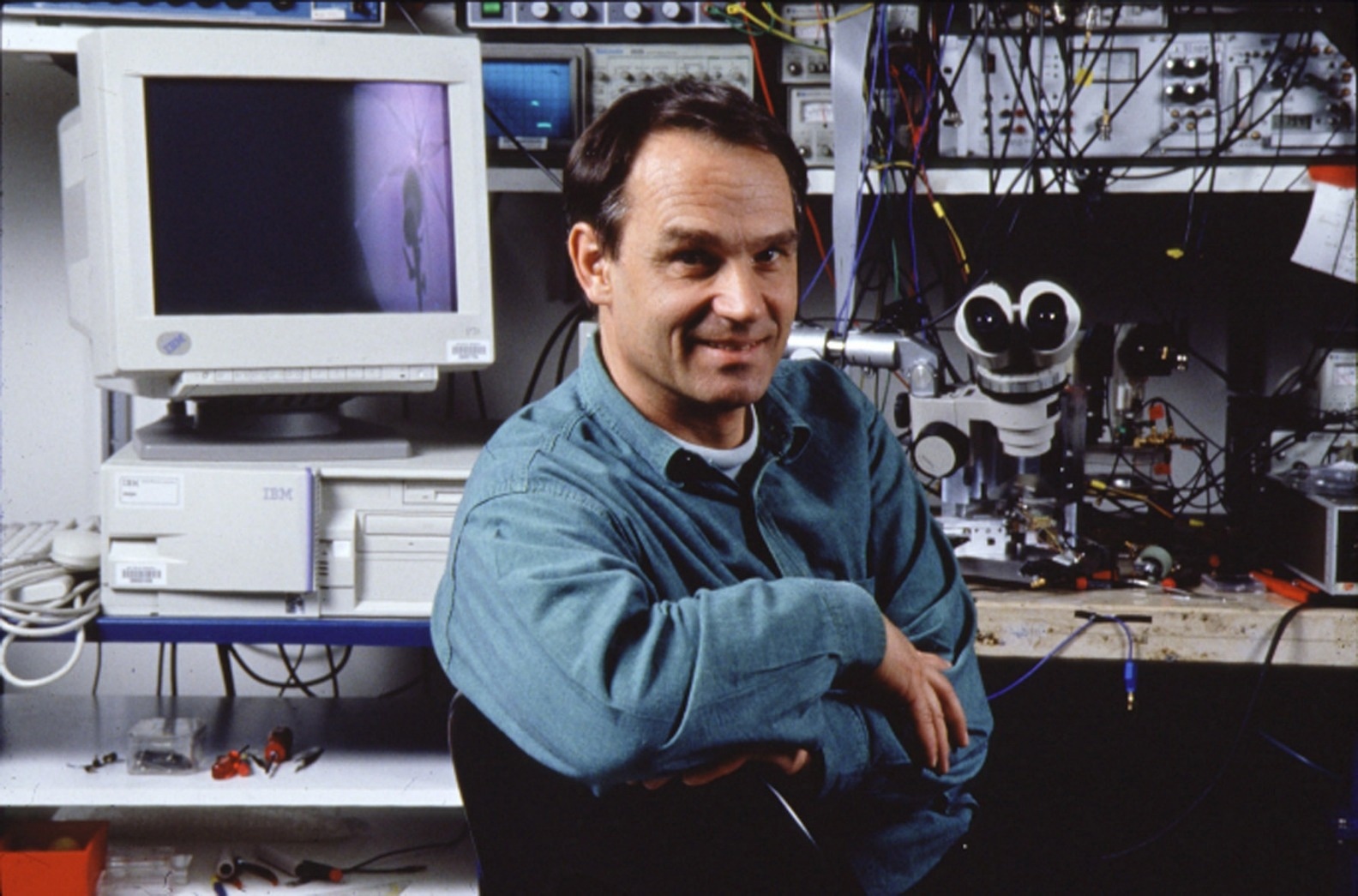 Image Credit: IBM Zurich
Gerd was born in 1947 in Frankfurt am Main, West Germany. The eldest of two sons, growing up in the city after World War II was surprisingly playful: “We had great fun playing among the demolished buildings but were too young to realize that much more than just buildings had been destroyed,” he said.
A self-professed music lover, Gerd began playing the violin at 15, and soon joined the school orchestra. After an introduction to the somewhat less classical Beatles and Rolling Stones, Gerd began composing songs, playing in bands, and learning about the power of cooperation, a lesson that would prove valuable in his research career. “Through music, I learned how difficult teamwork can be, but also how much fun it is to be creative,” he said. Both of these lessons directly translate to his career success.
In 1973, Binnig earned a bachelor’s degree in physics at the J. W. Goethe University in Frankfurt and a PhD five years later. Shortly after graduating he was hired by the IBM Zürich Research Laboratory, where he met Heinrich. It was only eight years after joining IBM that Gerd won the Nobel Prize – a testament to the talent of a great mind.
Definiens and eCognition
Gerd’s influence did not end with the STM or even with the AFM. After continuing in research for another decade, he co-founded Definiens in 1994, bringing the same interest in observation and interpretation into a new area: intelligent image analysis. The company developed technology based on Cognition Network Technology, later known through its eCognition platform.
This next step in Gerd's career can be seen as a natural continuation of his earlier work. The STM and AFM opened up new ways to image surfaces and structures; Definiens focused on how complex images could be analysed and understood more effectively.
After initial success, Definiens expanded into the life sciences in 2005, initially focusing on screening cell cultures, followed by radiology and pathology. The disposal of Definiens’ earth sciences arm to Trimble in 2010, followed by subsequent venture capital investment, allowed the company to concentrate on its digital pathology applications.
The following development of Definiens’ Tissue Phenomics technology dramatically improved the identification of biomarkers in tumour tissue, enabling applications in diagnosis and the creation of personalized treatments.
Definiens has since been adopted by AstraZeneca, and its technology is still used to advance pathological imaging science today.
In this way, Gerd's later work extended beyond nanoscience alone and into medical imaging, where better analysis could have direct consequences for research and patient care.
Christoph and myself, we ended up in the same spot. We started with atomic-scale imaging and now we are both trying to diagnose cancer patients. It's quite a coincidence.
Professor Gerd Binnig to Christoph Gerber in the Kavli Prize 2016 Round Table Talk
Previously in our series, Scientists in Focus: Professor Mildred Dresselhaus
Gerd's work clearly demonstrates that to progress in science, we need more than theory. His persistence, alongside Christoph and the rest of the team, helped build the tools that allowed new knowledge to emerge.
Ultimately, Gerd described the key to his success as never giving up. He said: "It's the only way".
References and Further Reading
- Nobel Prize Outreach AB (n.d.) ‘Gerd Binnig – Biographical’, NobelPrize.org. Available at: https://www.nobelprize.org/prizes/physics/1986/binnig/biographical/ (Accessed: 8 March 2026).
- Bayda, S. et al. (2019) ‘The History of Nanoscience and Nanotechnology’, Journal of Nanoparticle Research. Available at: https://pmc.ncbi.nlm.nih.gov/articles/PMC6982820/ (Accessed: 10 March 2026).
- Nature Nanotechnology (2013) ‘Scanning the past’, Nature Nanotechnology, 8, p. 539. Available at: DOI:10.1038/nnano.2013.167, https://www.nature.com/articles/nnano.2013.167.
- Brown, A.S. (2017) ‘Changing Our View of the Nanoscale World’, The Kavli Prize. Available at: https://www.kavliprize.org/changing-our-view-of-the-nanoscale-world (Accessed: 8 March 2026).