Italy has world-class nanotechnology research, but a new analysis shows that targeted funding, faster approvals, and stronger industry links may determine whether advanced batteries can power its renewable energy future.
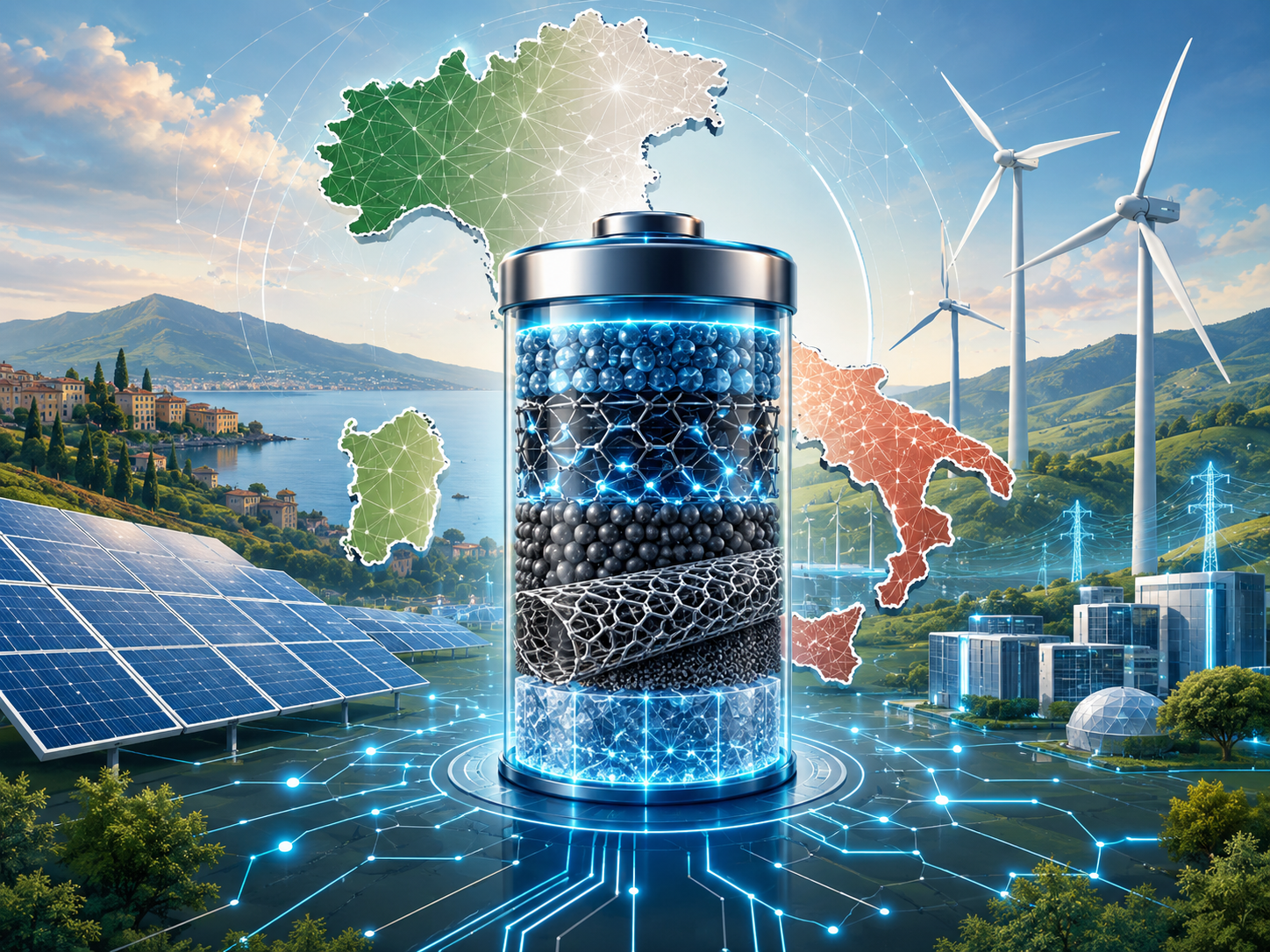
Study: Sustainable energy storage solutions using nanomaterials: bridging the gap between policy and technology in Italy. Image credit: AI-generated image created using ChatGPT/OpenAI
In a recent original research article published in the journal Environmental Sustainability, researchers used a 2018-2025 systematic literature review, policy assessment, comparative case studies, expert input, and Technology Readiness Level (TRL) analysis to explore the potential of nanomaterial-based energy storage systems to accelerate Italy’s renewable energy transition by integrating advanced technologies with policy and market analysis.
Renewable Energy Storage Challenges
Energy storage systems are essential for mitigating this intermittency, enabling the storage of surplus energy for use during low-production periods. In particular, lithium-ion batteries typically offer energy densities of 150-250 Wh/kg and lifespans of 1,000-2,000 cycles, while also raising concerns about raw material extraction and safety risks such as overheating.
Nanomaterials, including graphene, carbon nanotubes (CNTs), lithium-sulfur (Li-S) batteries, and solid-state electrolytes, exhibit exceptional electrical, mechanical, and chemical properties that could significantly improve battery performance and safety.
Italy stands out as a notable player in nanotechnology research with institutions actively exploring these advanced materials, yet the integration of such technologies into the national renewable energy strategy remains limited due to regulatory, financial, and awareness barriers.
Nanomaterial Innovations Overview
Graphene-based systems have been reported to reach energy densities up to 650 Wh/kg, above the 150-250 Wh/kg range cited for conventional lithium-ion batteries, while enabling rapid charging in under 15 minutes and enduring over 6,000 charge-discharge cycles.
Carbon nanotubes (CNTs) have been reported to enhance electrode robustness, mitigating degradation mechanisms such as dendrite formation and extending battery life by up to 40%, which is critical for electric vehicle and grid storage applications.
Lithium-sulfur (Li-S) batteries are projected to achieve capacities of 500-600 Wh/kg in advanced designs but have struggled with poor electrical conductivity and rapid capacity fading due to polysulfide shuttling. Incorporating nanomaterials, such as CNT-sulfur composite cathodes and TiO2 nanoparticles, can address these issues, boosting stability and increasing cycle life from about 300 to around 2,000 cycles.
Solid-state batteries using ceramic nanomaterials, such as lithium garnet electrolytes and nanostructured polymers, provide enhanced safety by reducing leakage risks associated with liquid electrolytes and offer high ionic conductivity and mechanical flexibility. Reviewed prototypes have demonstrated energy densities up to 550 Wh/kg with over 4,000 cycles, positioning them as promising candidates for large-scale energy storage.
Reported advances in nanoscale electrode catalysts, such as single-atom catalysts, and integration of metal-organic frameworks (MOFs) further optimize performance and multifunctionality.
On the policy front, Germany’s “Battery 2030+” initiative invests over €500 million and is associated with more than 50 nanomaterial-related battery patents since 2022, accelerating commercialization. The Netherlands fosters innovation via microgrid pilot projects and regulatory sandboxes for graphene-enhanced batteries, while Japan’s NEDO-linked approach supports accelerated commercialization and streamlined approvals, reducing approval times by up to 18 months.
Italy, despite strong institutions like the Italian Institute of Technology, lacks specific funding schemes, cohesive policies, and collaborative hubs to bridge research and market deployment. High production costs, with graphene at about $100/kg versus $10/kg for conventional materials, coupled with low stakeholder awareness, fragmented national coordination, and regulatory delays, pose substantial barriers to widespread adoption.
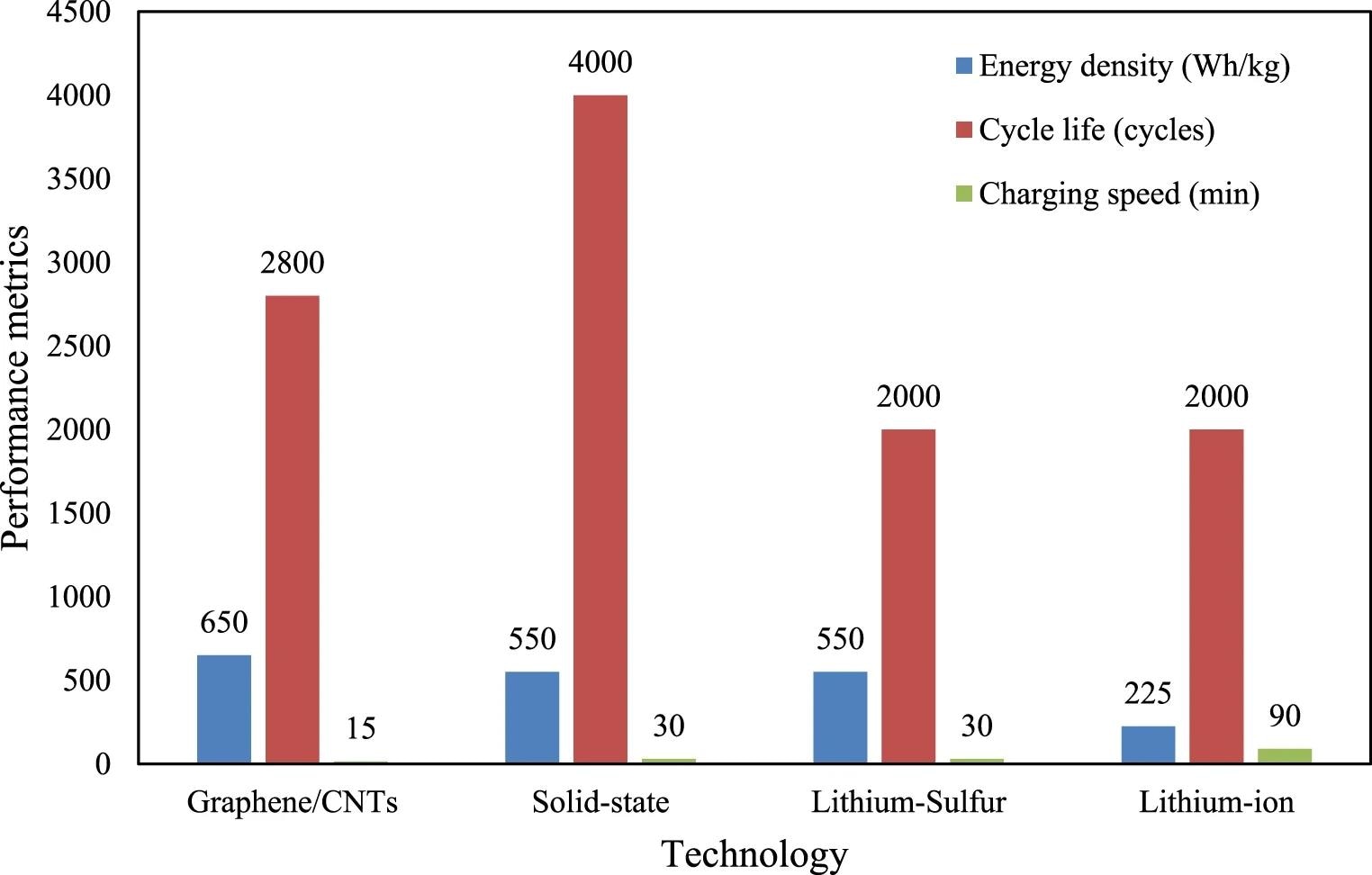
Technological advancement in Italy: nano material - based energy storage compares Li-ion
Italy’s Policy and Market Gaps
The complex and costly production processes for nanomaterials, such as chemical vapor deposition for graphene and CNTs, limit their commercial scalability and affordability. Emerging cost-reduction methods like solution-based exfoliation show promise but require further industrial adoption.
Italy’s nanotechnology research ecosystem is robust and internationally competitive, yet limited coordination among academic, industrial, and governmental stakeholders hampers technology transfer and market adoption. Regulatory uncertainty surrounding novel battery chemistries delays pilot implementations, while insufficient national funding contrasts with proactive programs in comparator countries.
Low stakeholder awareness, alongside the need for broader public engagement, exacerbates adoption barriers, underscoring the need for education and engagement initiatives. The review suggests that establishing regulatory sandboxes, as used in the Netherlands, alongside streamlined approval pathways, as highlighted in Japan’s NEDO-linked approach, could accelerate the deployment of innovation by providing controlled environments for real-world testing.
Furthermore, developing innovation hubs that integrate research institutions, startups, manufacturers, and policymakers would strengthen collaborative networks and expedite commercialization pathways.
In addition to technical and institutional challenges, environmental sustainability considerations are integral. Nanomaterial-based solid-state batteries may offer recyclable components and reduced reliance on scarce raw materials, aligning with circular economy principles.
Artificial Intelligence">AI-driven materials design emerges as a strategic enabler to optimize material properties and accelerate development cycles, potentially lowering costs and environmental impacts. Integrating such cutting-edge technologies within cohesive national policies aligned with EU-wide objectives like the Green Deal and Fit for 55 targets could enhance Italy’s competitiveness in the global sustainable energy storage market.
Strategies for Deployment Success
This study highlights the transformative potential of nanomaterials to advance energy storage solutions critical to Italy’s renewable energy transition. The authors recommend that Italy increase dedicated R&D and pilot funding, establish regulatory sandboxes to facilitate testing and market entry, promote innovation hubs fostering cross-sector partnerships, formulate a clear scale-up roadmap aligned with EU goals, and launch comprehensive awareness campaigns.
Embracing circular economy approaches and incorporating AI-driven materials design could further enhance the sustainability and affordability of these storage systems. By aligning its scientific strengths with coherent national strategies and international best practices, Italy could position itself as a leader in sustainable energy storage solutions, contributing significantly to decarbonization and energy security objectives within the EU framework.
Download your PDF copy by clicking here.